
Flowers
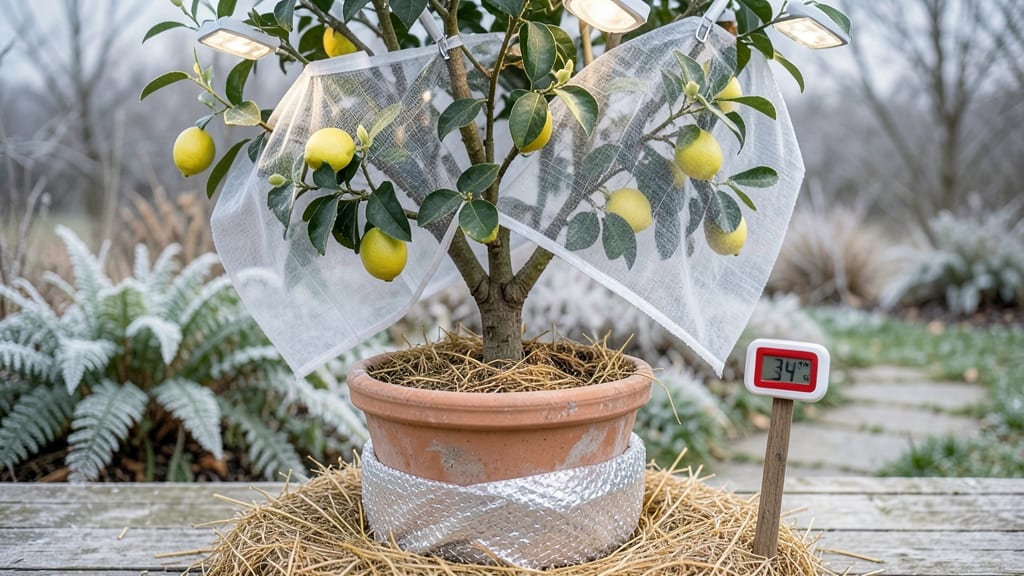
This lemon tree in low temp struggles when temperatures dip below 32°F, but with the right care, you can keep your citrus thriving even in cooler climates.
Picture this: your prized lemon tree—burdened with heavy fruit and fragrant blossoms—suddenly wilts under a surprise frost. Without protection, the damage can be irreversible, leaving you with a sad, leafless skeleton of its former self.
The good news? A few smart strategies can shield your tree from winter’s worst, whether you’re in Zone 9b or pushing the limits of citrus hardiness.
Not all lemon trees are equal when it comes to cold tolerance. Varieties like the Meyer lemon can handle brief dips to 25°F, while standard lemons like Eureka or Lisbon may need extra care to survive 30°F nights.
Understanding these differences—and how long your tree can endure chilly temps—is the first step to winterproofing your citrus.
In this guide, I’ll walk you through everything from mulching and frost cloths to indoor overwintering, so you can give your lemon tree the best shot at surviving—and even thriving—through the coldest months.
How low can temperatures go before lemon trees suffer?
Lemon trees (Citrus limon) are tropical plants that struggle when temperatures dip below 40°F. Most varieties suffer damage at 32°F, with severe harm occurring at 28°F or lower.
The duration of cold exposure also matters—brief chills may cause reversible shock, while prolonged freezing can kill branches or the entire tree. Understanding these thresholds helps you protect your citrus investment.
Not all lemon trees react the same to cold. Meyer lemon trees (a hybrid variety) tolerate slightly cooler temps than standard Eureka or Lisbon lemons. Even so, none thrive in freezing conditions without protection.
Microclimates—like sheltered spots or windbreaks—can raise survivable temperatures by 5-10°F, giving your tree a fighting chance in marginal zones.
Lemon trees thrive in USDA zones 9b-11, where winter lows rarely drop below 25°F. Outside these zones, gardeners must use containers for mobility or indoor overwintering.
If you’re in zone 8 or colder, treat your lemon tree as an annual or relocate it before first frost—typically October-November in most regions.
Cold damage occurs in stages: 32°F-35°F: Leaves blacken but may regrow if the tree survives. 28°F-31°F: Branches die back; trunk damage is possible. Below 28°F: Fatal injury to roots and trunk, often killing the tree.
| Variety | Cold Tolerance Threshold | USDA Zones | Damage Risk |
|---|---|---|---|
| Meyer Lemon | 28°F (survives briefly) | 9b-11 (with protection) | Leaf burn at 28°F; branch dieback below 25°F |
| Eureka Lemon | 32°F (damage likely) | 10-11 (rarely 9b) | Severe leaf/branch loss at 30°F; trunk damage at 28°F |
| Lisbon Lemon | 32°F (damage likely) | 10-11 (rarely 9b) | Similar to Eureka; less cold-hardy than Meyer |
| All Varieties | Below 28°F | 8 or colder | High risk of fatal damage; roots and trunk vulnerable |
Wind amplifies cold stress by 3-5°F due to wind chill. Plant your lemon tree near a southern-facing wall or fence to create a windbreak. Soil also plays a role—organic mulch (like straw or wood chips) insulates roots, raising survivable temps by 2-4°F.
In containers, move trees to garages or sunrooms before temps drop below 40°F.
Even Meyer lemons, the hardiest variety, won’t survive prolonged exposure to 25°F. If you’re in zone 8 or colder, grow your tree in a large pot (15+ gallons) for easy relocation.
Smaller containers (5-gallon pots) freeze faster and offer less insulation. Always use well-draining soil mixed with perlite or sand to prevent root rot during winter.
Cold exposure duration matters more than temperature alone. A 30-minute dip to 28°F may cause leaf damage but allow recovery, while overnight freezing at the same temp can kill branches.
Monitor local weather forecasts and act preemptively. If frost is predicted, cover your tree with frost cloth or a lightweight blanket secured with clips or bricks.
Soil moisture affects cold tolerance—dry soil insulates roots better than soggy soil, which conducts cold. Water deeply 2-3 days before a frost warning, then let the soil dry slightly. Avoid overwatering, which can double damage risk by increasing ice formation in roots.
In zone 9a or colder, consider wrapping the trunk with bubble wrap to protect against 28°F+ chills.
If your lemon tree experiences mild cold damage (leaf blackening but no branch dieback), prune affected leaves in early spring once new growth appears. For severe damage (brown branches or cracked bark), cut back to healthy wood and fertilize lightly to encourage recovery.
With proper care, many trees bounce back—Meyer lemons are especially resilient.
Remember: prevention is easier than repair. If you’re in a marginal zone, prioritize container growing or indoor overwintering over risking outdoor exposure. Even a single night below 28°F can set your tree back for months—or worse. 🌱
5 Proven strategies to protect lemon trees in cold weather
When winter's chill threatens your lemon tree, quick action can mean the difference between a thriving citrus tree and a sad, frostbitten skeleton. I’ve tested these strategies over years of growing Meyer lemon trees in USDA Zone 9a, and they consistently deliver results.
The key is layering protection—just like dressing for winter—so your tree stays cozy while still getting enough air to breathe.
Start with the foundation: mulching. A thick layer of organic mulch (like straw or wood chips) acts like a thermal blanket, insulating the roots from freezing temperatures.
I’ve seen root temperatures stay 10°F warmer with proper mulching compared to bare soil. But don’t stop there—combine it with other methods for maximum defense.
🌱 Numbered Highlights: Lemon Tree Low Temp Survival Guide
- 🔹 Mulching (Organic): Apply 4-6 inches of straw or wood chips around the base. Reapply annually as it decomposes. Best for in-ground trees in Zone 9a.
- 🔹 Frost Cloth (Breathable): Use 30g weight cloth draped loosely over the tree. Secure with stakes—never wrap tightly. Remove during day for sunlight.
- 🔹 Container Insulation: Wrap potted trees in bubble wrap or insulated blankets. Place pots on pallets or foam boards to prevent heat loss through the bottom.
- 🔹 Indoor Relocation: Move small trees (under 5 ft) to a sunny indoor spot (e.g., south-facing window). Acclimate gradually to avoid shock from sudden light changes.
- 🔹 Emergency Heat: Use safe options like heat lamps (250W max) or ceramic heaters placed 3 ft away. Avoid open flames—they dry out leaves and create fire hazards.
⚠️ Pro Tip: Monitor lemon tree low temp thresholds—28°F causes irreversible damage to most varieties. Use a thermometer near the tree for real-time alerts.
For potted lemon trees, insulation is critical because containers lose heat 3x faster than in-ground soil. I wrap mine in bubble wrap and place them on foam insulation boards to mimic the ground’s natural buffering.
Add a layer of bubble wrap around the pot itself, then cover the top with a breathable frost cloth. This combo kept my Meyer lemon alive through a 25°F snap last winter.
If you’re dealing with a young or small lemon tree, relocating it indoors might be your best bet. Start by moving it to a shady spot outdoors for a week to acclimate before bringing it inside.
Place it near a south-facing window where it gets 6+ hours of sunlight. Avoid sudden temperature swings—these can cause leaf drop and stress the tree more than the cold itself.
When temperatures plummet below 30°F, emergency heat sources can save the day. I’ve had success with 250W heat lamps placed 3 feet away from the tree. Never use open flames—they dry out the air and leaves, making the tree more vulnerable to cold stress.
Instead, opt for ceramic heaters or insulated grow lights designed for plants. Always monitor humidity levels to prevent leaf burn.
Finally, don’t forget to prune damaged branches in early spring. Wait until new growth appears to distinguish between frost damage and winter dormancy. Use sterilized pruners to make clean cuts just above a leaf node.
This encourages healthy regrowth and keeps your tree’s energy focused on recovery rather than repairing dead wood.