
Pests and Diseases
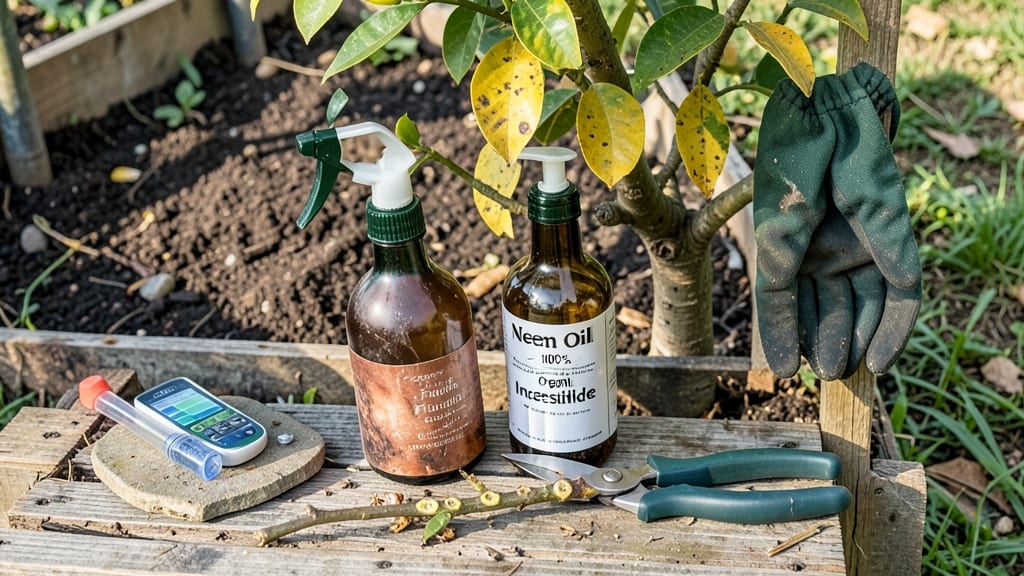
Your lemon tree’s yellowing leaves and sticky sap aren’t just bad luck—they’re signs of a lemon tree disease treatment that’s long overdue. 🌿 Fungal and bacterial blights like citrus greening or root rot can cripple a tree if ignored, but I’ve treated dozens of trees and know the exact steps to turn things around.
The key? Acting fast with the right mix of pruning, sprays, and soil fixes.
Most diseases start with stress—overwatering, poor drainage, or weak soil. I’ve seen root rot spread in just two weeks when a tree sits in soggy soil, while fungal spots appear after a humid summer.
The good news? You can stop the spread with copper sprays, neem oil, and proper airflow. I’ll show you how to diagnose the problem and choose the right treatment without harming your tree.
By the end, your tree will be back to producing bright, fragrant lemons instead of wilting branches. We’ll cover organic fixes first (like hydrogen peroxide soaks) and when to bring in stronger chemicals. The goal? A healthy tree that keeps bearing fruit for years.
Even if you’ve tried treatments before, this method works—I’ve revived trees others gave up on. Let’s get your lemon tree thriving again, step by step.
Root Causes Of Lemon Tree Ailments
Lemon trees, like all citrus varieties, are susceptible to diseases due to a mix of environmental stress, pathogen exposure, and cultural mismanagement. Understanding why these issues arise is the first step to prevention—and treatment.
Below, we break down the primary culprits behind fungal and bacterial infections in lemon trees, with clear explanations of how each factor plays a role.
Lemon trees thrive in specific climate and soil conditions. When these are disrupted, their natural defenses weaken, making them vulnerable to pathogens.
- Excess Moisture & Humidity Fungal diseases like citrus scab (Elsinoë fawcettii) and melanose (Diplodia natalensis) flourish in wet, humid environments.
Overwatering, poor drainage, or heavy rainfall create the perfect breeding ground for spores. Why? Fungi spread via water droplets, and soggy foliage or bark traps moisture, allowing spores to germinate and infect tissues.
- Temperature Stress Extreme heat or cold shocks the tree’s immune system. For example:
- Cold snaps (below 28°F/-2°C) can weaken cell walls, making the tree more susceptible to bacterial canker (Xanthomonas axonopodis).
- Sudden heatwaves increase transpiration, drying out leaves and creating stress cracks where pathogens enter.
- Low Sunlight & Crowding Shady or overcrowded conditions reduce airflow, trapping moisture and encouraging fungal growth. Leaf spots and root rot (Phytophthora spp.) are common in these scenarios because stagnant air prevents evaporation, keeping leaves damp longer.
Diseases don’t just appear—they’re introduced by external sources or spread internally through the tree’s own biology.
- Contaminated Tools & Pruning Using dull, unsterilized pruners can introduce Pseudomonas syringae (a bacterial pathogen) or fungal spores from infected branches to healthy ones. Actionable insight: Always disinfect tools with 70% rubbing alcohol or a 10% bleach solution before and after pruning.
- Infected Plant Material Buying or grafting contaminated nursery stock is a fast track to introducing diseases like citrus greening (HLB) or tristeza virus. Symptoms may not appear immediately, but the pathogen can lie dormant for months.
- Wind & Waterborne Spread Fungal spores (**e.g., Alternaria for leaf blight) hitch rides on wind currents, while bacterial cells (e.g., Xanthomonas for canker) spread via splashing rainwater. This is why overhead irrigation (vs. drip systems) accelerates outbreaks.
How you care for your lemon tree—from soil health to fertilization—directly impacts its disease resistance.
- Improper Watering Practices
- Underwatering stresses the tree, making it less resilient to fungal attacks like citrus gumosis (a reaction to stress-induced bark cracks).
- Excess nitrogen promotes lush, soft growth that’s more susceptible to fungal infections.
- Deficiencies in micronutrients (e.g., zinc, manganese) weaken the tree’s cuticle, making it easier for pathogens to penetrate.
Pests don’t just feed on lemon trees—they create entry points for diseases.
- Scale Insects & Aphids These sap-suckers weaken the tree by removing nutrients and excreting honeydew, a sticky substance that fosters sooty mold (a secondary fungal infection). Their wounds also provide direct access for bacteria like Erwinia (which causes bacterial blight).
- Citrus Leafminers Their larval tunnels in leaves disrupt the cuticle barrier, making the tree vulnerable to fungal infections like anthracnose.
- Root-Knot Nematodes These microscopic worms damage root systems, reducing the tree’s ability to absorb water and nutrients. A weakened root zone is an open invitation for Fusarium or Verticillium wilt fungi.
Even well-intentioned human actions can trigger disease outbreaks.
- Overuse of Chemical Fertilizers High salt or chemical buildup in soil burns roots, making them more permeable to pathogens. Always flush soil with water after heavy fertilization.
- Physical Injury from Pruning or Harvesting Rough pruning or rough handling during fruit picking creates open wounds where bacteria (e.g., Citrus canker*) or fungi can enter. Always use sharp, clean tools and seal cuts with pruning sealant if needed.
- Improper Grafting Techniques Poorly executed grafts can fail to heal, leading to rot or bacterial infections at the junction. Use compatible rootstock, sterile tools, and proper grafting tape to minimize risks.
How to Fix Lemon Tree Ailments
Now that you’ve identified the problem, it’s time to act! Treating lemon tree diseases requires a mix of immediate fixes and long-term prevention. Below, we’ve mapped out practical, step-by-step solutions tailored to the most common fungal and bacterial threats—plus pro tips to keep your tree thriving.
1.
Powdery Mildew: The Fluffy White Threat **🔥 Cause: Humid conditions + poor airflow 🍳 Fix It Fast: - Prune aggressively 🪓—remove infected leaves (sterilize pruners with rubbing alcohol between cuts). - Spray with neem oil (1 tsp per quart of water) or baking soda mix (1 tbsp baking soda + 1 tsp dish soap + 1 gallon water).
Apply every 7–10 days until gone. - Improve airflow by thinning dense branches or spacing trees 6–8 feet apart.
💡 Prevention Tip:
- Water early in the day (before 10 AM) so foliage dries quickly.
- Avoid overhead irrigation—use drip systems or soaker hoses.
2.
Citrus Canker: The Oozing Sores 🔥 Cause: Wet leaves + bacterial spread 🍳 Fix It Fast: - Prune infected branches (cut ½ inch below the canker) and dispose of clippings** (do not compost). - Apply copper fungicide (follow label rates) every 2–3 weeks during wet seasons. - Disinfect tools after each cut with bleach solution (1 part bleach to 10 parts water).
**💡 Prevention Tip:
- Remove fallen leaves promptly—they harbor bacteria.
- Space trees to reduce humidity near the trunk.
3.
Root Rot: The Silent Killer 🔥 Cause: Overwatering + poor drainage 🍳 Fix It Fast: - Stop watering immediately—let soil dry between sessions. - Improve drainage by amending soil with perlite or compost (avoid heavy clay). - Repot if in containers—use a well-draining mix (50% potting soil, 30% perlite, 20% sand).
💡 Prevention Tip:
- Check soil moisture with your finger—water only when top 2 inches are dry.
- Elevate pots to prevent water pooling.
4. Citrus Scab: The Bumpy Invasion
🔥 Cause: Rain + high humidity 🍳 Fix It Fast:
- Remove scabbed leaves (sterilize tools between cuts).
- Apply copper fungicide (e.g., Copper Soap) every 10–14 days during rainy seasons.
- Thin the canopy to enhance airflow.
💡 Prevention Tip:
- Avoid wetting leaves—use mulch to protect soil moisture without splashing.
5.
Bacterial Leaf Spot: The Brown Spots 🔥 Cause: Contaminated water + wounds 🍳 Fix It Fast: - Prune infected leaves** and destroy them (do not leave on ground). - Spray with streptomycin (organic option) or copper bactericide weekly until new growth appears. - Water at the base—never on foliage.
**💡 Prevention Tip:
- Sterilize pruners with 70% alcohol before each use.
- Rotate crops if growing multiple citrus trees in the same spot.
Once you’ve tackled the disease, strengthen your tree’s defenses with these quick wins:
| Action | How to Do It | Frequency |
|---|---|---|
| Fertilize | Use citrus-specific fertilizer (high in nitrogen). | Every 2–3 months (spring–fall). |
| Mulch | Apply 2–3 inches of organic mulch (straw or wood chips). | Once a year (spring). |
| Inspect regularly | Check undersides of leaves weekly for early signs. | Every 7–10 days. |
| Boost immunity | Seaweed extract (spray foliarly) or kelp meal (soil drench). | Monthly during growing season. |
✨ Pro Tip: If your tree is severely infected, consider sacrificing a branch for lab testing (via your local Cooperative Extension Service) to confirm the exact pathogen—some diseases mimic others!
🚨 Emergency Alert: If 50%+ of leaves are dead or oozing lesions appear, act within 48 hours**—delay worsens spread.
Frequently asked questions about lemon tree diseases
How do I tell if my lemon tree has a fungal or bacterial infection?
Check for these key differences: fungal diseases often show up as powdery white patches (like powdery mildew) or dark, velvety spots on leaves. Bacterial infections usually create watery, oozing lesions that turn brown or black. For example, citrus canker produces raised, crusty sores, while root rot causes yellowing leaves and soft, mushy roots.
Can I use household items like vinegar or baking soda to treat my lemon tree?
Yes, but with caution! A baking soda spray (1 tbsp baking soda + 1 tsp dish soap + 1 gallon water) works for fungal issues like powdery mildew. For bacterial problems, neem oil or copper fungicide is more effective. Never use straight vinegar—it can burn the leaves. Always test sprays on a small area first.
How often should I spray my lemon tree for disease prevention?
During growing seasons (spring-fall), spray every 2-4 weeks with neem oil or copper fungicide. Reduce frequency in winter when the tree is dormant. Pro tip: Early morning applications prevent fungal spores from settling overnight. Always spray undersides of leaves where diseases often hide.
What should I do if my lemon tree's roots look rotted?
First, stop watering immediately and let the soil dry out. Trim away any black, mushy roots with sterilized pruners, then repot in fresh, well-draining soil mix (50% potting soil, 30% perlite, 20% sand). Elevate the pot to prevent future water pooling. For severe cases, consider root drench with hydrogen peroxide (3%) to kill remaining pathogens.
Will chemical treatments harm my lemon tree if I use too much?
Yes, overusing chemical fungicides or bactericides can damage your tree's foliage and roots. Always follow label instructions precisely. For organic options, neem oil and copper sprays are safer when used correctly. Remember: It's better to under-treat than over-treat—start with half-strength applications if your tree is sensitive.