
Pruning
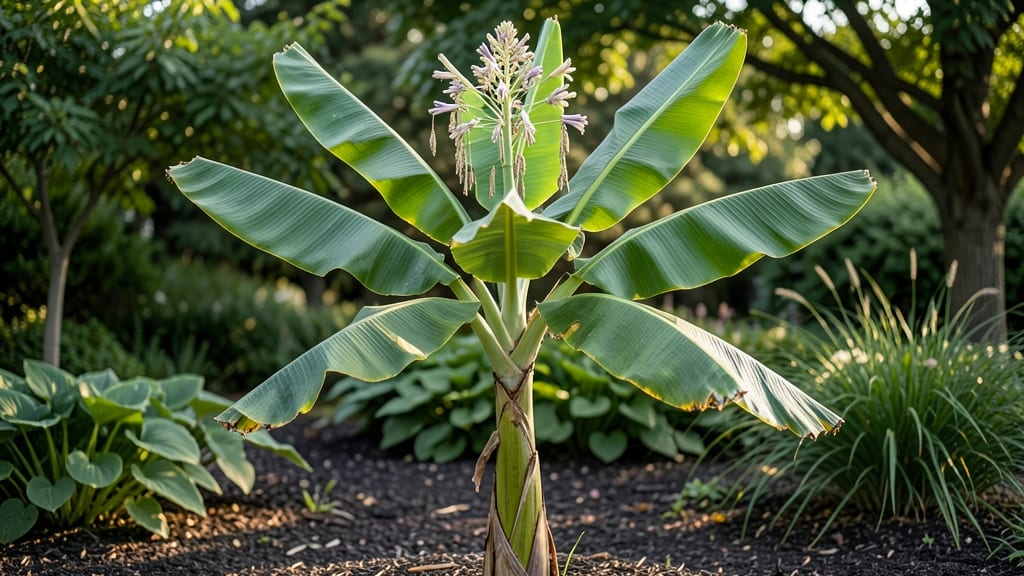
Pruning your Japanese banana tree (Musa basjoo) in late winter unlocks year-round growth—and I’ve learned the hard way that skipping this step means leggy stems and fewer fruit-like bananas. 🌱 The key is timing: wait until after the first hard frost when new growth starts, then cut back one-third of the oldest stems to the ground.
This forces fresh shoots that’ll outperform last year’s tired canes by summer.
You only need pruners, gloves, and a wheelbarrow for cleanup—no fancy tools required. Focus on thick, woody stems (they won’t regrow) while keeping younger, green canes intact.
The tree handles this like a champ, and within 4-6 weeks, you’ll see 3-5 feet of new growth where old stems once stood. It’s like hitting the reset button on your plant’s energy.
What you end up with is a taller, bushier tree that produces more edible (though not true) bananas and thrives even in Zone 5 winters. The pruned stems make great mulch, and the fresh growth is disease-resistant—no more black spots or wilted leaves.
By late spring, your neighbors will be asking how you keep yours looking so neat and productive.
For small gardens, prune aggressively to control size; for landscaping impact, keep a few mature stems for height. Either way, this one trick saves you from replanting every few years. Ready to transform that lanky mess into a showstopper? Let’s get those shears sharp.
📚 In This Guide
- What you need
- Instructions
- Tips and common mistakes
- Wrapping up and next steps
What you need
- ● Pruning shears or loppers: Sharp, bypass-style (not anvil) for clean cuts. Recommended size: 6–8 inches for small branches, 16–24 inches for thicker stems.
- ● Heavy-duty gloves: Cut-resistant (e.g., Filson or Tiger Claws) to protect from thorns and sap.
- ● Disinfectant (70% isopropyl alcohol or bleach solution): 1 part bleach to 9 parts water to sterilize tools between cuts.
- ● Rake or leaf blower: For clearing fallen debris post-pruning.
- ○ Mulch (optional but helpful): 2–3 inches of wood chips or straw to protect roots after pruning.
- ● Pole saw or extension pruners: For reaching high branches without a ladder.
- ● Pruning sealant: (e.g., Tanglefoot Tree Wound Pruning Seal) for large cuts over 2 inches in diameter.
- ● Safety glasses: To shield eyes from sap or debris.
- ○ Marking spray (optional): Fluorescent paint to tag branches for removal if you’re unsure.
Step-by-Step guide to pruning Japanese banana trees in dormancy
Here’s how I transform my Musa basjoo into a strong, productive specimen every winter—no guesswork, just precise cuts.
✂️ Step 1: Time Your Pruning for Maximum Recovery
Prune your Japanese banana tree in late winter or early spring, just before new growth begins—typically when daytime temperatures consistently stay above 40°F. This timing ensures the plant has stored enough energy to regenerate quickly. I wait until the first signs of swelling buds appear along the trunk, which signals the plant is waking up.
If you prune too early, the tree may not recover before new growth starts. If you wait too late, you’ll remove next year’s potential shoots. The ideal window is usually February through March in most climates, but watch your plant’s cues—it’s the best indicator of readiness.
🌿 Step 2: Remove Dead or Damaged Foliage First
Start by inspecting the tree and removing any dead, yellowed, or diseased leaves with clean, sharp pruners. These leaves won’t recover and can harbor pests or diseases that might spread to healthy growth. Cut back to the trunk or the nearest healthy bud, making sure your cuts are at a 45-degree angle to prevent water from pooling and causing rot.
Don’t skip this step—even if the leaves look mostly green, brown edges or mushy stems are red flags. I always work from the bottom up, clearing away debris as I go. This keeps my workspace clean and makes it easier to spot hidden damage on the trunk or lower branches.
🪴 Step 3: Prune Back Overly Long or Weak Pseudostems
The Musa basjoo’s distinctive pseudostems (the thick, trunk-like stems) can become leggy or weak over time. Use your pruners to trim back any pseudostems that are longer than 3 feet or show signs of splitting or thinning. Cut just above a healthy bud or node—this encourages new, stronger growth from that point.
Real talk: If you see pseudostems that are hollow or brittle, remove them entirely. These won’t regenerate well and can drain energy from the rest of the plant. I like to leave 2-3 strong pseudostems per plant to maintain structure while allowing room for new shoots to emerge.
☀️ Step 4: Thin Out Crowded Shoots for Better Airflow
Japanese banana trees often produce multiple shoots from the base. If you have more than 4-5 shoots emerging, thin them out to 2-3 of the strongest, healthiest ones. Use your pruners to cut the extras at the base, making sure to leave a small bump where the shoot was attached—this prevents unsightly stubs.
Thinning isn’t just about aesthetics; it improves airflow and reduces competition for nutrients. I always choose shoots that are upright, thick, and free of blemishes. Weak or crooked shoots will never grow into strong pseudostems, so it’s better to remove them early.
⏰ Step 5: Clean Up and Apply Mulch for Recovery
After pruning, rake up all the debris and dispose of it in the trash—not the compost bin. Diseased or dead plant material can harbor pathogens that might reinfect your tree. Once the area is clear, apply a 2-3 inch layer of mulch around the base of the plant, keeping it 6 inches away from the trunk to prevent rot.
Water the tree deeply after pruning to help it recover, but avoid overwatering—the roots need time to adjust. I usually wait 3-4 days before watering again, unless the soil feels bone-dry. This gives the plant a chance to focus its energy on healing rather than managing excess moisture.
Tips & tricks for perfect Japanese banana tree pruning
Between us, these subtle adjustments make all the difference between a stressed plant and one that thrives for years.
Timing Secret: The 40°F threshold isn't just arbitrary—it's when the plant's metabolic processes kick into gear. If your winter stays below this consistently, delay pruning until you see those swelling buds along the trunk. I've learned this the hard way after pruning too early and watching my tree struggle to recover when new growth started. Look for buds that feel slightly plump when pressed gently—they'll spring back slowly, not immediately.
Cutting Technique: That 45-degree angle in Step 2 isn't just for looks—it's about water management. When you make straight cuts, water pools at the base and creates perfect conditions for rot. The angled cut directs water away from the trunk while still providing a clean surface for the plant to seal. For stubborn stems, I use a small saw for the initial cut, then switch to pruners for the final clean cut at the desired angle.
Visual Cues for Shoots: When thinning in Step 4, focus on three key visual indicators: shoot thickness (should be about pencil-sized), upright growth (no leaning), and color (uniform green without yellowing). The strongest shoots will have a slight sheen to their leaves—almost like a fresh coat of wax. I always keep one extra shoot than I need (so 3 when aiming for 2) in case one fails to thrive after pruning.
Mulch Depth Matters: The 2-3 inch mulch layer in Step 5 serves two critical purposes: temperature regulation and moisture retention. Too thin (under 2 inches) and you won't get proper insulation, while too thick (over 3 inches) can smother the roots. I use shredded hardwood mulch because it breaks down slowly and improves soil structure over time. The key is to mound it slightly higher at the outer edges to create a natural slope that directs water away from the trunk.
Pro Tips for Japanese Banana Tree Musa Basjoo
- Between us, these subtle adjustments make all the difference between a stressed plant and one that thrives for years.
- Timing Secret: The 40°F threshold isn't just arbitrary—it's when the plant's metabolic processes kick into gear.
- Cutting Technique: That 45-degree angle in Step 2 isn't just for looks—it's about water management.
Frequently asked questions
Got questions about pruning your Musa basjoo? You’re not alone!
Here are answers to the most common concerns—from timing to troubleshooting—so you can keep your Japanese banana tree thriving year-round.
When is the best time to prune my Musa basjoo?
The ideal time is late winter or early spring, just before new growth begins (typically February–March in most climates). This aligns with its dormant season and minimizes stress. Avoid pruning in fall or during active growth—it can weaken the plant or invite pests. Pro tip: Wait until temps stay above 40°F (4°C) to prevent cold damage.
How much can I cut back my Musa basjoo?
You can remove up to ⅓ of the plant’s height during dormant-season pruning, but avoid overdoing it. Focus on:
- Dead or damaged leaves (brown, torn, or moldy)
- Crossing or crowded stems (thin out to improve airflow)
- Weak growth (prune at the base with clean cuts)
What should I do if my Musa basjoo hasn’t leafed out after pruning?
If your tree stays bare 4–6 weeks after pruning, check these fixes:
- Location: Ensure it gets 6+ hours of sunlight daily.
- Soil: Test for drainage—Musa basjoo hates soggy roots.
- Fertilizer: Apply a balanced, slow-release fertilizer (10-10-10) in early spring.
- Patience: Some varieties sprout late—wait until May if temps are cool.
Can I prune my Musa basjoo in containers?
Yes! Container-grown trees follow the same pruning rules, but with extra care:
- Size matters: Prune harder if pot-bound (roots circling = stress).
- Root check: Gently loosen roots if pruning heavily to reduce transplant shock.
- Winter prep: Move pots to a protected spot (e.g., against a wall) if temps drop below 20°F (-7°C).
What’s the difference between pruning Musa basjoo and edible banana trees?
Musa basjoo is ornamental—it’s not grown for fruit, so pruning focuses on:
- Shape and health (not harvest timing).
- Removing all dead growth (edible bananas often leave some stems).
- Year-round maintenance (vs. edible bananas, which prune post-harvest).
Wrapping up and next steps
The Japanese banana tree (Musa basjoo) thrives when you embrace dormant-season pruning—it’s your secret weapon for lush, year-round growth! By following the right techniques, you’ll encourage stronger stems, healthier foliage, and even more dramatic blooms. Your garden (and your tree!) will thank you.
Ready to take the next step? Mark your calendar for late fall or early winter—this is when your Musa basjoo needs your attention most. Grab your tools, roll up your sleeves, and give your tree the care it deserves. 🌱 Happy pruning!