
Pests and Diseases
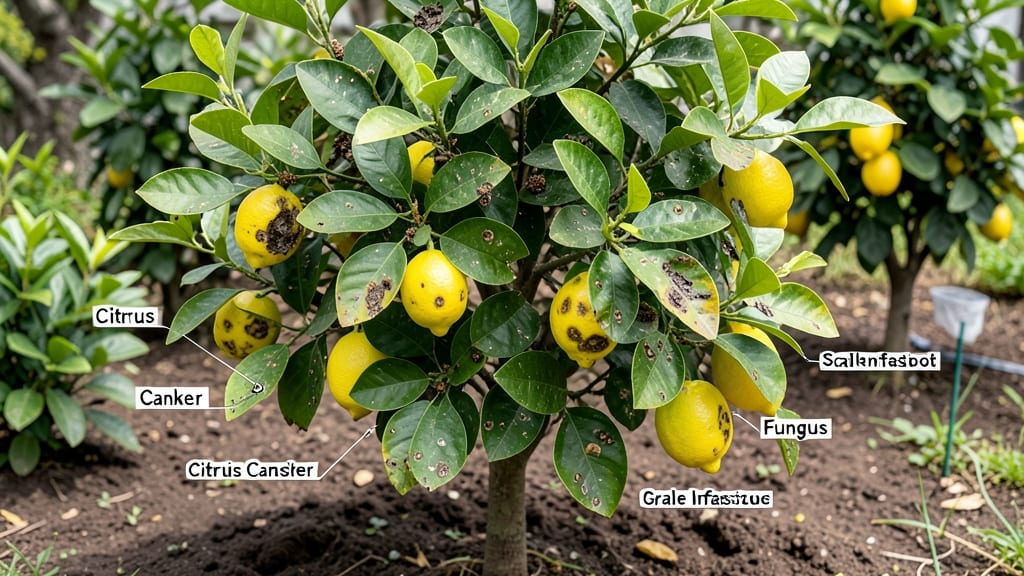
Your lemon tree’s yellowing leaves and sticky branches might signal trouble—but don’t panic. 🌿 The most common lemon tree diseases and pests—like citrus canker, root rot, and scale insects—are often behind the damage, but catching them early means saving your tree with simple organic fixes.
I’ve battled every one of these in my own backyard, and I’ll walk you through the telltale signs, what’s really causing the damage, and how to stop it without harsh chemicals.
The real culprits often hide in plain sight: greasy spots on leaves, tiny white webs under branches, or roots that smell foul when you check. Most problems start with overwatering or poor drainage, but pests like aphids and citrus leaf miners spread fast if you ignore the first signs.
The good news? A mix of neem oil, copper spray, and proper pruning can turn things around before your tree’s health spirals.
By the end of this, you’ll know exactly which leaves to trim, when to apply treatments, and how to keep your tree thriving all season. Think of it as a first-aid kit for your citrus—just like we’d use for any beloved plant in our collection.
The key is acting fast, and I’ll show you how.
Whether you’re dealing with a potted lemon in your kitchen or a full-sized tree in the yard, these fixes work. Let’s get your tree back to its vibrant, productive self—without the guesswork.
Root Causes Behind Damage
Lemon trees, with their glossy leaves and fragrant blooms, can quickly become a gardener’s pride—until something goes wrong. Understanding why diseases and pests strike is the first step to protecting your citrus treasure.
Below, we break down the science behind the most common culprits, from environmental stressors to tiny invaders, so you can take action before your tree’s health spirals.
Lemon trees thrive in specific climates, and when their needs aren’t met, they become vulnerable to pests and diseases. Here’s how environmental factors set the stage for trouble:
- Extreme Temperatures:
Citrus trees prefer mild winters (above 20°F/-7°C) and warm summers (below 95°F/35°C). Freezing temps can weaken roots, making them susceptible to fungal infections like Phytophthora, while scorching heat stresses the tree, reducing its ability to fight off pests like citrus leaf miners.
- Poor Drainage:
Soggy soil is a breeding ground for root rot, caused by fungi like Armillaria or Fusarium.
Lemon trees hate "wet feet"—if water pools around the roots, oxygen can’t reach them, and beneficial microbes that protect the tree diminish. Pro tip: Amend heavy clay soil with perlite or compost to improve aeration.
- Humidity and Rain:
High humidity (above 70%) creates the perfect environment for fungal spores to germinate. Diseases like citrus scab or melanose thrive in damp conditions, while excessive rain can wash away protective waxes on leaves, leaving them prone to bacterial infections like canker.
- Sunburn:
Young lemon trees or those suddenly exposed to intense sunlight can develop sun scorch, turning leaves yellow or brown. Weakened foliage becomes an easy target for pests like aphids, which feed on stressed sap.
Pests don’t just appear out of nowhere—they’re drawn to trees that are already compromised. Here’s how they take advantage:
- Nutrient Deficiencies:
Lemon trees lacking key nutrients (like nitrogen, zinc, or iron) produce weak, yellowing leaves that attract pests.
For example, spider mites thrive on dry, nutrient-poor foliage, while scale insects latch onto trees with high sugar content (often a sign of over-fertilization). Fix it: Test soil annually and fertilize with a balanced citrus blend (e.g., 6-6-6 NPK).
- Physical Damage:
Pruning wounds, hail, or even bird pecks create entry points for pests like citrus psylla or thrips. These insects lay eggs in fresh cuts, and their larvae burrow into the tree, spreading sooty mold (a fungal hitchhiker) as they feed on sap.
- Overcrowded Gardens:
Lemon trees planted too close to other citrus varieties or dense foliage trap moisture, encouraging pests like mealybugs or whiteflies. Poor airflow also slows down the tree’s recovery from minor stress, making it a long-term target.
- Contaminated Tools or Soil:
Fungal spores or pest eggs can hitch a ride on pruners, gloves, or even water from a contaminated hose. If you’ve moved a lemon tree from a nursery or shared tools with an infected plant, you’ve likely introduced pathogens like citrus greening (HLB) or anthracnose.
Many lemon tree diseases don’t act alone—they’re spread by pests, wind, or even human activity. Here’s how they gain a foothold:
| Disease | How It Starts | Trigger Factors |
|---|---|---|
| Citrus Canker (bacterial) | Bacteria (Xanthomonas) enter through leaf wounds or rain splashes. | High humidity, overhead watering, or physical damage (e.g., hail). |
| Melanose (fungal) | Fungal spores (Diplodia) infect young leaves and fruit. | Poor air circulation, wet foliage, or infected nursery stock. |
| Root Rot (fungal) | Fungi (Phytophthora) thrive in waterlogged soil, killing roots. | Compacted soil, overwatering, or poor drainage. |
| Sooty Mold (fungal) | Grows on honeydew (sap excreted by pests like aphids). | Heavy pest infestations or sticky leaf surfaces. |
💡 Key Insight: Most diseases exploit a weakened tree. The goal? Strengthen your lemon tree’s defenses by addressing environmental stressors and keeping pests in check before they become a full-blown crisis.
Quick fixes for lemon tree troubles
Reviving your lemon tree starts with identifying the root cause—whether it’s a sneaky pest or a stubborn disease—and taking action fast. Below, we’ve mapped out practical, organic solutions for the most common issues, plus prevention tips to keep your citrus queen thriving. No harsh chemicals here—just targeted fixes that work!
🔥 Powdery Mildew: The Fluffy White Invader
Fix:
- Prune & Toss: Snip off infected leaves (wear gloves!) and dispose of them in the trash—not the compost.
- Neem Oil Spray: Mix 1 tbsp neem oil + 1 tsp mild soap + 1 quart water.
Spray early morning or evening (avoid direct sun) every 5–7 days until gone. 3. Improve Airflow: Thin out dense foliage and space trees 6–8 feet apart to reduce humidity.
Prevention:
- 💡 Pro Tip: Water at the base (not overhead) and early in the day so leaves dry fast.
- ✨ Bonus: Dust leaves with sulfur powder (1 oz per gallon of water) monthly in humid climates.
🍳 Citrus Canker: The Oozing Sore
Fix:
- Clean the Wound: Scrape off infected bark with a sterilized knife (rubbing alcohol works). Cut 1/4-inch beyond the blackened edges.
- Copper Fungicide: Use Bordeaux mixture (copper sulfate + lime) or a store-bought copper spray (follow label).
Apply every 2 weeks until healed. 3. Sterilize Tools: Wipe pruners with bleach water (1:10 ratio) between cuts.
Prevention:
- 🌡️ Heat Trick: Avoid overhead irrigation—drip systems keep leaves dry.
- 🎯 Isolation: Remove all infected leaves immediately to stop spread.
👨🍳 Root Rot: The Silent Killer
Fix:
- Drainage First: Amend soil with perlite or coarse sand (20% mix) to improve airflow.
- Fungicide Drench: Soak roots in hydrogen peroxide (3%) or mycorrhizal fungi (like Trichoderma) for natural defense.
- Repot if Needed: If soil is waterlogged, transplant into a pot with drainage holes and well-draining mix.
Prevention:
- 🔥 Water Wisdom: Let top 2 inches of soil dry between waterings—overwatering = rot city.
- ⚠️ Warning: Avoid plastic pots—they trap moisture. Terracotta or fabric pots breathe better.
🍎 Scale Insects: The Sticky Sap-Suckers
Fix:
- Blast Them Off: Spray with soapy water (1 tsp mild soap + 1 quart water) to dislodge adults.
- Ladybugs & Lacewings: Release beneficial insects (buy online) or plant dill, fennel, or marigolds nearby to attract them.
- Horticultural Oil: Apply dormant oil (like Neem oil) in late fall/early spring to smother eggs.
Prevention:
- 💡 Early Detection: Check new growth weekly—cottony white puffs = scale eggs.
- 🌿 Companion Plant: Rosemary or lavender repels scale naturally.
🥘 Aphids: The Tiny Green Menaces
Fix:
- Knock ‘Em Down: Blast aphids off with a strong water spray (like a hose nozzle).
- Garlic Spray: Blend 4 garlic cloves + 1 tsp cayenne + 1 quart water.
Strain and spray every 3 days. 3. Parasitic Wasps: Introduce Aphidius colemani (sold online)—they love aphids more than you do.
Prevention:
- 🔥 Yellow Sticky Traps: Hang yellow cards near the tree to catch adults.
- 🌱 Healthy Soil: Compost tea boosts tree resilience—aphids hate strong plants!
🔪 Citrus Leaf Miner: The Hidden Tunnelers
Fix:
- Scrape Larvae: Use a soft brush to remove white trails (frass) and larvae from leaves.
- Kaolin Clay: Dust leaves with Surround WP (kaolin clay)—it smothers eggs and deters adults.
- Pheromone Traps: Buy citrus leaf miner traps (like Isomate-CLM) to disrupt mating.
Prevention:
- ⏰ Timing: Apply neem oil in late summer to break the life cycle before winter.
| Issue | Quick Fix | Prevention |
|---|---|---|
| Yellow Leaves | Check for overwatering or nutrient deficiency (feed with citrus-specific fertilizer). | Test soil pH (ideal: 6.0–7.0). |
| Wilting | Root check: Healthy roots = white; rotten = brown/mushy. | Mulch with wood chips (2–3 inches) to retain moisture. |
| No Fruit | Hand-pollinate with a small brush or plant nearby bees. | Prune in late winter to encourage new growth. |
💡 Final Pro Tip: Inspect weekly—catching problems early means less work and more lemons! And remember: A happy lemon tree = happy you (and happy lemonade). 🍋✨
Frequently asked questions
How do I tell if my lemon tree has a fungal disease vs. pest problem?
Look for oily spots, powdery coatings, or moldy growth—these usually signal fungal diseases like greasy spot or powdery mildew. Pests often leave tiny webs, sticky residue (honeydew), or visible bugs like aphids or scale. Check both leaf surfaces and stems carefully, especially under leaves where pests hide.
Can I use the same treatment for all lemon tree pests?
No—different pests need different approaches. For soft-bodied pests (aphids, mealybugs), use soapy water or neem oil. Scale insects require horticultural oil or beneficial insects, while citrus leaf miners need kaolin clay or pheromone traps. Always identify the pest first before treating.
Why does my lemon tree keep getting the same disease year after year?
This usually means the underlying conditions (like poor drainage or high humidity) aren’t fixed. Fungal diseases thrive in wet, stagnant environments, so improve airflow, adjust watering habits, and sterilize pruning tools. If the problem persists, your tree may need repotting with fresh, well-draining soil.
Is it safe to use chemical pesticides on my lemon tree?
Chemical pesticides can harm beneficial insects and may leave residues on fruit. For edible trees, always opt for organic solutions like neem oil, insecticidal soap, or beneficial nematodes. If you must use chemicals, apply them early in the season and avoid spraying when bees are active.
How often should I inspect my lemon tree for pests and diseases?
Check your tree weekly during growing seasons (spring through fall) and monthly in winter. Focus on new growth, undersides of leaves, and stem crevices—these are prime hiding spots. Early detection makes treatments much easier and more effective.