
How To
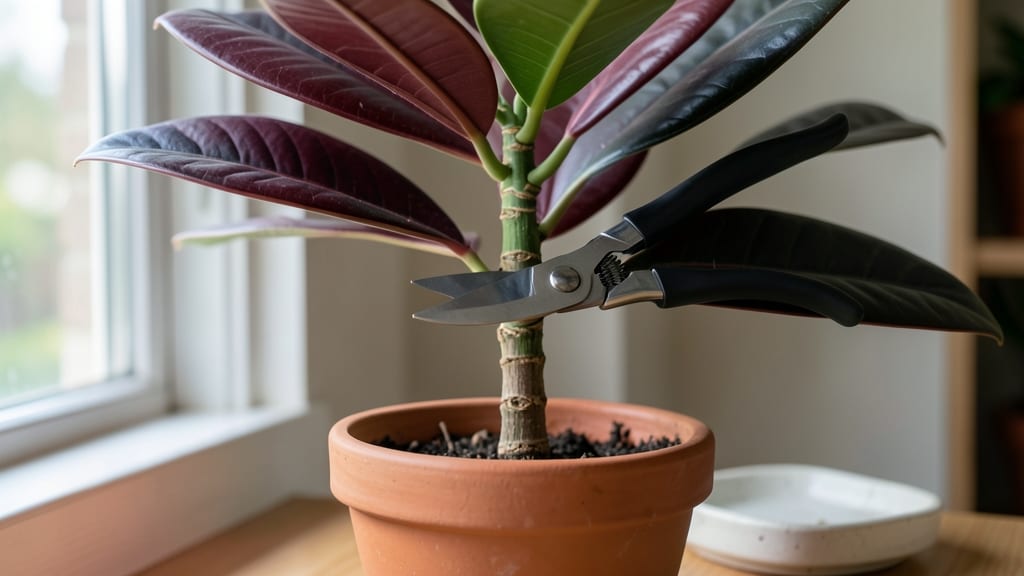
Stopping your rubber tree from growing too tall like a jungle giant starts with a sharp pair of pruners and a little strategy. ✂️ I’ve wrestled with this problem myself—my 6-foot Ficus elastica was blocking every light fixture in my living room until I learned the right pruning tricks.
The key isn’t just cutting branches; it’s timing, technique, and understanding how rubber trees respond to light and nutrients.
With the right approach, you’ll encourage bushier growth instead of a single stem reaching for the ceiling. Prune just above a leaf node in early spring, then adjust light and fertilizer to keep new shoots compact.
Even the milky sap (which stains!) becomes manageable once you know how to handle it. Your tree won’t just stop growing tall—it’ll fill out beautifully, giving you that lush, tropical look without sacrificing ceiling space.
📚 In This Guide
- What you need
- Instructions
- Tips and common mistakes
- Wrapping up and next steps
What you need
- ● Sharp pruning shears or bypass pruners – Choose bypass-style (not anvil) for cleaner cuts. Opt for a 7- to 10-inch blade for thicker branches.
- ● Sterilized rubbing alcohol (70% isopropyl) or hydrogen peroxide (3%) – 1 small bottle (4 oz) to disinfect tools between cuts.
- ● Pruning saw – For branches thicker than ½ inch in diameter. A curved-tooth saw prevents tear-out.
- ● Garden gloves – 1 pair (nitrile or leather) to protect hands from sap and sharp edges.
- ● Sealing wax or pruning paste – Small jar (4 oz) to coat large cuts and prevent disease.
- ● Disposable containers or trash bags – For collecting pruned branches (avoid composting if diseased).
- ● Ladder or step stool – If your tree exceeds 6 feet tall. Ensure it’s stable and non-slip.
- ● Hand pruners with a ratchet mechanism – Reduces hand fatigue for heavy pruning sessions.
- ● Extension pole pruners – For high branches without a ladder (8–12 ft reach).
- ● Root pruning knife – If you plan to root-prune (for container-grown trees).
- ● Plant food or fertilizer – Balanced 10-10-10 or slow-release granules to replenish nutrients post-pruning.
- ● Misting bottle with water – Keeps cuts moist if pruning on a hot, dry day.
Step-by-Step guide to pruning your rubber tree for compact growth
Here’s how I keep my rubber tree lush and manageable—no more towering branches or awkward height.
✂️ Step 1: Identify the Right Time to Prune
Prune your rubber tree in early spring when new growth begins—this is when the plant recovers fastest. Avoid pruning in winter (dormancy slows healing) or summer (heat stress increases). I like to wait until I see fresh, bright green leaves emerging, which means the tree is ready for trimming.
If you’re dealing with leggy growth, you can do a light prune in late spring too, but never cut more than one-third of the foliage at once. Over-pruning stresses the plant and can lead to yellowing leaves or stunted growth. Watch for new buds forming—these are your signal that the tree is actively growing and ready for shaping.
✂️ Step 2: Gather Tools and Prepare the Plant
Use clean, sharp pruning shears (sterilized with rubbing alcohol) to make precise cuts—dull blades tear stems and invite disease. I also keep a small spray bottle of water handy to mist the cuts immediately after pruning, which helps the tree recover faster.
Before you start, inspect the tree for any yellow or brown leaves—these should be removed first, as they’re dead or dying. Healthy leaves are deep green and firm to the touch. If your tree is in a pot, water it 24 hours before pruning so the soil is slightly moist but not soggy. This ensures the plant isn’t stressed during the process.
🌿 Step 3: Prune for Shape and Height Control
To stop the rubber tree from growing too tall, focus on cutting back the topmost leaves just above a leaf node (where leaves grow). This encourages branching lower down. Make your cuts at a 45-degree angle about ¼ inch above the node—this prevents water from pooling on the wound and reduces rot risk.
For height control, trim the tallest stems first, then work your way down. If you want a bushier look, prune the outermost leaves to open up the center. Avoid cutting into the thick, woody trunk—this won’t help with height and can damage the plant. Instead, focus on the flexible, leafy stems. You’ll see new growth sprout from the nodes within 2-4 weeks—that’s your reward for patience!
☀️ Step 4: Post-Pruning Care for Recovery
After pruning, place your rubber tree in bright, indirect light for a few days to reduce stress. Avoid direct sunlight, which can scorch new growth. I also increase humidity around the plant by misting it daily or placing the pot on a tray of pebbles with water (but never let the pot sit in water).
Fertilize lightly 2 weeks after pruning with a balanced liquid fertilizer (like 10-10-10) to support new growth. Over-fertilizing now can burn the roots, so dilute it to half-strength. Keep the soil evenly moist but not waterlogged—rubber trees are drought-tolerant but need consistent moisture after heavy pruning. You’ll know you’re doing it right when you see new leaves unfurling within 3-4 weeks.
⏰ Step 5: Maintain Compact Growth Year-Round
Prune again in late summer (around August) to shape the tree and encourage a second flush of growth before fall. This keeps the height in check naturally. I also rotate the pot a quarter turn every few weeks so the tree grows evenly toward the light—no more lopsided branches!
If your rubber tree starts growing too tall again, don’t wait until it’s out of control. A light trim every 6 months keeps it manageable without shocking the plant. With consistent pruning, your rubber tree will stay 3-5 feet tall (depending on the variety) and thrive as a compact, bushy houseplant. Real talk: It’s easier than you think—just stay consistent!
Tips & tricks for pruning your rubber tree for compact growth
Here's what nobody tells you about keeping your rubber tree from becoming a ceiling decoration.
Timing is Everything: The early spring timing in Step 1 is non-negotiable for rubber trees. I learned this the hard way after pruning in late winter and watching my tree struggle to recover. Look for those fresh, bright green leaves as your cue—this means the tree's actively growing and can handle the stress. If you're in a warm climate, you might need to adjust to late winter instead.
The 45-Degree Angle Secret: When making cuts in Step 3, that 45-degree angle isn't just for looks—it's about preventing water from pooling on the wound. I used to make straight cuts and noticed more browning at the cut sites. The angled cut also creates a larger surface area for faster healing. Remember to cut about ¼ inch above the leaf node to encourage new growth from that spot.
Pruning Shears Maintenance: Your pruning shears are just as important as the cuts you make. After each use, wipe them clean and sterilize with rubbing alcohol—this prevents spreading disease between cuts. I keep mine in a small container with a bit of rubbing alcohol-soaked cotton ball between uses. Sharp blades make cleaner cuts that heal faster, so don't skip this step even if it seems tedious.
Recovery Checklist: After pruning, I always follow this post-care routine: bright indirect light for 3 days, daily misting, and no fertilizer for 2 weeks. The 24-hour watering before pruning in Step 2 is crucial—it ensures the plant isn't dehydrated when you start cutting. Watch for those new leaves unfurling in 3-4 weeks as your reward for proper care.
Pro Tips for Stop Rubber Tree Growing Too Tall
- Here's what nobody tells you about keeping your rubber tree from becoming a ceiling decoration.
- Timing is Everything: The early spring timing in Step 1 is non-negotiable for rubber trees.
- The 45-Degree Angle Secret: When making cuts in Step 3, that 45-degree angle isn't just for looks—it's about preventing water from pooling on the wound.
Frequently asked questions
about controlling your rubber tree’s height—because even the most patient plant parents have questions! Here are answers to the most common ones.How often should I prune my rubber tree to keep it short?
Prune your rubber tree 2-3 times a year—spring, summer, and early fall—to encourage compact growth. Avoid heavy pruning in late fall or winter, as the plant slows down and may struggle to recover. Light trims (like removing a few leaves) can be done anytime, but major cuts should align with active growth periods. Pro tip: Prune just above a leaf node to promote bushier regrowth.
Will pruning stunt my rubber tree permanently?
No! Pruning doesn’t permanently stunt your rubber tree—it simply controls its height by redirecting energy to lateral growth. If you stop pruning, the tree will eventually grow taller again. Think of it like a haircut: regular trims keep it manageable without altering its natural potential. Fun fact: Rubber trees are resilient and bounce back beautifully after pruning!
Can I use regular scissors or do I need special pruning tools?
For small branches or leaves, clean bypass pruners or sharp scissors work fine. For thicker stems (over ½ inch), use hand pruners or a pruning saw to avoid tearing. Always sterilize tools with rubbing alcohol to prevent disease. Never use dull tools—they crush stems instead of cleanly cutting, which stresses the plant. Warning: Avoid hedge trimmers; they can damage the tree’s delicate bark.
What if my rubber tree keeps growing tall even after pruning?
If your tree ignores your pruning efforts, it might be due to over-fertilization (too much nitrogen = rapid vertical growth) or lack of light (stretching for sunlight). Try these fixes:
- Switch to a balanced fertilizer (e.g., 10-10-10) and reduce frequency to every 2-3 months.
- Move the tree to bright, indirect light (e.g., near a window but not in direct sun).
- Prune more aggressively in spring—cut back ⅓ of the new growth to reset its trajectory.
Patience is key—some trees take time to adjust! Check: Yellow leaves? You might be overwatering too.
Can I prune a rubber tree in a small apartment without it getting leggy?
Rubber trees thrive in apartments with consistent care. To prevent legginess:
- Rotate the pot quarter-turn weekly so all sides get light.
- Use a grow light (12-14 hours/day) if natural light is limited.
- Prune regularly (every 6-8 weeks) to encourage bushiness.
- Consider a dwarf variety like Ficus elastica ‘Robusta Compacta’ if space is extra tight.
With these tweaks, your rubber tree will stay lush and manageable—no jungle required!
Wrapping up and next steps
Stopping your rubber tree from towering over your space is totally doable with the right techniques!
By pruning regularly, training its growth direction, and providing proper care, you’ll encourage a lush, manageable plant that fits your home beautifully. 🌿 Don’t let fear of pruning hold you back—start small, stay consistent, and watch your rubber tree thrive in a compact, stylish form.
Ready to take action? Grab your pruners and give your tree its first trim today! Your future compact, happy plant is waiting.