
Propagation
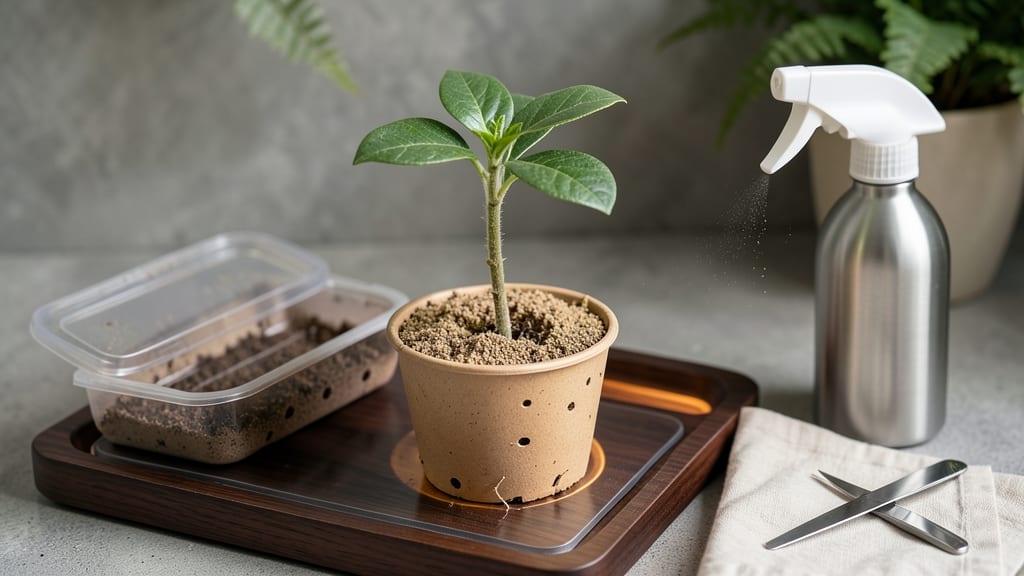
Starting a persimmon tree from seed unlocks a garden legacy that could fruit for centuries. 🌱 The key is mimicking nature's timing—cold stratification breaks seed dormancy, and with just a few weeks of patience, you'll watch tiny roots emerge that will one day support a tree bearing sweet, orange harvests.
Most people skip this step and wonder why their seeds never sprout. I learned the hard way—my first batch sat in warm soil for months before I realized they needed a winter chill.
After 8 weeks of cold treatment (or a fridge stint), germination rates jump from near-zero to nearly 100%. You'll need well-draining soil, a humidity dome, and a sunny windowsill or grow light.
By month 3, you'll have sturdy 6-inch saplings ready for transplanting. The real magic happens years later when those first flowers appear—persimmons take 5-7 years to fruit, but the wait rewards you with trees that outlive generations.
The orange glow of ripe fruit in autumn makes every cold winter worth it.
Works for both Asian and American persimmon varieties, though cold requirements vary slightly. If you live in Zone 7 or warmer, outdoor stratification in a protected spot works just as well as the fridge method. Here's how to do it right the first time.
Germination Challenges Explained
Understanding why persimmon seeds struggle to sprout is half the battle in successfully growing your tree from seed. These challenges often stem from natural biological quirks of the fruit and its environment. Let’s break down the key reasons—so you can troubleshoot like a pro.
Persimmon seeds are naturally dormant, meaning they won’t sprout right away even when moist and warm. This dormancy is a survival trick—wild persimmons rely on cold winters to break dormancy before spring germination.
Without this "winter signal," seeds may: - Stay hard and unyielding (a sign of physical dormancy). - Sprout weakly or not at all (even after weeks in warm soil).
Why it happens:
- The seed coat is impermeable to water until exposed to cold, which softens it.
- Internal chemical inhibitors (like abscisic acid) block germination until cold temperatures trigger hormonal shifts.
Actionable fix: Mimic winter with cold stratification (6–8 weeks in the fridge) before planting. This mimics nature’s timing and primes seeds for success.
If you skip stratification and plant seeds in warm soil too early, they may:
- Sprout weakly or rot (from fungal attacks in damp, warm conditions).
- Grow leggy and weak (stretching toward light but lacking energy reserves).
Why it happens:
- Warmth speeds up metabolic activity in seeds before they’re ready, depleting stored energy.
- Fungi and bacteria thrive in moist, warm soil, outcompeting the seedling.
Actionable fix: Wait until after stratification (when seeds are soft to the touch) before planting in lukewarm (60–70°F) soil. Avoid direct sunlight until true leaves appear.
Persimmon seeds rot faster than they sprout if overwatered or planted in heavy, compacted soil. Signs of trouble:
- Seeds turn mushy (anaerobic conditions kill embryos).
- Fungus grows on seed surfaces (white fuzz = bad news).
Why it happens:
- Persimmon seeds require oxygen to germinate—waterlogged soil cuts off airflow.
- Clay or poorly amended soil traps moisture, creating a suffocating environment.
Actionable fix:
- Use a well-draining mix (50% potting soil + 50% perlite/sand).
- Water lightly (keep soil damp, not soggy) and use shallow trays with drainage holes.
Persimmon seeds lose viability quickly—especially if stored improperly. Older seeds may:
- Fail to sprout entirely (dead embryos).
- Germinate erratically (some seeds sprout, others don’t).
Why it happens:
- Seeds contain high oil content, which oxidizes over time (like rancid nuts).
- Humidity and heat accelerate deterioration (store seeds in a cool, dry place).
Actionable fix:
- Use fresh seeds (from ripe fruit, planted within 1–2 months).
- If storing, keep them in a paper towel-lined bag in the fridge (not the freezer).
Not every persimmon seed is a winner. Some varieties (like astringent types) have seeds that:
- Germinate slowly (taking 2–3 months vs. 4–6 weeks).
- Produce weaker seedlings (if the parent tree was stressed).
Why it happens:
- Hybridization can lead to unpredictable traits.
- Pollination issues (if the fruit wasn’t properly fertilized) may result in weak seeds.
Actionable fix:
- Choose ripe, plump seeds from healthy fruit.
- If possible, select seeds from non-hybrid varieties (like native American persimmons).
Seeds need consistent warmth (60–75°F) to germinate, but extremes can halt progress:
- Below 50°F: Germination stops (seeds go dormant again).
- Above 85°F: Seeds overheat, leading to weak or no sprouts.
Why it happens:
- Persimmon seeds are sensitive to temperature shifts (like a Goldilocks zone).
- Nighttime cooling can trick seeds into thinking winter isn’t over.
Actionable fix:
- Use a seedling heat mat (70°F) for consistent warmth.
- Keep trays in a stable indoor location (avoid windowsills with drafts).
Pro Tip: 💡 If your seeds still refuse to sprout after stratification, try scarification—lightly sanding the seed coat to mimic natural wear and tear.
Troubleshooting Your Persimmon Seedlings
Growing a persimmon tree from seed can be a rewarding but finicky process—especially for beginners. If your seeds aren’t germinating, seedlings aren’t thriving, or growth stalls, don’t panic!
Most issues have simple fixes. Below, we’ve mapped common problems to practical solutions, including prevention tips to keep your persimmon saplings on track.
Cause: Improper stratification, stale seeds, or incorrect moisture levels.
How to Fix It:
- Double-Check Stratification 🔥
- If you skipped cold stratification (or did it wrong), place seeds in a damp paper towel inside a sealed bag, then refrigerate for 4–6 weeks. Test for moisture by squeezing—it should feel damp, not soggy.
- Pro tip: Some gardeners use a seedling heat mat (55–65°F) after stratification to speed up germination.
- Freshness Matters ⏳
- Persimmon seeds lose viability quickly. If your seeds are over a year old, try soaking them in warm water for 24 hours before replanting. Discard any that float (they’re dead).
- Optimal Planting Conditions 🌡️ - Use a well-draining seed-starting mix (pearlite + coconut coir works well). Plant seeds ½-inch deep in small pots, then mist lightly to keep soil moist (not waterlogged). - Place pots in a warm, bright spot (70–75°F) with indirect sunlight.
A sunny windowsill or grow light setup helps.
Prevention Tips: ✔ Store seeds in a cool, dry place (like the fridge) if not planting immediately. ✔ Label seeds with the date of stratification to track freshness.
Cause: Overcrowding, poor light, or nutrient deficiency.
How to Fix It:
- Thin Out Seedlings 🌿
- If multiple sprouts emerge in one pot, snip the weakest with clean scissors, leaving the healthiest 1–2 per container. Overcrowding steals nutrients and light.
- Boost Light Exposure ☀️
- Leggy seedlings mean they’re stretching for light. Move them within 6 inches of a grow light (12–16 hours/day) or to a south-facing window. Rotate pots daily for even growth.
- Fertilize Gently 🌱
- Once seedlings have 2–3 true leaves, use a balanced, diluted fertilizer (like 5-5-5 at half strength). Over-fertilizing burns young roots!
Prevention Tips: ✔ Use individual pots from the start to avoid transplant shock later. ✔ Avoid cold drafts—persimmons hate temperature swings.
Cause: Overwatering, poor airflow, or contaminated soil.
How to Fix It:
- Adjust Watering Habits 💧
- Let the top ½-inch of soil dry between waterings. Use a spray bottle for misting instead of drowning the pot. Fungus thrives in soggy conditions!
- Improve Airflow 🌬️
- Space pots 2 inches apart and use a small fan on low setting (24/7) to circulate air. This prevents mold buildup.
- Natural Fungicide Spray 🍄
- Mix 1 tsp hydrogen peroxide + 1 cup water and spray lightly on soil and leaves. Repeat weekly if needed.
Prevention Tips: ✔ Sterilize pots with bleach solution (1 part bleach to 9 parts water) before reuse. ✔ Use sterilized potting mix (or bake homemade soil at 200°F for 30 mins to kill pathogens).
Cause: Lack of nutrients, root bound, or transplant shock.
How to Fix It:
- Repot into Larger Containers 🏺
- If roots circle the pot, upgrade to a 5–7 inch pot with fresh, nutrient-rich soil. Gently loosen roots before transplanting.
- Feed with Organic Matter 🍂
- Mix in compost or worm castings into the soil. Avoid synthetic fertilizers—they can burn tender roots.
- Acclimate Gradually to Outdoors 🌿
- If moving seedlings outside, harden them off over 1–2 weeks: Start with 1 hour of sunlight/day, increasing daily.
Prevention Tips: ✔ Use slow-release fertilizer (like osmacote) at planting time. ✔ Keep seedlings in consistent temperatures (60–75°F).
Cause: Weak seedlings attract insects, especially in dry conditions.
How to Fix It:
- Blast Off Pests 💦
- Spray seedlings with soapy water (1 tsp mild dish soap + 1 quart water) to dislodge aphids. Repeat every 3 days.
- Introduce Beneficial Insects 🐞
- Release ladybugs or lacewings near the plants—they eat pests naturally.
- Neem Oil Treatment 🌿
- Mix 1 tsp neem oil + 1 tsp mild soap + 1 quart water, then spray (avoid direct sun). Reapply weekly.
Prevention Tips: ✔ Inspect new plants before bringing them indoors. ✔ Keep humidity moderate (pests love dry air).
If your persimmon seeds still refuse to cooperate, try grafting a scion onto a rootstock (like a Japanese persimmon) later—many growers use this method for reliable fruit production. But with the right care, your homegrown persimmon tree will thrive!
Remember: Persimmon seeds are temperamental, but persistence pays off. Track your progress in a garden journal—noting watering, light, and growth patterns helps future attempts! 🌱✨
Frequently asked questions
How long does cold stratification take for persimmon seeds?
Cold stratification typically requires 6-8 weeks in the refrigerator. Place seeds in a damp paper towel inside a sealed bag and store them at 34-40°F. This mimics winter conditions and helps break seed dormancy for successful germination.
Can I use persimmon seeds from any variety?
Most persimmon seeds will germinate, but fruit quality varies by variety. American persimmons (like 'Meader') are easier to grow from seed and produce reliable fruit, while some Asian varieties may take longer to fruit or have inconsistent taste. Choose seeds from healthy, ripe fruit for best results.
What's the best soil mix for germinating persimmon seeds?
Use a light, well-draining mix like 50% potting soil and 50% perlite or sand. This prevents rot while allowing roots to establish. Keep the soil consistently moist (not soggy) during germination, and avoid compacted soils that can suffocate young seedlings.
How do I know when my persimmon seedlings are ready to transplant?
Seedlings are ready when they develop 2-3 true leaves and measure about 4-6 inches tall. At this stage, they've built enough root strength to handle transplanting. Harden them off by gradually exposing them to outdoor conditions over 1-2 weeks before permanent planting.
Why are my persimmon seeds taking so long to sprout?
Persimmon seeds often have slow germination (4-8 weeks) due to natural dormancy. If they're still hard after stratification, try scarification (lightly sanding the seed coat) to help water penetrate. Keep soil warm (70-75°F) and maintain consistent moisture during this waiting period.