
Pruning
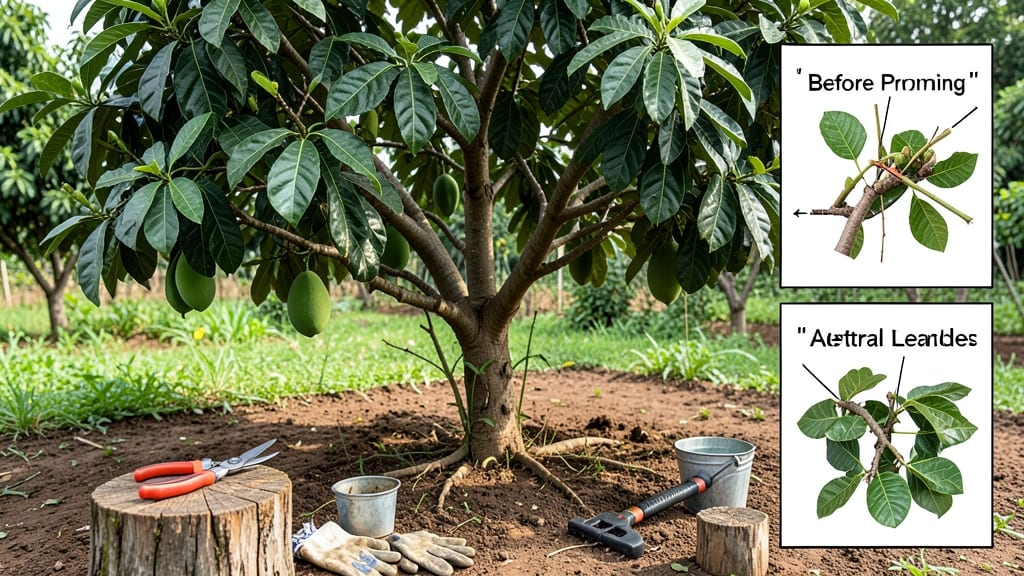
Pruning a mango tree for fruit isn’t just trimming—it’s sculpting abundance. 🌿 I’ve watched my backyard mango go from scraggly to loaded with fruit just by mastering these four cuts, and the best part?
You can start anytime the weather cooperates. The right pruning turns a tree into a fruit factory, not just a pretty shade provider.
Timing matters most: prune in late winter or early spring when the tree’s dormant, or right after harvest to encourage new growth. You’ll need clean, sharp pruners, a ladder (for higher branches), and a bucket to collect the clippings—though don’t toss them!
Those branches can root into new trees. The goal is sunlight and air reaching every branch, so thin out crowded spots and remove dead wood first.
You’ll end up with a tree that produces larger, sweeter fruit and fewer empty branches. The first year after pruning, expect a slight dip in yield as the tree recovers—but by year two, you’ll wonder why you waited.
The canopy opens up, pests have fewer hiding spots, and the fruit ripens more evenly. It’s like giving your mango tree a spa day, and the harvest is the reward.
Works for container-grown mangos too—just scale down the cuts. The key is patience: a well-pruned tree can keep bearing for decades. Here’s how to do it right the first time.
📚 In This Guide
- What you need
- Instructions
- Tips and common mistakes
- Wrapping up and next steps
What you need
- ● Pruning shears (bypass or anvil type) – Sharp, clean blades (2.5"–3.5" for small branches)
- ● Loppers (for thicker branches) – 8"–12" cutting capacity, bypass-style for precision
- ● Pruning saw (for large branches) – Curved blade, 10"–14" length
- ● Gloves (cut-resistant) – Heavy-duty leather or synthetic blend (e.g., Mechanix)
- ● Ladder or step stool – Sturdy, extendable (12–16 ft for mature trees)
- ● Disinfectant (70% isopropyl alcohol or bleach solution) – 1 part bleach to 9 parts water (for sterilizing tools)
- ○ Rubbing alcohol or hand sanitizer – For cleaning wounds (optional but helpful)
- ○ Pruning sealant (optional) – For cuts larger than 0.5" diameter (e.g., Tanglefoot Tree Wound Pruning Seal)
- ● Compost or mulch – 2–3 inches of organic matter (for tree base after pruning)
- ● Plastic bags or container – For collecting pruned branches (if composting or disposing)
- ○ Sharpie or permanent marker – For labeling branches if training young trees (optional)
- ● Weather check – Prune on a dry, calm day (avoid rain for 24 hours post-pruning)
- ● Safety glasses – Protects eyes from debris
- ● Long sleeves/pants – Covers arms and legs (thorns are sharp!)
- ● First-aid kit – For minor cuts or scratches
- ● Water and snacks – Hydration is key, especially in hot climates!
Step-by-step guide to pruning a mango tree for maximum fruit
Here's the method I've used to transform wild, unproductive mango trees into fruit-bearing powerhouses.
✂️ Step 1: Remove Dead or Diseased Wood First
Start by inspecting the tree for any branches that are completely brown, brittle, or oozing sap—these are dead or diseased and must go. Use sharp, clean pruning shears to cut just outside the branch collar (the swollen area where the branch meets the trunk). This ensures the tree can heal properly without leaving a stub that invites rot.
I always prune these first because they're the easiest to spot and remove. You'll know you've done it right when the cuts are clean and the tree looks like it's shedding its winter coat. If you see any fungal growth (white, black, or pinkish mold), sterilize your tools with rubbing alcohol between cuts to prevent spreading.
🌿 Step 2: Thin Out Overcrowded Branches
Next, focus on the tree's structure. Look for branches that are growing inward or rubbing against each other—they'll compete for sunlight and nutrients, reducing fruit production. Remove about 20-25% of the tree's total branches, prioritizing those that cross or grow straight up (vertical branches rarely bear fruit).
Make your cuts at a 45-degree angle just above an outward-facing bud. This encourages new growth in the right direction. I like to step back every few cuts to visualize the tree's shape—you want an open canopy that lets sunlight reach the center. If you're unsure which branch to remove, ask yourself: "Does this branch contribute to fruit production or just take up space?"
☀️ Step 3: Prune to Encourage Sunlight Penetration
Mango trees need full sun to set fruit, so your goal is to create an open, airy structure. Focus on the inner branches—these often grow weakly because they're shaded. Remove any branches that block sunlight from reaching the center of the tree, even if they look healthy. You'll know you're doing it right when you can see light filtering through the canopy.
For larger branches, use a pruning saw and make the cut just outside the branch collar. For smaller branches, your shears will work fine. After pruning, you might see some leaf loss, but don't worry—this is normal. The tree will redirect its energy to the remaining branches, which will produce more fruit next season.
⏰ Step 4: Shape for Future Growth and Fruit Bearing
Now it's time to shape the tree for optimal fruit production. Mango trees naturally grow with a central leader (main upward trunk), but you'll want to encourage 3-4 strong scaffold branches (main horizontal branches) that spread out from the trunk. These will bear the majority of your fruit, so give them room to grow.
Prune any branches that are growing too close together or competing for the same space. You can also lightly trim the tips of the scaffold branches to encourage them to branch out further. This is where the tree's future fruit will develop, so take your time. A well-shaped mango tree will have a rounded, vase-like form with plenty of space between branches.
🌱 Step 5: Clean Up and Monitor Recovery
After pruning, rake up and dispose of all the debris—this prevents pests and diseases from taking hold. Apply a layer of mulch around the base of the tree (but not touching the trunk) to retain moisture and keep weeds at bay. Water the tree deeply to help it recover from the stress of pruning.
Over the next few weeks, watch for new growth at the pruning cuts. This is a good sign that the tree is healing. Avoid fertilizing immediately after pruning—wait until new growth appears, then feed with a balanced fertilizer to support recovery. You'll know you've done it right when the tree starts producing more flowers and fruit in the following season.
Tips & tricks for perfect mango tree pruning
These simple strategies will help you transform your mango tree into a fruit-bearing machine without the guesswork.
Tool Prep is Critical: Always sterilize your pruning shears between cuts, especially when dealing with diseased wood in Step 1. I keep a small bottle of rubbing alcohol in my tool belt—just wipe down blades after every cut to prevent spreading fungal spores. Sharp tools also make cleaner cuts that heal faster, so take 5 minutes to sharpen your shears before starting. This small step prevents jagged edges that invite infections.
Visualize the Final Shape: Before making any cuts in Step 2, step back and imagine your tree's ideal structure. I sketch a rough outline on paper first—picture an open vase shape with sunlight reaching the center. This helps me identify which branches to remove immediately. Focus on creating space between branches rather than just reducing overall size. The goal is to maximize airflow and sunlight penetration, not just make the tree look smaller.
Timing Matters for Recovery: The best time to prune is during the tree's dormant season, typically late winter or early spring before new growth begins. This gives your mango tree several months to recover before the next fruiting season. If you must prune outside this window, avoid heavy pruning during flowering or fruiting—this stresses the tree when it's already working hard to produce fruit. Even light pruning can be done at other times, but save major structural work for the dormant period.
Monitor for New Growth: After completing Step 5, watch for fresh green shoots emerging from the pruning cuts within 2-3 weeks. These indicate successful healing and energy redistribution. I make a note of where new growth appears—this helps me identify which branches are thriving and which areas might need additional attention next year. If you don't see new growth after 4-6 weeks, your pruning might have been too aggressive or the tree needs additional nutrients.
Pro Tips for Prune A Mango Tree For Fruit
- These simple strategies will help you transform your mango tree into a fruit-bearing machine without the guesswork.
- Tool Prep is Critical: Always sterilize your pruning shears between cuts, especially when dealing with diseased wood in Step 1.
- Visualize the Final Shape: Before making any cuts in Step 2, step back and imagine your tree's ideal structure.
Frequently asked questions
Got questions about pruning your mango tree for a bountiful harvest?
Here are answers to the most common ones—so you can prune like a pro and enjoy those sweet, juicy mangoes year after year!
When is the best time to prune a mango tree for fruit?
The ideal time is late winter or early spring (just before new growth starts). Avoid pruning during flowering or fruiting seasons—this can stress the tree and reduce yield. For tropical climates, prune after the rainy season when the tree is dormant.
How much can I prune a mango tree without harming it?
Mango trees are resilient, but don’t overdo it! Remove no more than 25-30% of the canopy in one session. Focus on dead, diseased, or crossing branches first. Over-pruning can weaken the tree and delay fruiting.
Will pruning my mango tree increase fruit size?
Yes! Pruning improves air circulation and sunlight penetration, which helps larger, healthier fruit develop. Thin out dense branches and remove water sprouts (fast-growing, weak shoots) to redirect energy to existing fruit.
What should I do if my mango tree isn’t fruiting after pruning?
Check these first:
- Age: Young trees (under 3-5 years) may need more time to mature.
- Nutrients: Ensure it gets enough potassium and phosphorus (key for fruiting).
- Pollination: Mangoes need cross-pollination—plant a second variety nearby if possible.
- Climate: Cold snaps or drought can stress the tree. Mulch and water consistently.
Can I prune a mango tree in hot or rainy weather?
Avoid pruning during extreme heat or heavy rain, as it stresses the tree and slows healing. Opt for cool, dry mornings (60–75°F) to minimize shock. If you must prune in humidity, sterilize tools and prune early to allow wounds to dry.
Wrapping up and next steps
Pruning your mango tree the right way is like giving it a well-deserved spa day—it boosts fruit production, improves airflow, and keeps your tree healthy and happy! 🌿 With the four key cuts (structural shaping, thinning branches, heading back, and removing dead wood), you’ll be well on your way to a year-round harvest of juicy, sweet mangoes.
Now that you’re armed with the know-how, grab those pruners and get started! Monitor your tree’s progress, adjust as needed, and soon you’ll be enjoying the rewards of your hard work—one delicious mango at a time. 🍈✨