
Planting
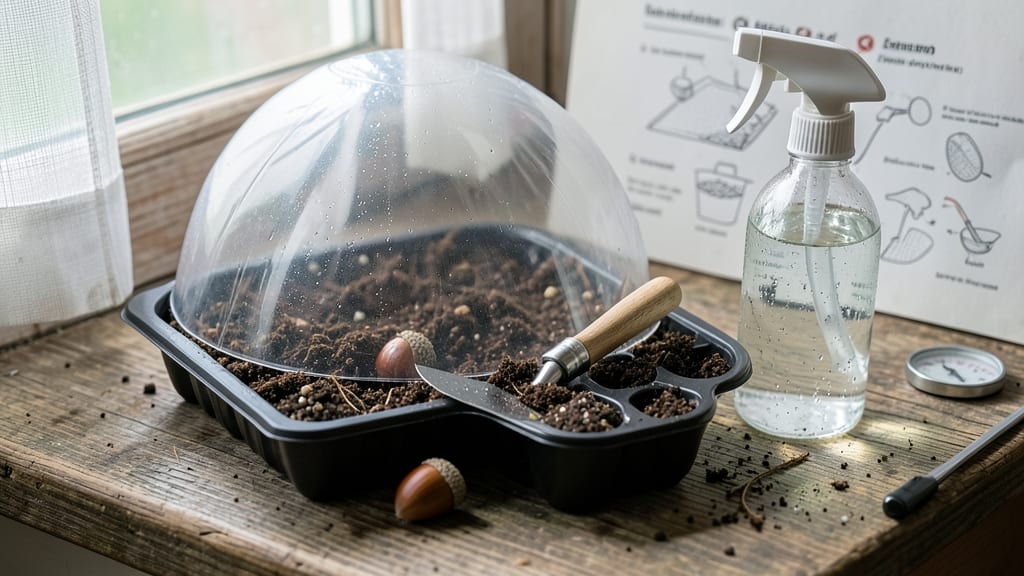
Planting oak tree seeds starts with that first cold-stratified sprout—a tiny green promise that will one day shade your yard for centuries. 🌱 I’ve watched acorns turn into towering oaks, and the secret isn’t just patience; it’s knowing exactly when to plant those sprouted seeds so they don’t rot in the soil.
Most gardeners fail at this step, but I’ll show you the exact timing, depth, and soil mix that gives your oak the best shot at survival.
The key is 8 weeks of cold stratification—mimicking winter’s chill to break dormancy—before planting in well-draining soil. You’ll need a sunny spot with room to grow (oaks hate competition), a trowel, and a little patience—these seeds take 2-3 years just to sprout above ground.
White oaks and red oaks have slightly different needs, so I’ll cover how to tell them apart and adjust your approach.
By the time your first true leaves appear, you’ll be hooking up a watering system to keep the soil moist but not soggy. Oak seedlings are tough once established, but they’re finicky as babies—too much water, and they rot; too little, and they dry out.
The payoff? A tree that’ll outlive you, your kids, and maybe even their kids, standing strong against storms and time.
Works for backyard plantings, parks, or even container-grown oaks (yes, they can start in pots!). Here’s how to get those sprouts in the ground without losing them to mold or drought.
📚 In This Guide
- What you need
- Instructions
- Tips and common mistakes
- Wrapping up and next steps
What you need
- ● Fresh oak acorns: Collect 10–20 healthy, plump acorns (avoid wormy or cracked ones). White oaks (Quercus alba) and red oaks (Quercus rubra) are great choices!
- ● Cold-stratification supplies: 1–2 paper towels or peat moss (moistened)
- ● 1 ziplock bag (resealable)
- ● 1 refrigerator (or cool, dark space at 33–41°F (1–5°C))
- ● Planting containers: 1–2 small pots (3–4 inches deep) or a seed tray with drainage holes
- ● Potting mix: Well-draining blend (e.g., 50% peat/50% perlite or coco coir)
- ● Basic tools: 1 spray bottle (for gentle watering)
- ● 1 small hand shovel or spoon (for transplanting)
- ● 1 label marker (to track planting dates)
- ● 1 humidity dome or plastic wrap (to retain moisture while sprouting)
- ● 1 grow light (if natural light is limited)
- ● 1 thermometer (to monitor cold-stratification temps)
- ● Fungicide (like hydrogen peroxide, 3% solution) to prevent mold
Step-by-step instructions for planting oak tree seeds
Here’s my foolproof method for turning tiny acorns into sturdy saplings ready for the ground.
🌱 Step 1: Collect and Prepare the Acorns
Gather fresh acorns in fall—look for plump, intact ones without cracks or holes. Store them in a breathable container (like a paper bag) in a cool, dry place until you’re ready to start. The key here is timing: acorns need 8-12 weeks of cold stratification to break dormancy. I like to start in December so they’re ready by spring.
Remove any remaining caps or debris from the acorns. Soak them in warm water for 24 hours to soften the outer shell slightly—this helps speed up germination later. Drain well and let them air-dry completely before moving to the next step. You’ll know they’re ready when the shells feel slightly lighter and the water no longer pools on top.
❄️ Step 2: Cold-Stratify for 8-12 Weeks
Fill a sealed plastic bag with damp (not soggy) peat moss or coconut coir. Place the acorns inside, spacing them about 1 inch apart so they don’t touch. Seal the bag tightly and poke a few small holes in the top for airflow. This mimics winter’s natural chilling process.
Store the bag in your refrigerator’s crisper drawer (or a similarly cool, dark spot at 35-45°F). Check them weekly—if the moss feels dry, spritz lightly with water. After 8-12 weeks, the acorns should start sprouting tiny white roots. This is your signal that dormancy is broken, and they’re ready for planting.
🪴 Step 3: Plant in Containers for Germination
Fill small pots (about 3-4 inches deep) with a mix of 50% potting soil and 50% perlite or sand for drainage. Plant each acorn 1 inch deep, with the pointed end facing upward. Gently firm the soil around it—you want it snug but not compacted. Label each pot with the date to track progress.
Place the pots in a warm, bright spot (like a sunny windowsill) where temps stay between 65-75°F. Keep the soil lightly moist—never soggy. Germination can take 2-4 weeks, so patience is key. You’ll see the first true leaves emerge as small, rounded cotyledons. This is when the real fun begins!
☀️ Step 4: Transplant Saplings Outdoors
Once the seedlings have 3-4 sets of true leaves and are about 6 inches tall, they’re ready for their first outdoor move. Choose a spot with partial shade (young oaks hate direct sun). Dig a hole twice as wide as the root ball but only as deep as the pot.
Gently remove the seedling from its pot, tease the roots slightly to encourage spreading, and place it in the hole. Backfill with soil, tamp lightly, and water deeply. Mulch around the base with 2-3 inches of organic mulch to retain moisture and protect roots. Over the next year, gradually move the sapling to sunnier spots as it grows stronger.
⏰ Step 5: Care for Young Oak Trees
Water deeply once a week during the first growing season, letting the soil dry slightly between waterings. Avoid overhead watering to prevent fungal diseases. Fertilize lightly in spring with a balanced, slow-release fertilizer (like 10-10-10) to support steady growth.
Watch for pests like acorn weevils or deer browsing—young oaks are vulnerable. If you see chewed leaves, wrap the trunk with hardware cloth or use organic pest deterrents. In 3-5 years, your sapling will be ready to transplant to its permanent home in the landscape. That’s the beauty of starting small!
Tips & tricks for planting oak tree seeds
These simple tricks will help you turn acorns into thriving saplings without the guesswork.
Acorn Selection: Look for acorns that are plump and free of cracks or holes—these are your best bets for successful germination. I always tap two acorns together; if they sound hollow, they're likely empty inside. Store them in a breathable paper bag in a cool, dry place until you're ready to start the stratification process. This mimics their natural winter dormancy period.
Cold-Stratification Check: During the 8-12 weeks of cold stratification, keep the peat moss or coconut coir consistently damp but never soggy. I like to use a spray bottle to mist the moss every 7-10 days—this prevents mold while maintaining moisture. The tiny white roots that appear after 8-12 weeks are your clear signal that dormancy has broken, and planting time has arrived.
Germination Environment: Once planted in your 3-4 inch pots, maintain temperatures between 65-75°F for optimal growth. A sunny windowsill works perfectly, but avoid placing pots near drafts or heat sources. The soil should stay lightly moist—think "damp sponge" rather than "mud puddle." Overwatering is the #1 reason acorns fail to germinate, so let the top inch dry out slightly between waterings.
Transplanting Timing: Wait until your seedlings have developed 3-4 sets of true leaves and reached about 6 inches tall before transplanting outdoors. This usually takes 2-4 weeks after germination. Harden off your seedlings by placing them outside in partial shade for a few hours each day during the week before transplanting. This gradual adjustment helps prevent transplant shock when they move to their permanent home.
Pro Tips for Plant An Oak Tree Seed
- These simple tricks will help you turn acorns into thriving saplings without the guesswork.
- Acorn Selection: Look for acorns that are plump and free of cracks or holes—these are your best bets for successful germination.
- Cold-Stratification Check: During the 8-12 weeks of cold stratification, keep the peat moss or coconut coir consistently damp but never soggy.
Frequently asked questions
Got questions about growing oak trees from seeds? You’re not alone—this process can feel tricky! Below, we’ve answered the most common questions to help you avoid pitfalls and boost your success rate.
How long does it take for an oak tree seed to sprout?
With cold stratification, most oak acorns sprout in 4–8 weeks after planting. Some may take longer, especially if moisture or temperature conditions aren’t ideal. Patience is key—oak trees grow slowly, but consistency pays off!
Can I skip cold stratification and plant the acorn directly?
While possible, skipping stratification drastically reduces germination rates. Oaks rely on winter’s cold to break dormancy. If you plant without it, expect fewer than 10% of seeds to sprout. For best results, always stratify for 6–8 weeks in a damp, chilled environment.
How deep should I bury the acorn when planting?
Plant acorns 2–3 times deeper than their size—typically 1–2 inches for small acorns. Burying too shallowly risks drying out, while planting too deep may hinder sprouting. Use a trowel for precision, and mark the spot to monitor progress.
Will squirrels or animals steal my acorns before they sprout?
Yes! Squirrels, raccoons, and birds love acorns. To protect your seeds:
- Plant in wire mesh cages (buried slightly to hide them).
- Use decoy acorns (fake or old ones) to distract critters.
- Choose less accessible spots, like under dense foliage.
What if my acorn rots or molds instead of sprouting?
Rotting or mold usually means too much moisture or poor airflow. To troubleshoot:
Wait until seedlings have 2–3 sets of true leaves (not cotyledons) and are 4–6 inches tall. Transplanting too early stresses roots. Harden off seedlings by gradually exposing them to outdoor conditions for 1–2 weeks before moving them permanently.
If mold appears, remove the acorn and restart with fresh seeds.
How big should my oak tree seedling be before transplanting?
Wrapping up and next steps
Planting an oak tree seed is a rewarding journey that blends patience with nature’s magic! 🌱 By following the steps of cold stratification, you’ve given your seed the best chance to thrive—just like a tiny time capsule waiting to bloom.
Whether you’re a gardening newbie or a seasoned green thumb, every sprouted acorn is a testament to your dedication.
Now that you’re ready to plant, take the next step: mark your calendar for those 8 weeks of cold stratification and watch your garden transform. Share your progress with fellow plant lovers—your oak’s story might inspire someone else’s green adventure! 🌳