
How To
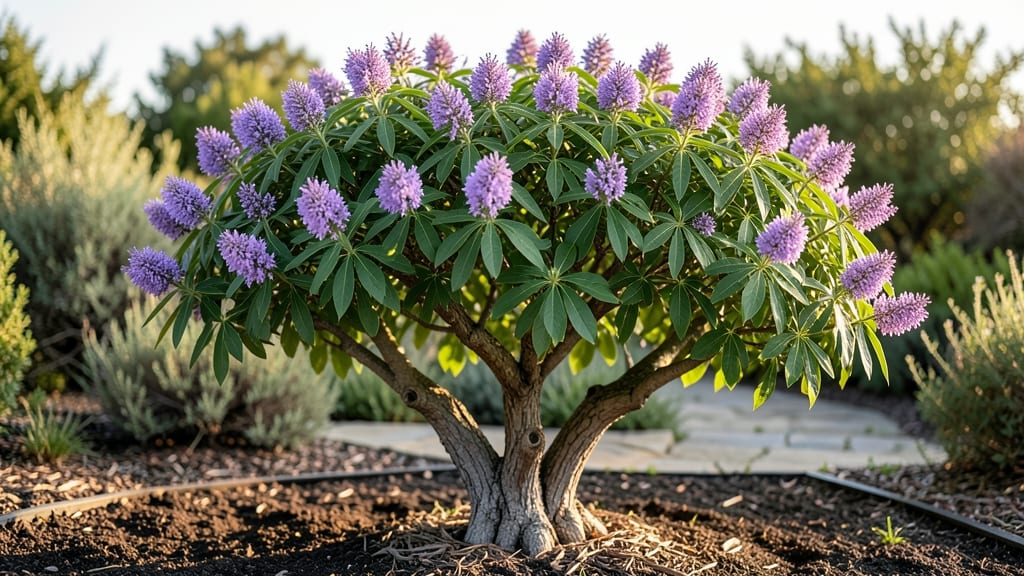
A vitex tree grows anywhere from 6 to 15 feet tall, depending on the variety and growing conditions—so the answer depends on what you’re planting and where.
If you're considering adding a vitex tree to your landscape but wondering whether it'll tower over your house or stay neatly contained, you're not alone. This fast-growing shrub can be a game-changer for privacy, shade, or wildlife attraction, but its size varies wildly by variety.
Some vitex varieties, like the popular Vitex agnus-castus (🌿), can reach heights of 10 to 15 feet when left unpruned, while dwarf cultivars stay compact at 4 to 6 feet. The right choice depends on your space, climate, and how much maintenance you're willing to put in.
In this guide, I’ll break down the exact heights by variety, how fast they grow, and the best ways to control their size—so you can pick the perfect vitex for your garden without surprises down the road.


Vitex tree height by variety: exact growth expectations
Choosing the right vitex tree for your landscape means understanding its mature height expectations. This versatile shrub offers stunning lavender blooms and lush foliage, but varieties range from compact dwarf cultivars to towering 15-foot giants.
Knowing these differences helps you select the perfect fit for your yard, whether you need a privacy screen or a container-friendly accent.
Most vitex varieties grow aggressively in the right conditions, but their final size depends heavily on the specific cultivar and your growing zone. For example, Vitex agnus-castus (chaste tree) can reach 12-15 feet tall, while dwarf vitex varieties stay under 6 feet.
Let’s break down the exact height expectations for each popular type so you can plan accordingly.
🌿 Visual Guide: Below is a quick reference table showing mature heights, growth habits, and ideal uses for common vitex varieties. Use this to compare options before planting.
| Variety | Mature Height | Spread | Growth Rate | Best For |
|---|---|---|---|---|
| Vitex agnus-castus (Chaste Tree) | 12–15 ft | 8–12 ft | Fast (3–5 ft/year) | Privacy screens, large landscapes |
| Vitex rotundifolia (Korean Lilac) | 6–10 ft | 6–8 ft | Moderate (2–4 ft/year) | Small yards, containers, hedges |
| Vitex negundo (Five-Leaf Chaste Tree) | 10–12 ft | 8–10 ft | Fast (3–4 ft/year) | Wildlife habitats, informal borders |
| Dwarf Vitex (e.g., 'Little Spire') | 4–6 ft | 3–5 ft | Slow-Moderate (1–2 ft/year) | Patios, small gardens, containers |
| Vitex 'Shiro PPM' | 8–10 ft | 6–8 ft | Moderate (2–3 ft/year) | Urban landscapes, mixed borders |
The Vitex agnus-castus is the most common variety and grows the tallest, often reaching 12–15 feet in ideal conditions. This makes it perfect for large properties where you need a privacy hedge or a shade-providing specimen.
Its broad canopy also attracts butterflies and hummingbirds, adding ecological value to your garden.
If you have limited space, consider Vitex rotundifolia or its dwarf cultivars. These stay between 6–10 feet tall, making them ideal for small yards or even large containers.
The 'Little Spire' variety is a top pick for patio gardens because it tops out at just 4–6 feet while still producing abundant blooms.
For a balanced approach, Vitex 'Shiro PPM' offers a middle ground with 8–10 feet of height and a compact growth habit.
This variety is also prized for its silver foliage and fragrant purple flowers, making it a standout in mixed borders or as a focal point in perennial beds.
When planning your vitex tree placement, account for its mature spread as well as height. For example, a 15-foot vitex with an 8-foot spread will need 10–12 feet of clearance on all sides.
Always check your local frost dates too—vitex thrives in USDA zones 6–9, but younger plants may need winter protection in colder climates.
Pro tip: If you’re unsure about a variety’s growth, start with a container-grown specimen to test its fit in your space before committing to a permanent planting. This lets you observe its growth rate and adaptability to your microclimate firsthand.
For fastest growth, ensure your vitex gets full sun (6+ hours daily) and well-draining soil. Overwatering can stunt growth, so prioritize deep, infrequent watering once established. With the right variety and care, your vitex will thrive—and you’ll love its year-round interest from spring blooms to winter structure.
🌳
How fast do vitex trees grow? Annual growth rates revealed
If you're planning to add a vitex tree to your landscape, understanding its growth rate is key to managing expectations. These shrubs are known for their rapid growth, but their speed depends heavily on variety, climate, and care.
In ideal conditions, vitex can grow 3 to 5 feet per year during its most vigorous years, but this slows as it matures.
For most vitex varieties like Vitex agnus-castus (chaste tree), the first few years are when you'll see the most dramatic changes. Proper soil conditions, sunlight exposure, and pruning can accelerate growth, while poor care or harsh winters may stall it. Let’s break down what to expect year by year.
In warmer climates (Zones 8-10), vitex trees often grow faster due to longer growing seasons. For example, Vitex rotundifolia (coastal vitex) can reach 10 feet in just 3 years with ideal conditions. In cooler zones (6-7), growth may be slower, with 2-3 feet per year during the first few years.
Pruning plays a critical role in managing growth. Regular pruning in late winter or early spring encourages bushier growth and can help control height. If left unpruned, vitex can become leggy and overgrown, reaching its maximum height more quickly. Always use sterilized tools to prevent disease spread.
Soil quality is another game-changer. Vitex thrives in well-draining, slightly alkaline soil with a pH of 6.5-7.5. Amending heavy or clay soils with compost or sand can significantly boost growth rates. Mulching around the base also helps retain moisture and regulate soil temperature, supporting faster development.
With the right conditions, your vitex can become a stunning focal point in just a few years. Whether you're aiming for a privacy screen or a wildlife-friendly hedge, understanding its growth pace helps you plan accordingly. Just remember: patience and consistent care are key to achieving those stunning heights!