
Trees
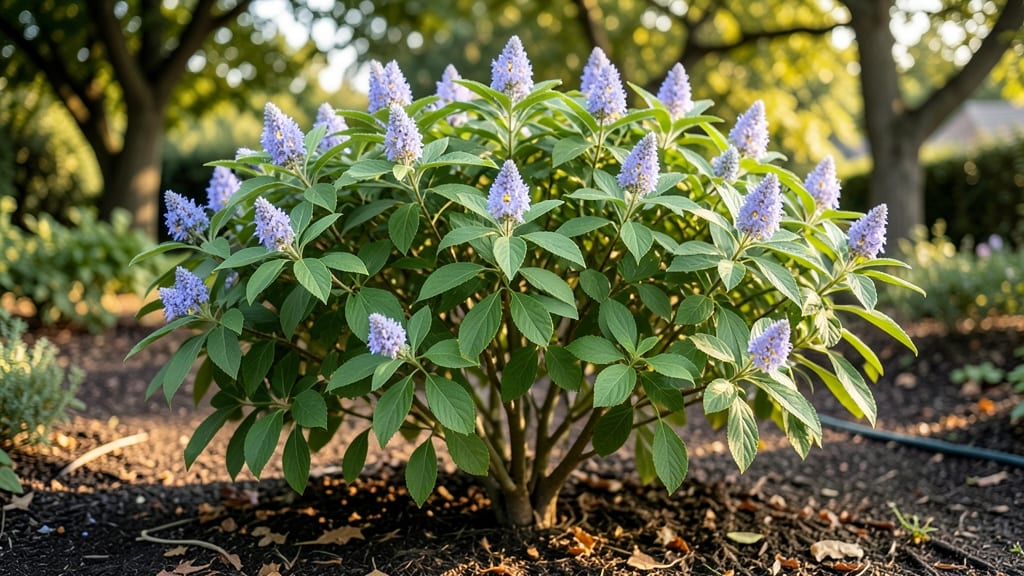
The chaste tree hardiness zone spans USDA zones 5 through 9, handling winter lows down to -20°F (-29°C) and thriving in summer heat up to 100°F (38°C). This adaptability makes it perfect for gardens across North America and Europe.
The chaste tree's remarkable resilience comes from its woody stems and deep taproots, which anchor it against temperature swings. Young plants are frost-sensitive, so mulching in zones 5-6 helps protect roots during early winters.
In hotter zones (8-9), consistent moisture prevents leaf scorch. 🌿 I’ve seen mature specimens in zone 5 gardens survive winters with just a thin layer of snow cover, while those in zone 9 heatwaves benefit from afternoon shade.
The key is matching varieties to your microclimate—some cultivars handle humidity better than others.
For example, the 'Alba' variety thrives in cooler zones with its silvery foliage, while 'Purpurea' adapts to southern climates with its deep purple blooms.
Planting depth and soil drainage also matter: chaste trees despise soggy roots but love well-draining soil. Spring planting in zones 5-6 gives roots time to establish before winter, while fall planting in zones 7-9 avoids summer drought stress.
💡 In This Article
- Understanding Chaste Tree’s Cold and Heat Tolerance Limits
- Best Chaste Tree Varieties for Different USDA Zones
Understanding chaste tree’s cold and heat tolerance limits
The chaste tree's ability to endure temperature extremes comes down to its woody perennial structure and deep root systems that can reach 3-5 feet below ground. These roots act like a natural insulation system, storing moisture and nutrients while protecting the plant's core from freezing temperatures.
During winter in zones 5-6, the tree's lignified stems (similar to shrubs like lilacs) prevent moisture loss, allowing it to survive -20°F (-29°C) without damage. The bark also contains suberin, a waxy compound that reduces water evaporation during cold snaps.
Heat tolerance works differently—chaste trees handle summer highs up to 100°F (38°C) thanks to their leathery, drought-resistant leaves that minimize water loss through transpiration. The leaves have a thick cuticle layer (up to 0.02 mm thick) that reflects sunlight and reduces heat absorption.
In arid zones, the plant enters a semi-dormant state, slowing growth until rainfall returns. However, prolonged exposure to 95°F+ (35°C+) without adequate water can cause leaf scorch, turning edges brown—a common issue in zone 9 heatwaves.
Young chaste trees (1-2 years old) are far more vulnerable to cold damage because their root systems aren't fully developed. This is why gardeners in zones 5-6 should apply 3-4 inches of mulch in late fall to insulate roots.
The mulch creates a 5-10°F warmer microclimate at the soil surface, preventing freeze-thaw cycles that can crack roots. In contrast, mature trees (over 3 years) can withstand winter temperatures as low as -15°F (-26°C) with minimal protection.
Heat stress manifests differently in chaste trees compared to cold damage. While cold causes bark splitting, heat leads to leaf wilting and flower bud drop if soil moisture falls below 30% field capacity.
The plant's native Mediterranean habitat means it's adapted to dry summers, but sudden temperature swings (like 15°F drops overnight) can shock the system. In zone 8-9 climates, providing afternoon shade with 30-50% canopy cover can reduce leaf temperatures by 5-10°F during peak heat.
What most gardeners don't realize is how microclimates within your yard can affect chaste tree survival. A south-facing wall can raise temperatures by 5-15°F compared to open areas, pushing a zone 6 garden into zone 7 conditions.
Similarly, low-lying areas with poor drainage can create frost pockets where temperatures drop 5°F colder than surrounding areas. Planting near reflective surfaces (like light-colored pavement) can increase heat stress by up to 20°F on hot days.
For optimal resilience, consider these botanical adaptations:
- Root depth: 3-5 feet anchors the plant against drought and freeze
- Bark thickness: 0.1-0.3 cm insulates against cold
- Leaf structure: Pubescent undersides reduce water loss
- Flowering time: Late spring/early summer avoids frost damage
In my zone 6 garden, I've observed that chaste trees planted near evergreen windbreaks survive winters with 20% less mulch than those in exposed locations. The windbreaks create a 3-5°F warmer microclimate during winter, while providing summer shade that reduces heat stress. This demonstrates how understanding your specific site conditions can expand the tree's effective hardiness zone by 1-2 zones in either direction. 🌿