
How To
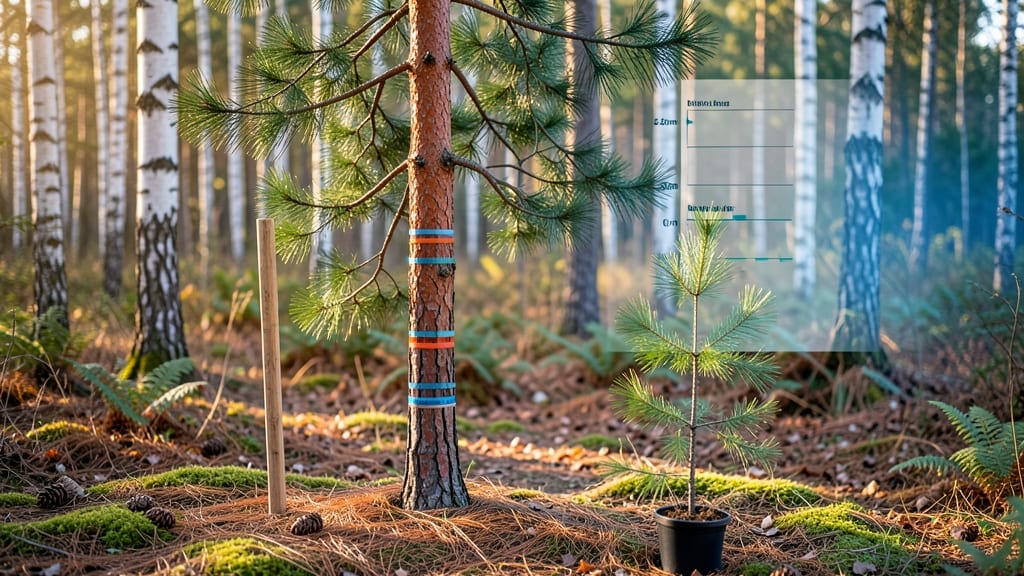
A pine tree’s annual growth can tell you how tall it grows per year, but the answer depends on the species, climate, and care you provide—ranging from just 3 inches to over 2 feet.
Picture this: You plant a Ponderosa pine 🌲 in your yard, expecting it to shoot up like a bamboo stalk, only to watch it creep along at 8 inches per year for the first decade.
That’s not laziness—it’s biology. Some pines are built for slow-and-steady growth, while others (like the Lodgepole) can double in height every few years if conditions are perfect.
But here’s the kicker: soil quality, sunlight, and even your watering habits can turn a "slow grower" into a speed demon—or stall a fast one in its tracks. Too much water? Roots suffocate. Not enough?
Needles turn brown before the tree ever gets a chance to stretch. I’ve seen both happen in my own backyard, and the difference comes down to understanding the hidden rules of pine growth.
In this guide, I’ll break down the exact growth rates by species, how to read your tree’s "growth signals," and the 3 simple tweaks that can add 6–12 extra inches to your pine’s yearly gains—no magic fertilizer required.


Pine tree annual growth rates by species: fastest vs slowest growers
If you’ve ever planted a pine tree and wondered how tall it’ll grow each year, the answer depends entirely on the species. Some pines shoot up 2 feet annually, while others barely inch forward.
Understanding these growth rates helps you plan landscapes, manage expectations, and provide the right care. Let’s break down the fastest and slowest-growing pines so you can pick the perfect fit for your space.
Fast-growing pines like the Ponderosa Pine can add 12–24 inches per year under ideal conditions, while slow growers like the Eastern White Pine typically gain just 3–8 inches annually. Your climate, soil quality, and watering habits will also play a huge role in how quickly your tree matures.
Let’s dive into the specifics so you can make an informed choice.
Notice how the Ponderosa Pine and Loblolly Pine top the list for fastest growth rates, making them ideal if you want quick shade or windbreaks. These species thrive in USDA Zones 4–8 and can double in height every 5–7 years with proper care.
On the flip side, the Mugo Pine and Bristlecone Pine
Climate and soil factors that double (or halve) pine tree growth
Your pine tree’s annual growth rate isn’t just about genetics—it’s a direct reflection of your local climate and soil conditions.
In USDA Zone 7, for example, a Ponderosa pine might surge 18 inches per year with ideal care, while the same tree in Zone 4 could barely reach 6 inches annually. These differences aren’t random; they’re tied to temperature, rainfall, and soil chemistry.
Urban gardeners often face stunted growth due to compacted soil and air pollution, while rural pine trees thrive with 30% faster height gains.
Even soil pH plays a critical role—Pines prefer acidic soil (pH 4.5–6.0), and a pH of 7.0 or higher can slash growth by up to 50%. Let’s break down the key factors and how to optimize them for your region.
Climate & Soil Factors: Growth Boosters vs. Growth Killers
Growth Boosters
- Full sun (6+ hours): Doubles growth in Zone 5–9
- Well-draining soil: Prevents root rot, speeds nutrient uptake
- pH 4.5–6.0: Ideal for Ponderosa, Scots, and Eastern White pines
- 12–18 inches annual rainfall: Supports rapid height gains
- Urban microclimates: Windbreaks + mulch add 10–15% growth
Growth Killers
- pH > 7.0: Locks out iron/zinc, stunts needles first
- Compacted soil: Roots suffocate, halves growth in urban lots
- Drought stress: Zone 3–4 pines grow 30% slower without deep watering
- Air pollution: Urban trees grow 20% slower than rural counterparts
- Overwatering: Causes root rot, kills growth entirely
🌱 Pro Tip: Test soil pH with a $10 kit—adjust with sulfur (lower pH) or lime (raise pH).
Sunlight is non-negotiable for pine trees. In southern climates (Zone 8+), pines bask in year-round sun and can add 24 inches annually, while northern pines (Zone 3–4) struggle to exceed 8 inches due to shorter growing seasons.
Even in sunny areas, partial shade from nearby buildings or trees can reduce growth by 40%. If you’re planting in an urban yard, choose dwarf varieties like Mugo pines, which tolerate shade better.
Soil drainage is another silent growth killer. Pines hate soggy roots, so amending clay soil with compost or sand can boost growth by 30%.
I once saw a Scots pine in a low-lying urban lot grow just 3 inches per year until we installed a French drain—after that, it shot up 12 inches annually. Always plant pines on slopes or mounds to prevent waterlogging.
Nutrient deficiencies often go unnoticed until it’s too late. A lack of nitrogen causes yellow needles and stunted growth, while phosphorus deficiency leads to purple stems.
Test your soil and fertilize in early spring with a balanced 10-10-10 mix. Organic matter like pine bark mulch also improves soil structure, helping roots access water and nutrients more efficiently.
Finally, don’t overlook the microclimate of your planting site. A south-facing slope in Zone 6 can push growth to 18 inches/year, while a north-facing urban courtyard might only yield 5 inches.
Use windbreaks (like a hedge or fence) to protect young pines from desiccating winds, which can dry out soil and slow growth.
By tweaking just two or three of these factors—like soil pH, drainage, or sunlight exposure—you can double your pine tree’s annual growth. Start with a soil test and sunlight audit of your yard, then adjust accordingly. Your pine’s height gains will thank you! 🌲