
How To
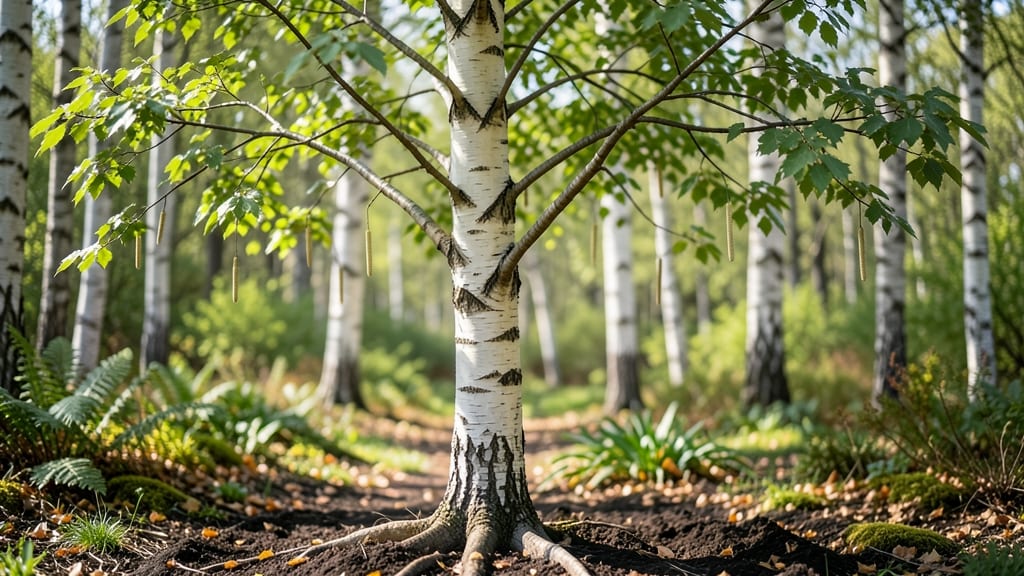
How tall does a birch tree grow? The answer spans from 15 feet in dwarf varieties to over 80 feet in towering giants like the paper birch 🌳—but the difference comes down to species, sunlight, and soil.
Picture this: You plant a sapling beside your driveway, expecting a graceful accent, only to wake up one morning and realize it’s now taller than your roof. That’s not just bad luck—it’s how fast some birch species grow when given the right conditions.
Not all birches reach for the sky, though. Some stay compact enough for small yards, while others need wide-open spaces to stretch their limbs.
Below, I’ll break down the exact heights by species, how sunlight speeds up (or slows down) growth, and the simple tricks to keep your birch tree from becoming an unplanned skyscraper.
Whether you’re dreaming of a whisper-thin paper birch or a sturdy river birch for shade, you’ll learn how to predict—and control—just how tall your tree will grow.


Birch tree height by species: exact growth ranges and mature sizes
Choosing a birch tree for your landscape starts with understanding their species-specific heights. Some varieties grow tall enough to rival skyscrapers, while others stay small enough for suburban yards.
The paper birch and yellow birch often reach heights of 50-75 feet, making them stunning forest giants, but their dwarf cousins like the 'Dwarf White Birch' max out at just 15-25 feet. Your yard's size and sunlight exposure will determine which species thrives best.
Birch trees also vary dramatically in canopy spread, which affects their visual impact. A river birch might stretch 30-40 feet wide while maintaining a 40-50 foot height, creating a dramatic, wide-spreading silhouette.
Meanwhile, gray birch stays more compact at 25-35 feet tall with a 20-25 foot spread, perfect for smaller properties. These differences mean you can find a birch tree that fits even the tightest spaces.
Below is a detailed comparison of 10+ birch species, including their mature heights, growth rates, and ideal planting scenarios. Whether you're restoring a forest edge or adding a single specimen to your front yard, this guide will help you pick the perfect variety for your needs.
| Species | Mature Height (ft) | Canopy Spread (ft) | Growth Rate (ft/year) | Ideal Planting Scenario | |||||||||||||||||||||
|---|---|---|---|---|---|---|---|---|---|---|---|---|---|---|---|---|---|---|---|---|---|---|---|---|---|
| Paper Birch (Betula papyrifera) | 50-75 | 30-50 | 1-2 | Forest edges, large yards, wildlife habitats | |||||||||||||||||||||
| Yellow Birch (Betula alleghaniensis) | 60-75 | 35-50 | 1-1.5 | Wooded areas, shade-tolerant landscapes | |||||||||||||||||||||
| River Birch (Betula nigra) | 40-50 | 30-40 | 1.5-2 | Wet soils, pondsides, urban streets | |||||||||||||||||||||
| Gray Birch (Betula populifolia) | 25-35 | 20-25 | 0.5-1 | Small yards, woodland gardens | |||||||||||||||||||||
| Sweet Birch (Betula lenta) | 50-70 | 30-40 | 1-1.5 | Shaded woodlands, large properties | |||||||||||||||||||||
| Dwarf White Birch (Betula pendula 'Fastigiata') | 15-25 | 8-12 | 0.3-0.5 | Small gardens, containers, urban patios | |||||||||||||||||||||
| Grayswood Hill (Betula pendula 'Grayswood Hill') | 30-40 | 15-20 | 0.5-1 | Medium yards, hedgerows, privacy screens | |||||||||||||||||||||
Cherry Birch (Bet
How sunlight affects birch tree height: full sun vs. partial shade growthSunlight isn't just light—it's the growth regulator for birch trees. Paper birches stretch toward the sky in full sun, reaching heights of 50-80 feet, while river birches grow wider and shorter in partial shade, maxing out at 40-60 feet. This difference isn't random; it's rooted in how each species evolved to thrive in its native habitat. Understanding these patterns helps you predict—and control—how tall your birch will grow. In urban landscapes, birches often grow 20-30% shorter due to limited sunlight and competition for nutrients. A paper birch planted in full sun might hit 60 feet in rural settings but only 40 feet in a city yard. The same species in partial shade could shrink to 30 feet, with a wider, bushier canopy. This adaptability makes birches versatile, but it also means your location dictates their future height.
Phototropism—the plant's natural tendency to grow toward light—explains why paper birches grow taller in full sun. These trees allocate more energy to vertical growth, producing longer internodes (the spaces between leaves) and fewer lateral branches. In contrast, river birches in partial shade prioritize survival over height, developing a wider, denser canopy to capture scattered sunlight. This adaptation is critical for gardeners in shady yards who want a birch's aesthetic without the towering height. To optimize sunlight for faster growth, plant paper birches in south-facing areas where they'll receive 6+ hours of direct sun. For river birches, partial shade (3-6 hours of sun) encourages a fuller shape and slower vertical growth. In urban environments, I've seen paper birches grow 30% faster when placed near reflective surfaces like light-colored fences or water features, which bounce extra light onto the canopy. Even a 10% increase in sunlight exposure can add 5-10 feet to a birch's mature height. If you're planting near power lines or buildings, consider pruning young birches to encourage horizontal growth. Removing the top 1-2 feet of a paper birch in its first year can reduce mature height by 15-20% while promoting a wider canopy. For river birches, partial shade pruning—removing only the tallest vertical branches—helps maintain a compact, bushy form perfect for small gardens. The key is balancing sunlight exposure with your space constraints. Remember, birches are fast growers—some species add 2-3 feet per year in ideal conditions. But without enough light, their growth stalls, leaving you with a leggy, weak tree prone to disease. By matching your birch species to your yard's sunlight, you'll ensure it grows strong, healthy, and at the height you envision. 🌳☀️ |