
How To
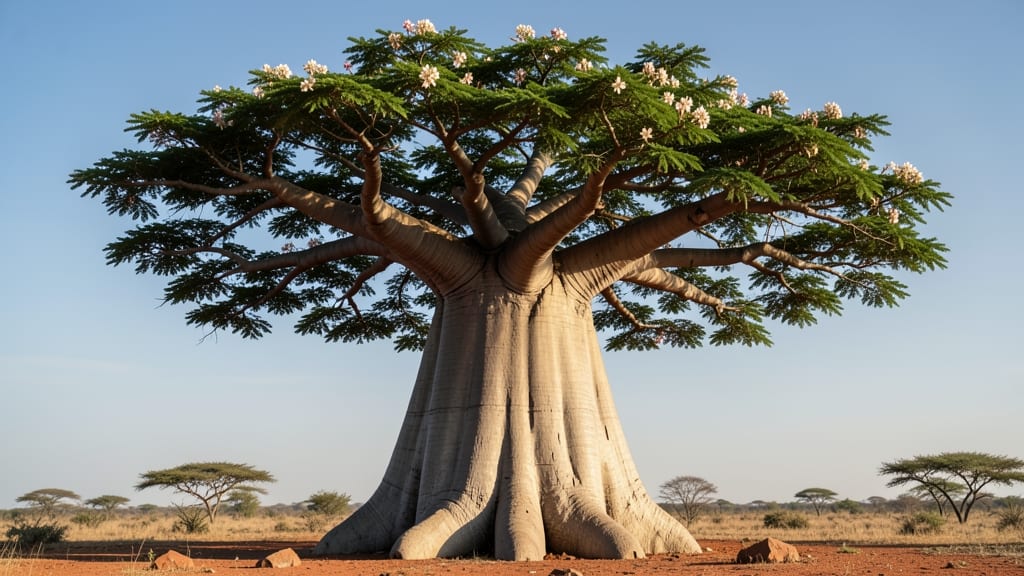
Baobab tree height records: tallest species compared globally
When you think of towering trees, the baobab (Adansonia spp.) immediately comes to mind—not just for its massive trunks, but for its staggering height. These ancient giants can reach heights that make even the tallest redwoods seem modest.
But which species holds the record? Let’s compare the three most impressive baobab varieties and their jaw-dropping heights.
The African baobab (Adansonia digitata) is the most famous, with some specimens stretching over 80 feet tall. Meanwhile, the grandidier baobab (Adansonia grandidieri) from Madagascar often surpasses this, with verified heights exceeding 100 feet.
Even the Australian baobab (Adansonia gregorii) can rival these giants, though its growth is slightly more limited.
Comparison Table: Baobab Tree Height Records
| Species | Average Mature Height | Record Height | Location |
|---|---|---|---|
| African Baobab (Adansonia digitata) | 50–80 ft | 82 ft (Sunland Baobab, South Africa) | Southern Africa |
| Grandidier Baobab (Adansonia grandidieri) | 60–100 ft | 105 ft (Anjajavy, Madagascar) | Madagascar |
| Australian Baobab (Adansonia gregorii) | 40–70 ft | 75 ft (Purnululu National Park, Australia) | Northern Australia |
The Sunland Baobab in South Africa is one of the most famous African baobabs, standing at a staggering 82 feet tall with a trunk diameter of over 40 feet.
This tree is so massive that it earned the nickname "The Giant of the Kalahari." Its height is a testament to the species' ability to thrive in arid conditions.
In contrast, the grandidier baobab in Madagascar often outshines its African cousin. The record-holder in Anjajavy reaches 105 feet, making it one of the tallest baobabs on Earth. These trees are not just tall—they’re also incredibly wide, with trunks that can store thousands of gallons of water.
The Australian baobab, while slightly shorter on average, still boasts impressive heights. The tallest recorded specimen in Purnululu National Park stands at 75 feet, showcasing the adaptability of baobabs across different continents. Their ability to thrive in Australia’s harsh, dry climate is a marvel of nature.
What makes these heights even more astonishing is the slow growth rate of baobabs. Some species take hundreds of years to reach maturity, meaning the tallest baobabs today were already ancient when European settlers first arrived in Africa and Australia. Their longevity and resilience make them true survivors.
If you’re dreaming of growing a baobab in your garden, remember that these giants need space, sunlight, and patience. While they won’t reach record-breaking heights in a backyard, smaller varieties can still thrive with the right care—though they’ll take decades to mature.
For now, admire these natural wonders from afar! 🌳
What determines a baobab tree’s maximum height?
The baobab tree’s height isn’t just a matter of genetics—it’s a complex interplay of nature’s forces. These trees, often called living skyscrapers, thrive in arid climates where few other plants survive.
Their massive trunks store water like natural reservoirs, allowing them to grow taller over centuries. But why do some reach 100 feet while others stay shorter? Let’s explore the key factors.
First, soil composition plays a critical role. Baobabs prefer well-draining, sandy soils rich in minerals like calcium and magnesium. Poor soil quality stunts growth, while nutrient-rich earth fuels their upward expansion.
In Madagascar’s granitic soils, for example, trees like the grandidier baobab (Adansonia grandidieri) grow taller due to the soil’s natural alkalinity.
Next, climate conditions shape a baobab’s destiny. These trees evolved in dry savannas where water is scarce. In Madagascar’s arid south, the grandidier baobab thrives, reaching heights of 80-100 feet due to intense sunlight and minimal competition.
Meanwhile, in Australia’s semi-arid regions, the Australian baobab (Adansonia gregorii) grows taller but slower, often reaching 60-80 feet.
Genetics also play a surprising role. Some baobab species, like the Adansonia gregorii, are genetically predisposed to grow taller, while others focus on trunk girth over height.
For example, the African baobab (Adansonia digitata) often grows wider rather than taller, with trunks up to 30 feet in diameter but heights of 50-70 feet. This genetic diversity explains why record-breaking heights vary by species and location.
Human activity can’t be ignored. Deforestation for agriculture or timber has reduced many baobab populations, limiting their ability to reach full height. Conversely, protected areas like Botswana’s Moremi Game Reserve allow baobabs to mature unchecked, resulting in some of the world’s tallest specimens.
Even urban pollution can stunt growth by altering soil chemistry and air quality.
Finally, competition for resources matters. A baobab growing in isolation with abundant sunlight and nutrient-rich soil will stretch toward the sky, while one crowded among other trees may struggle to reach half its potential height.
This is why the tallest baobabs are often found in open savannas or remote desert edges, where they dominate their environment.
Understanding these factors helps explain why some baobabs become skyscrapers of the plant world while others remain modest in stature. For gardeners dreaming of growing their own, remember: patience and the right conditions are key to nurturing a baobab’s full potential. 🌳