
Flowers
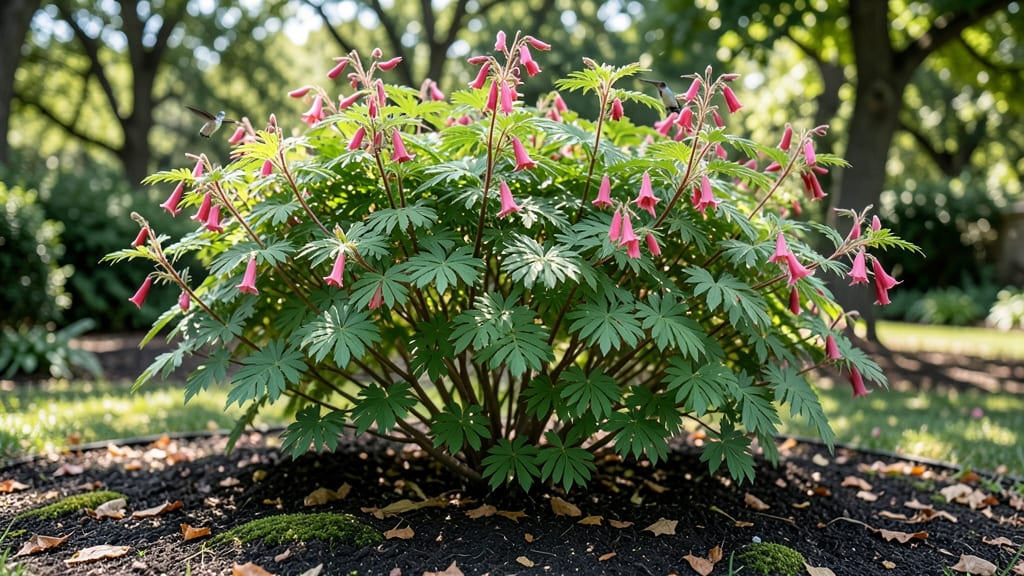
That fern-like tree with red flowers paired with delicate foliage?
You’re likely looking at an Eastern redbud—the spring showstopper that turns yards into dreamy pastels. 🌸 I’ve grown these in my Zone 6 garden for years, and they’re the first tree to bloom, stealing the show before tulips even finish.
The secret to their success? Well-draining soil, morning sun with afternoon shade, and a watering routine that mimics spring rains. Redbuds tolerate drought once established but hate soggy roots—think of them as the divas of the understory who still thrive in full sun if given good drainage.
By late May, you’ll have a canopy of heart-shaped leaves and a second flush of flowers if you prune lightly after the first bloom. The bark even turns a silvery-gray that adds winter interest—no other tree does this much year-round.
If yours isn’t blooming, check for overcrowded roots or poor soil. These trees reward patience with decades of drama-free beauty. Let’s get yours thriving!
Natural Triggers For Red Blooms
The striking fern-like tree with red flowers—often the Cornus sericea (Red Osier Dogwood) or Cornus stolonifera—produces its vibrant blossoms due to a mix of environmental cues and biological timing.
Understanding these triggers helps gardeners encourage healthy flowering and troubleshoot issues when blooms don’t appear. Let’s break down the science behind why these trees burst into color each season.
The most critical factor for red flower production is day length (photoperiod). These trees are short-day plants, meaning they rely on decreasing daylight hours to trigger bud formation. Here’s how it works:
- Late Winter/Early Spring: As days lengthen after the winter solstice, the tree’s growth shifts from dormant to active. However, the critical photoperiod (typically 12–14 hours of light) must shorten again in late summer to signal flower bud initiation.
- Chill Hours Matter: Even with the right light cues, the tree needs 600–1,000 hours below 45°F (7°C) during winter dormancy. Without sufficient cold exposure, buds may fail to set properly, leading to sparse or no flowers.
- Actionable Tip: If you’re in a mild-winter zone (like Zone 9), consider artificial chilling (e.g., moving potted trees to a cooler garage for 6–8 weeks in winter) to mimic natural conditions.
Flower buds form in the previous summer or early fall, but their development hinges on temperature fluctuations. Extreme heat or cold at the wrong times can disrupt the process:
| Temperature Phase | Ideal Range | Risk of Poor Blooms |
|---|---|---|
| Bud Formation (Summer) | 70–85°F (21–29°C) with cool nights | Heatwaves above 90°F (32°C) can sterilize pollen or cause bud drop. |
| Dormancy (Winter) | 20–40°F (-6 to 4°C) with frost | Sudden freezes below 0°F (-18°C) may kill buds; thaw-freeze cycles stress roots. |
| Blooming (Spring) | 50–65°F (10–18°C) | Late spring frosts (<32°F/0°C) can burn open buds before they unfurl. |
Pro Tip: Mulch heavily in late fall with 3–4 inches of shredded bark or wood chips to insulate roots and protect buds from temperature swings. 🌡️
While these trees tolerate moist or even boggy soils, water stress—either drought or overwatering—disrupts nutrient uptake and hormone signaling, directly impacting flower buds:
- Drought Stress: Inconsistent watering (especially in late summer) can cause buds to abort. The tree prioritizes root survival over reproduction.
- Overwatering: Soggy soil in winter can suffocate roots, reducing the tree’s ability to store carbohydrates for spring blooms.
- Solution:
- Water deeply once a week in dry spells (1–1.5 inches total).
- Avoid wetting foliage in winter to prevent fungal diseases that weaken the tree.
💡 Quick Fix: If your tree is established, a deep soak in early spring (before buds swell) can jumpstart growth and encourage flowering.
Flowering is energy-intensive, and these trees need balanced nutrients to produce vibrant red stems and blooms. Deficiencies or excesses throw off the process:
| Nutrient | Role in Blooming | Signs of Deficiency |
|---|---|---|
| Phosphorus (P) | Critical for energy transfer in flower development. | Purple-tinged leaves; weak, sparse blooms. |
| Potassium (K) | Regulates water and hormone balance in buds. | Yellowing leaf edges; buds drop prematurely. |
| Magnesium (Mg) | Supports chlorophyll and enzyme activity for bud growth. | Interveinal yellowing; stunted flower clusters. |
Actionable Tip: Apply a balanced fertilizer (10-10-10 or 5-10-5) in early spring and a low-nitrogen, high-phosphorus formula (e.g., 3-8-6) in late summer to fuel bud formation. 🌿
By aligning these natural triggers—light, temperature, water, and nutrients—you’ll give your fern-like tree with red flowers the best shot at a show-stopping spring display. Monitor these factors closely, and you’ll troubleshoot issues before they affect blooming!
Quick Fixes for Fern-Like Red-Blooming Tree
Revitalizing your fern-like tree with striking red flowers doesn’t have to be a guessing game. Whether it’s struggling with poor growth, pests, or environmental stress, these practical, step-by-step solutions will help it bounce back to its vibrant best.
Below, we’ve mapped common issues to easy fixes, plus prevention tips to keep your tree thriving long-term.
Cause: Roots bound by tight soil or containers restrict growth, leading to stunted blooms or yellowing fronds. Fix:
- 🔥 Gently remove the tree from its pot (or dig around the base if planted in the ground).
- 👨🍳 Loosen roots with your fingers or a fork, trimming any circling or mushy roots with sterilized pruners.
- ⏰ Repot or replant in fresh, well-draining soil mixed with compost or perlite (for container plants).
- 💡 Pro Tip: Water lightly after replanting to reduce shock. Avoid fertilizing for 2–3 weeks to let roots recover.
Prevention:
- ✨ Repot every 2–3 years (spring is ideal).
- Use containers with drainage holes and loose, airy soil mixes.
Cause: Scorched fronds or faded red blooms signal sunburn or heat stress, common in hot climates (Zones 7–9). Fix:
- 🍳 Gradually acclimate your tree to shade by moving it to a dappled-light spot (e.g., under a sheer curtain or near a north-facing window).
- 🥘 Increase humidity with a pebble tray or misting (especially for indoor plants).
- 🌡️ Water deeply in the morning to prevent evaporation—avoid soggy soil (root rot is a risk!).
Prevention:
- 🎯 Plant in partial shade (4–6 hours of sunlight daily).
- 💡 Mulch the base with wood chips to regulate soil temperature.
Cause: Spider mites, aphids, or scale insects suck sap, causing wilting fronds or sticky residue on leaves. Fix:
- 🔪 Inspect leaves under a magnifying glass. Common pests:
- Aphids (tiny green/black clusters).
- Spider mites (fine webbing on undersides).
- Scale (brown bumps on stems).
- 🍎 Blast pests off with a strong stream of water (repeat 2x weekly).
- 💡 Treat stubborn infestations with:
- Neem oil spray (1 tsp oil + 1 tsp mild soap per quart of water; spray every 5 days).
- Insecticidal soap (follow label instructions).
Prevention:
- 🌿 Encourage natural predators like ladybugs with companion plants (e.g., marigolds).
- ✨ Wipe leaves monthly with a damp cloth to remove eggs.
Cause: Early frosts or late springs can damage tender new growth or buds. Fix:
- 🥘 Cover young plants with frost cloth when temps drop below 28°F (-2°C).
- 🍳 Water deeply before cold snaps to insulate roots (but avoid soggy soil).
- 🌡️ Move potted trees to a garage or sheltered porch if possible.
Prevention:
- 🎯 Plant in spring (after last frost) or choose cold-hardy varieties (e.g., Cornus sericea ‘Kelseyi’).
- 💡 Mulch heavily (3–4 inches) around the base with straw or leaves.
Cause: Overwatering or drought stress yellows leaves or drops buds. Fix:
- 🔥 Test soil moisture by sticking your finger 1 inch deep—water only if dry.
- 🍳 Adjust frequency:
- Containers: Water when topsoil is dry (2–3x weekly in summer).
- Ground-planted: Water deeply 1x weekly (or less in rain).
- ⏰ Water at the base (not leaves) to prevent fungal issues.
Prevention:
- 🌿 Use a moisture meter for accuracy.
- ✨ Improve drainage by amending soil with sand or coconut coir.
💡 Bonus Tip: If your tree’s red flowers fade early, it may need more phosphorus. Use a balanced fertilizer (10-10-10) in spring to boost blooms!
Remember: Most issues are fixable with patience and consistency. Monitor your tree’s progress and adjust care as needed—your fern-like red beauty will reward you with lush growth and vibrant blooms in no time!
Frequently asked questions
What are the most common types of fern-like trees with red flowers?
The two most popular varieties are Eastern Redbud (Cercis canadensis), with its iconic pink-purple blooms, and Red Osier Dogwood (Cornus sericea), known for striking red stems and white flowers. Both thrive in similar conditions and offer year-round interest.
Can these trees grow in containers, or do they need to be planted in the ground?
Yes! Many fern-like flowering trees—like dwarf varieties of Redbud or Cornus sericea 'Kelseyi'—thrive in 5-gallon containers for 2–3 years. Use well-draining soil with 30% perlite and repot every spring. Just ensure the pot has drainage holes to prevent root rot.
Why aren’t my red flowers as vibrant as they should be?
Faded red blooms often signal nutrient deficiencies (especially phosphorus) or overwatering. Try applying a low-nitrogen, high-phosphorus fertilizer (3-8-6) in late summer and reduce watering to once weekly during dry spells. Too much moisture washes away nutrients!
How do I prune these trees to encourage more flowers?
Prune right after flowering (late spring) to remove dead branches and shape the tree. For Redbuds, avoid heavy pruning—these trees bloom on old wood. For Dogwoods, thin out crowded stems to improve airflow, which boosts next year’s blooms.
Are these trees deer-resistant?
Not completely! While deer usually avoid mature trees, they may nibble on young shoots or flowers. Protect seedlings with deer repellent sprays or plant near deer-resistant shrubs like boxwood or barberry. Established trees are less appealing once they reach 6–10 feet tall.