
Pruning
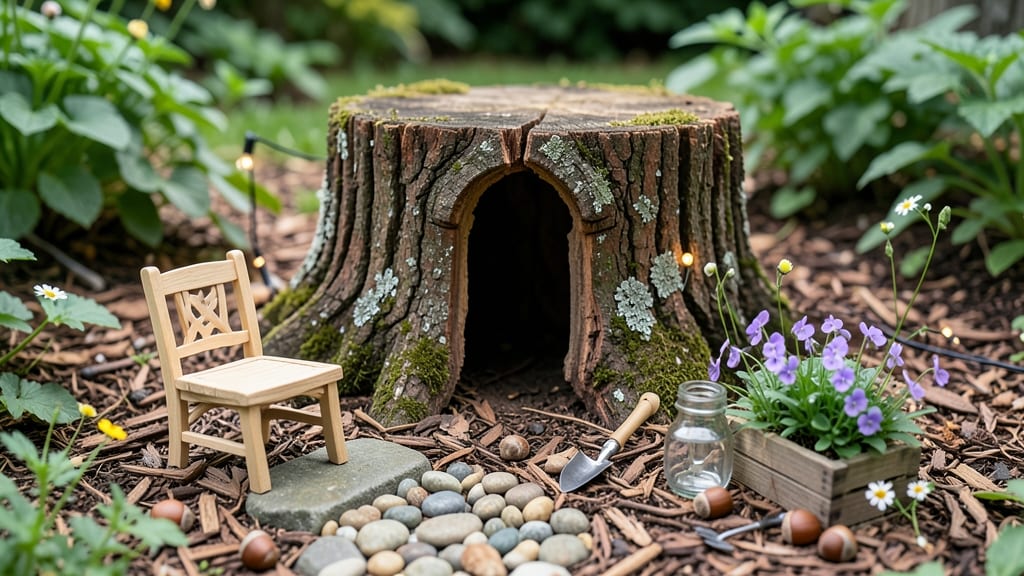
Building a fairy house out of a tree stump transforms a garden centerpiece into a magical miniature dwelling using natural elements like moss, bark, and twigs. Begin with a sturdy, rot-resistant stump and focus on carving out a hollow interior for a cozy fairy space.
This project turns an ordinary stump into a charming fairy habitat by blending natural materials with creative design. 🌿 The key is selecting a stump with a sturdy base—look for hardwoods like oak or maple that resist decay.
Once you've hollowed out the center (use a drill or chisel for precision), smooth the edges with sandpaper to prevent splinters. For extra durability, seal the wood with non-toxic outdoor varnish to protect against weather.
The magic happens when you layer in organic textures like Spanish moss for roofs, acorn caps as tiles, or tiny pebbles for pathways—each detail invites fairies to call it home.
Pro tip: Place your fairy stump near a water source or under dappled sunlight to mimic a natural forest floor. Over time, the materials will blend seamlessly with your garden, creating a living fairy ecosystem that evolves with the seasons.
The best part? This project encourages kids (and adults!) to connect with nature while sparking endless creative possibilities. 💫
💡 In This Article
- Choosing and Preparing the Perfect Tree Stump
- Natural Materials for Building Whimsical Fairy Stump Homes
Choosing and preparing the perfect tree stump
The foundation of your fairy house starts with selecting the right stump. Opt for hardwoods like oak, maple, or cherry—they resist rot and decay for years, while softwoods like pine break down faster. Look for a stump with a diameter of 12-18 inches; this size balances stability and workability.
A stump with natural cracks or hollows can actually add character, but avoid ones with extensive fungal growth or insect damage, as these compromise structural integrity. 🌳
Preparation begins with safety: wear gloves and goggles when handling tools. Use a cordless drill with a 1-inch spade bit to hollow out the center, starting from the top and working downward in 1-inch increments. For deeper cuts, switch to a chisel and mallet to avoid splintering.
Leave the outer 1-2 inches of wood intact to maintain stability—this will form the walls of your fairy home. Sand the interior and edges with 80-grit sandpaper to create smooth surfaces where fairy furniture can rest.
Preservation is key to extending your stump's lifespan. Apply a non-toxic, water-based polyurethane sealant in thin coats, allowing each layer to dry for 4-6 hours before adding another. This protects against moisture while letting the wood breathe.
For extra durability, consider mixing linseed oil with turpentine (1:3 ratio) and brushing it on—this penetrates deep into the grain, repelling water and preventing cracking. A well-sealed stump can last 3-5 years outdoors with minimal maintenance.
Location matters just as much as preparation. Place your fairy stump in a spot with partial shade—this mimics a forest understory where fairies might naturally dwell. Avoid direct sunlight, which can dry out moss and warp wood over time.
If your garden has a water feature nearby, position the stump within 3-5 feet of it; the sound of trickling water adds to the magical ambiance. For added realism, tuck the stump into a bed of mulch or leaf litter to blend it seamlessly into the landscape.
Advanced builders can enhance the stump's structure with hidden features. Drill small holes in the sides to create "windows" or "doorways," then line them with stained glass shards or colored cellophane for a fairy-tale glow. For a multi-level home, stack smaller stumps or logs around the base to form terraces.
The goal is to balance functionality with whimsy—fairies need practical spaces, but they also love intricate details like tiny bridges made from twigs or mushroom-shaped planters growing from the roof.
One common mistake is underestimating the weight of materials. Test the stump's stability by gently pressing down on the roof—it should hold 5-10 pounds without wobbling. If your stump feels unstable, reinforce it with wooden stakes driven into the ground at a 45-degree angle beneath the base.
For extra security in windy areas, anchor the stump with galvanized screws through the sides into the ground. These subtle reinforcements ensure your fairy home stays upright through seasons of rain and play. ✨