
Pruning
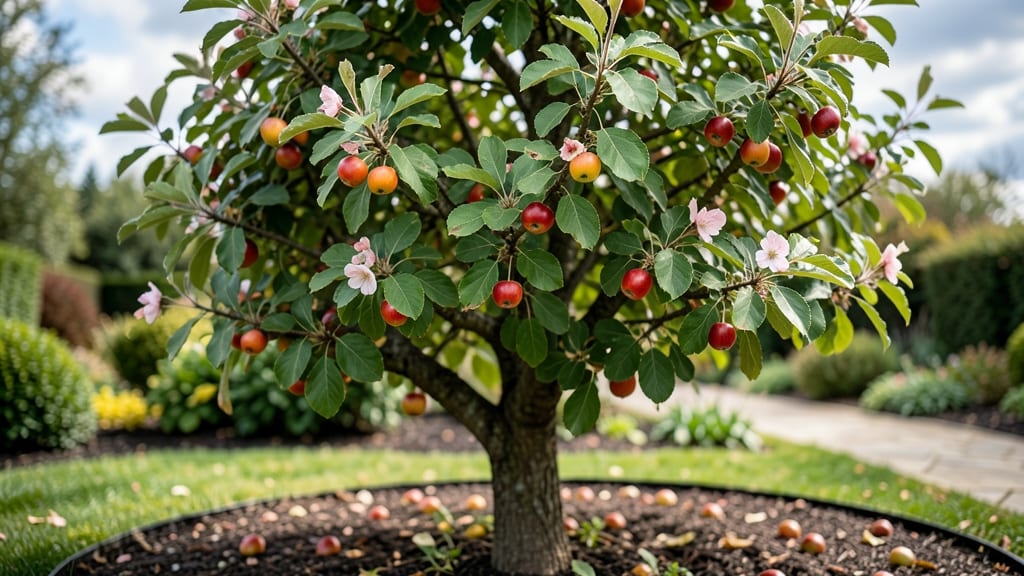
Summer pruning crabapple trees saves you from winter cleanup chaos. ✂️ I used to dread winter pruning, but summer trimming keeps branches strong and fruit production on track—plus, it’s easier to spot dead wood when leaves are full.
The key is timing: prune after harvest but before late summer growth spurts, when the tree can heal quickly.
You’ll need sharp pruning shears, rubbing alcohol for sterilizing cuts, and a ladder if branches are high. Look for crossing branches (they rub and create wounds) and suckers (those aggressive shoots at the base).
Remove any limbs showing signs of disease—like blackened spots from apple scab—before they spread. Healthy branches should have a smooth, green bark and no cracks.
After trimming, your tree will reward you with stronger structure and fewer broken limbs in storms. The fruit that remains will be larger and less prone to splitting from heavy rain.
Just avoid heavy pruning—stick to light shaping and removing only what’s necessary. Over-pruning stresses the tree and reduces next year’s harvest.
This works for all crabapple varieties, whether you grow them for fruit, fall color, or ornamental value. Just remember: summer pruning is about maintenance, not drastic changes. Your tree will thank you with better blooms and fruit next spring—and less work for you in winter.
📚 In This Guide
- What you need
- Instructions
- Tips and common mistakes
- Wrapping up and next steps
What you need
- ● Pruning shears: Bypass pruners (for cuts up to ½ inch thick) – 1 pair (look for ergonomic, sharp blades like Felco or Fiskars).
- ● Loppers: Bypass or anvil type (for branches ½ to 1½ inches thick) – 1 pair (extendable loppers help with taller trees).
- ● Pruning saw: Curved-tooth or bow saw (for branches 1½+ inches thick) – 1 saw (avoid cheap saws—they dull quickly!).
- ● Gloves: Heavy-duty gardening gloves (cut-resistant, like Mechanix or Wolverine) – 1 pair.
- ● Ladder: Sturdy, extendable aluminum ladder (20–30 ft, with non-slip feet) – 1 ladder (or hire a professional if the tree is over 20 ft tall!).
- ● Disinfectant: 70% isopropyl alcohol or pruning sealant (to sterilize tools between cuts) – small bottle.
- ● Heavy-duty trash bags: 10–20 gallon size (for collecting pruned branches) – 2–3 bags.
- ● Pole saw: For high branches without a ladder (if you’re comfortable using one).
- ● Work gloves: Lightweight for extra comfort during longer sessions.
- ● Tree wound dressing: Pruning paste (controversial—skip if your tree is healthy!).
- ● Safety gear: Safety glasses (to protect from debris) and earplugs (if using a chainsaw for large branches).
- ● Notebook & pen: To jot down notes on cuts or tree health observations.
Step-by-Step guide to summer pruning your crabapple tree
Summer is the perfect time to shape your crabapple tree—here's how to do it right for stronger branches and better fruit.
✂️ Step 1: Identify and Remove Dead or Diseased Branches
Start by scanning your crabapple tree for any branches that show signs of disease, dead wood, or pest damage. Look for brown, brittle wood, lack of leaves, or fungal growth like powdery mildew. These branches won’t recover and can spread problems to healthy parts of the tree.
Use sharp, clean pruning shears to make a clean cut just outside the branch collar—the swollen area where the branch meets the trunk. Avoid leaving stubs, as they invite decay. If a branch is larger than 2 inches in diameter, use a pruning saw instead. Work systematically from the bottom up to avoid missing any hidden issues.
🌿 Step 2: Thin Out Overcrowded Branches for Better Airflow
Crabapple trees often develop dense canopies that trap moisture and encourage fungal diseases. Focus on removing branches that cross or rub against each other, as well as those growing inward toward the center of the tree. These "water sprouts" or "suckers" compete for sunlight and nutrients, weakening fruit production.
When thinning, aim to maintain an open center with branches spaced 6-12 inches apart. This spacing improves airflow and sunlight penetration, which is critical for fruit development and disease prevention. Make your cuts at the branch collar, and avoid leaving stubs—this ensures a smooth healing process.
☀️ Step 3: Prune for Sunlight Exposure and Fruit Quality
Summer pruning is your chance to encourage sunlight to reach the inner branches, where fruit often develops. Remove any branches that block light from penetrating the canopy. Focus on the lower third of the tree, as this area tends to get shaded and produces fewer, smaller fruits.
Look for branches that are growing straight up or down—these are less productive than those at a 45-60 degree angle, which allow fruit to develop more evenly. Cut back these vertical branches to a lateral branch or bud that faces outward. This redirects the tree’s energy toward stronger, fruit-bearing branches.
⏰ Step 4: Time Your Cuts for Optimal Healing
Prune during the late morning or early afternoon when temperatures are mild—avoid pruning in extreme heat or cold, as this stresses the tree. Summer pruning should be done gradually over 4-6 weeks to avoid shocking the tree. Never remove more than 25% of the tree’s foliage in one session.
After pruning, apply a thin layer of pruning sealant to cuts larger than ½ inch in diameter to prevent disease entry. Monitor the tree for 2-3 weeks post-pruning, watching for signs of stress like wilting or yellowing leaves. If you notice any issues, adjust your watering or provide temporary shade until the tree recovers.
🪴 Step 5: Clean Up and Maintain Pruning Tools
After finishing, dispose of any diseased branches immediately by burning or bagging them—never leave them on the ground, as they can spread spores. Clean your pruning tools with a 10% bleach solution (1 part bleach to 9 parts water) to prevent cross-contamination between cuts.
Sharpen your tools before storing them to ensure they’re ready for next season. Summer pruning sets your crabapple tree up for a healthier, more productive fall and winter. Keep an eye on new growth, and plan for light winter pruning to refine the tree’s shape further.
Tips & tricks for perfect summer pruning of your crabapple tree
Summer pruning transforms your crabapple tree from a tangled mess into a thriving fruit powerhouse—here's how to do it right without stressing the tree.
Branch Collar Precision: When removing branches in Step 1, focus on cutting just outside the branch collar—the swollen ridge where the branch meets the trunk. This is where the tree's natural healing begins. I've seen too many pruning jobs leave ugly stubs that invite decay, so take your time here. A sharp pair of pruning shears makes all the difference—dull blades crush the wood, creating jagged edges that heal poorly.
Visual Airflow Check: After thinning in Step 2, stand back and look at your tree from all angles. You should be able to see light filtering through the canopy like sunlight through a window. If you can't see through to the center, you haven't thinned enough. Aim for that open vase shape—it's the secret to better fruit production and fewer disease problems. The 6-12 inch spacing isn't just a number; it's about creating that perfect airflow pattern.
Seasonal Pruning Strategy: Real talk: summer pruning is about maintenance, not major restructuring. Save big structural changes for winter when the tree is dormant. In summer, we're just cleaning up and encouraging the right growth patterns. That 4-6 week timeline in Step 4 isn't arbitrary—it gives the tree time to adjust without shock. If you're ambitious, you can do light pruning every 2-3 weeks rather than all at once.
Tool Maintenance Secret: That 10% bleach solution in Step 5 isn't just for sanitation—it's about extending the life of your tools. I keep a small spray bottle of it in my tool shed and spray tools after every use, even if they're not dirty. Rust is the silent killer of pruning tools, and a rusty blade is more dangerous than a dull one. Sharpen your tools before AND after pruning—you'll notice the difference in how cleanly the cuts heal.
Pro Tips for Crabapple Tree Summer
- Summer pruning transforms your crabapple tree from a tangled mess into a thriving fruit powerhouse—here's how to do it right without stressing the tree.
- Branch Collar Precision: When removing branches in Step 1, focus on cutting just outside the branch collar—the swollen ridge where the branch meets the trunk.
- Visual Airflow Check: After thinning in Step 2, stand back and look at your tree from all angles.
Frequently asked questions
Got questions about pruning your crabapple tree this summer?
Here are some of the most common ones—and their answers—to help you trim with confidence!
When is the best time to prune a crabapple tree in summer?
The ideal time is right after the tree finishes blooming (late spring to early summer) or during dormant season (late fall/winter). Avoid pruning during peak heat (July-August) to reduce stress. Light trimming to remove dead branches can happen anytime, but major pruning should wait for cooler months.
How much can I trim off a crabapple tree without hurting it?
Never remove more than 25-30% of the tree’s foliage in a single session. For young trees, limit cuts to 10-15% to avoid shock. Focus on dead, diseased, or crossing branches first—these are the lowest-risk areas to trim. Over-pruning weakens fruit production and invites pests.
Will pruning my crabapple tree in summer attract pests or diseases?
Pruning opens wounds that can invite borers or fungal infections if done poorly. Always use sterilized tools and seal larger cuts with pruning sealant. Time cuts for mild, dry weather (avoid rain within 24 hours) to minimize risk. Healthy trees handle summer pruning better—so prioritize removing weak branches over aggressive shaping.
Can I still get fruit from a crabapple tree if I prune it in summer?
Yes! Summer pruning won’t stop fruit production if done correctly. Focus on opening the canopy for sunlight (better fruit ripening) and removing suckers or water sprouts that drain energy. Avoid heavy pruning in late summer, as new growth won’t harden off before winter, risking frost damage.
Are there alternatives to summer pruning for crabapple trees?
If summer pruning feels risky, opt for winter dormancy pruning (Dec-Feb) when the tree is least active. For urgent fixes (like storm damage), light summer trimming is better than leaving hazards. Another option: thinning fruit (not branches) in summer to improve size/quality—just remove 1/3 of fruit clusters to reduce stress on the tree.
Wrapping up and next steps
Your crabapple tree is thriving—thanks to your summer pruning efforts! 🌳 By removing dead wood, thinning crowded branches, and shaping growth, you’ve set the stage for healthier fruit, stronger structure, and a stunning display next season. Remember, consistency is key: a little care now means fewer surprises later.
Ready to take it further? Mark your calendar for fall pruning (just before dormancy) to refine your tree’s shape and prep for winter. Or, if you’re eager to learn more, explore seasonal care tips to keep your crabapple tree flourishing year-round!