
Trees
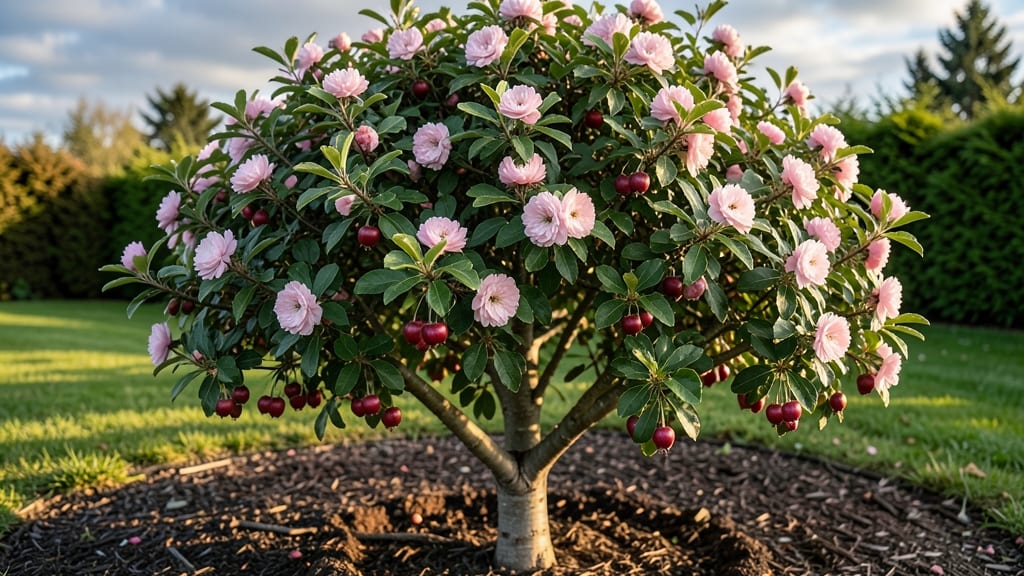
A non-fruit-bearing crabapple tree likely suffers from pollination gaps, inadequate sunlight exposure, or poor pruning practices, while young trees (under 3–5 years) or disease stress (like fire blight) can also stall fruit production. Start by evaluating sunlight hours, tree age, and overall health.
A non-fruit-bearing crabapple tree needs cross-pollination between compatible varieties to set fruit—planting two different cultivars within 50 feet often solves this. 🌳 Sunlight is another critical factor: these trees require at least 6+ hours of direct light daily, and shade-pruned branches reduce fruiting potential.
Even healthy trees may take 3–5 years to mature enough for fruit production, so patience is key. Diseases like fire blight or nutrient deficiencies (especially nitrogen) can also block fruiting, making soil testing and targeted care essential.
💡 In This Article
- Why Your Crabapple Tree Isn’t Producing Fruit
- How to Encourage Fruit on a Non-Bearing Crabapple Tree
Why your crabapple tree isn’t producing fruit
Crabapple trees rely on a precise biological process called cross-pollination to develop fruit. Unlike some fruit trees that self-pollinate, most crabapple varieties need pollen from a different cultivar within 50 feet to trigger fruit set.
The tree’s flowers produce nectar to attract bees and other pollinators, but without compatible pollen, the blossoms simply drop off without forming fruit. This is why planting two complementary varieties—like 'Adams' and 'Dolgo'—can double your chances of fruiting success. 🌸
Sunlight exposure is another critical factor, as crabapple trees require 6+ hours of direct sunlight daily to support flower production. When branches are shaded—often due to overcrowded canopies or nearby structures—the tree diverts energy toward leaf growth instead of fruit development.
You’ll notice this in the tree’s appearance: non-fruiting branches may have sparse foliage or elongated shoots, while well-lit areas produce dense, healthy leaves. Even a single shaded side can reduce fruiting by up to 40%.
Tree age plays a surprising role too. Most crabapple varieties take 3–5 years to mature enough for consistent fruiting, and some dwarf cultivars may never produce heavily. Young trees focus energy on root and trunk development, leaving little for fruit.
Look for signs of maturity: a well-established tree should have a trunk diameter of at least 2–3 inches and a canopy that’s filled in with branches reaching outward. 🌿
Diseases and nutrient imbalances can also sabotage fruiting. Fire blight—a bacterial infection—can kill blossoms and young fruit clusters, leaving behind blackened, oozing cankers. Apple scab, a fungal disease, causes brown spots on leaves and fruit, reducing the tree’s ability to photosynthesize effectively.
Nutrient deficiencies, particularly low nitrogen or phosphorus, weaken the tree’s overall health, making it less likely to invest energy in fruit production. Soil testing can reveal these issues before they become problematic.
Seasonal timing matters as well. Crabapple trees need a period of chilling hours (typically 400–800 hours below 45°F) during winter to break dormancy and trigger flowering.
In warmer climates, insufficient chilling can prevent blossoms from forming entirely. This is why some southern-grown crabapples may fruit poorly compared to their northern counterparts. 🌡️
Finally, even healthy trees may experience off-years where fruiting is light or nonexistent. This is a natural cycle, often tied to environmental stress like drought or extreme weather. While not a permanent issue, it highlights why patience and consistent care are essential for long-term fruit production.