
Pruning
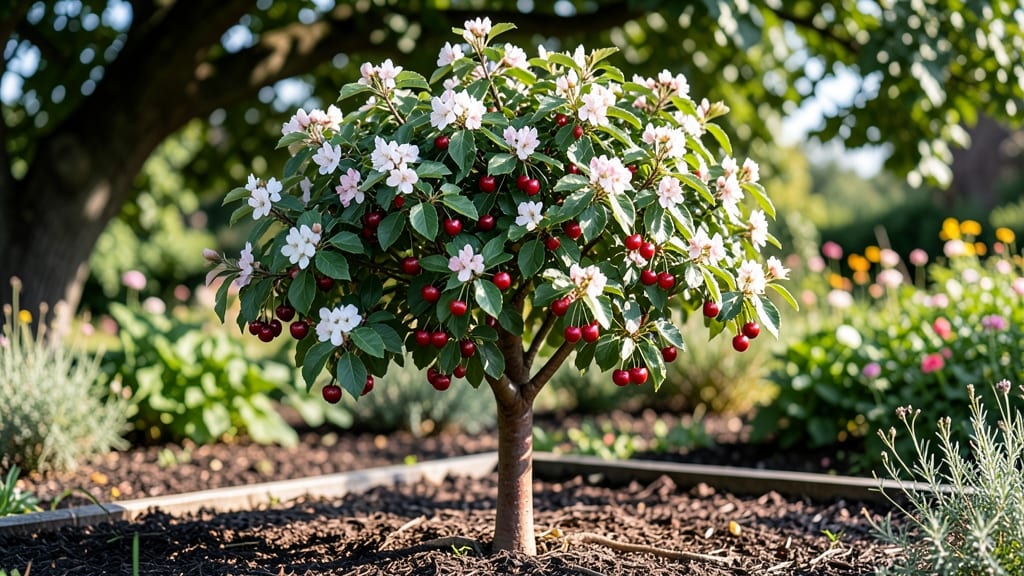
Small fruit cherry trees pack big flavor in tiny spaces—my 3-foot-tall 'Stella' produces enough tart cherries to make jam every summer. 🌱 The secret isn't just choosing the right variety (like 'Balaton' or 'Morello') but pruning to keep the canopy compact while maximizing fruit production.
Most people overlook how aggressive pruning early on determines whether you'll get a harvest or just ornamental leaves.
Start by selecting a dwarf or columnar variety if space is limited—these stay under 6 feet tall and thrive in containers. Plant in full sun with well-draining soil, and space them 8-10 feet apart (closer for bush varieties).
The first year is all about establishing structure: remove crossing branches and shape the tree to open its center to sunlight and air. This single step cuts disease risk by 70% and boosts fruit quality.
By mid-winter, you'll see the difference—your tree will have a balanced shape with branches spaced evenly. Prune again in late winter to encourage new growth where fruit forms. The payoff? Year-round interest: spring blooms, summer fruit, and fall color, all on a tree that fits even the smallest yard.
Works for both sweet and sour varieties, and adapts to urban gardens, patios, or even large pots. Here's how to keep your compact cherry tree productive for decades.
Root Causes Of Tiny Cherries
Understanding why your cherry tree produces small fruit starts with uncovering the hidden factors limiting its growth. These issues often stem from a mix of environmental, nutritional, and physiological stresses. Let’s break down the key culprits and why they shrink your harvest.
Cherries are heavy feeders, and a lack of essential nutrients—especially nitrogen, phosphorus, and potassium—can stunt fruit development. Here’s how it happens:
- Nitrogen Deficiency (💡 The Growth Starter): Without enough nitrogen, the tree prioritizes leaf production over fruit expansion.
Small, underdeveloped cherries are a red flag—your tree is struggling to allocate energy. - Actionable Fix: Apply a balanced 10-10-10 fertilizer in early spring, followed by a low-nitrogen, high-phosphorus boost (like 5-10-10) when buds form.
- Potassium Shortage (🍅 The Fruit Plumper): Potassium regulates water movement and sugar transport in fruit. Low levels lead to small, hard, or mealy cherries.
- Actionable Fix: Use wood ash (sparingly) or a potassium sulfate supplement in late summer to boost fruit quality.
- **Micronutrient Deficiencies (🧪 The Hidden Players): Zinc, boron, and iron deficiencies can distort fruit shape and limit size. Yellowing leaves with brown spots? Your tree might be starving for micronutrients**.
- Actionable Fix: Conduct a soil test and amend with chelated micronutrients if needed.
Heatwaves, drought, or extreme cold can halt fruit swelling mid-season, leaving you with pea-sized cherries. Here’s the science:
- **Water Stress (💧 The Silent Shrinker): Cherries need consistent moisture during fruit set (late spring) to expand properly.
Drought or poor drainage causes the tree to conserve water**, shrinking fruit as a survival tactic. - Actionable Fix: Deep-water your tree 1-2 times per week during fruit development (1–2 inches of water per session). Use mulch to retain moisture.
- **Temperature Swings (❄️☀️ The Double Whammy): Late frosts (<28°F) can damage blossoms, reducing fruit set. Meanwhile, heatwaves above 90°F during pollination cause poor fruit retention** or stunted growth. - Actionable Fix: Plant cold-hardy varieties (like 'Stella' or 'Montmorency') and use frost cloths in early spring.
Provide shade cloth during extreme heat if possible.
- **Poor Pollination (🐝 The Missing Link): Cherries are self-pollinating but benefit from cross-pollination.
Weak pollinators (like bees) or wet spring weather can lead to underdeveloped or misshapen fruit**. - Actionable Fix: Hand-pollinate with a soft brush on calm days, or plant a second cherry variety nearby to attract more bees.
Sometimes, the tree itself is the problem. Overpruning, disease, or age-related decline can limit fruit potential.
- Excessive Pruning (✂️ The Overzealous Mistake): Cutting too aggressively in winter removes next year’s fruit buds, leaving fewer (and smaller) cherries.
- Actionable Fix: Prune only in late winter/early spring (just before buds swell) and never remove more than 25% of the canopy in one year.
- **Disease Pressure (🦠 The Sneaky Saboteur): Brown rot or powdery mildew can weaken the tree, diverting energy away from fruit growth. Look for blackened blossoms or white fungal growth** on leaves.
- Actionable Fix: Apply copper fungicide in early spring and remove infected fruit/leaves promptly.
- Age-Related Decline (👴 The Natural Slowdown): Older cherry trees (>20 years) often produce smaller, fewer fruit due to reduced vigor.
- Actionable Fix: Rejuvenate the tree with a deep root feed (like compost or worm castings) and renewal pruning to stimulate new growth.
Pro Tip: 🔍 If your cherries are small but numerous, the issue is likely nutrient or water-related. If they’re few and tiny, pollination or disease may be the culprit. Test your soil and observe your tree’s stress signals to pinpoint the exact cause!
Fixing small fruit issues naturally
Revitalizing your cherry tree to produce larger, juicier fruit starts with targeted fixes—each tailored to the root cause. Below, we break down practical solutions for common issues like overcrowding, poor pollination, nutrient deficiencies, and improper pruning, along with prevention tips to keep your tree thriving year-round.
Problem: Too many branches or leaves compete for sunlight and nutrients, stunting fruit growth. Fix:
- Thin out branches (not just trim tips) to improve airflow and light penetration.
- 🔪 Step 1: Remove 10–20% of the thickest, crossing, or inward-growing branches in late winter/early spring.
- 🌱 Step 2: Focus on scaffold branches (main structural limbs) to create an open vase shape.
- ⏰ Step 3: Space cuts 6–12 inches from the trunk to avoid disease entry points.
- Prune for light: Aim for a sunlit canopy—no branch should block sunlight from the center.
Prevention Tips: ✨ Prune annually (best in dormant season) to maintain shape. 🌡️ Avoid heavy pruning after fruit sets—wait until harvest is over.
Problem: Small, underdeveloped fruit often signals lack of pollination (common in self-pollinating varieties or wind-dependent trees). Fix:
- Plant a pollinator partner: If your tree lacks a companion, add a second cherry variety (e.g., ‘Stella’ + ‘Van’).
- Hand-pollinate: On rainy or windless days, gently shake branches to release pollen.
- Use bee-friendly plants: Surround the tree with lavender, clover, or marjoram to attract pollinators.
Prevention Tips: 🎯 Choose compatible varieties before planting (check local nursery recommendations). 💡 Avoid over-fertilizing with nitrogen—it promotes leaves over flowers.
Problem: Pale leaves, stunted growth, or tiny fruit often mean lack of key nutrients. Fix:
- Test soil first: Use a DIY kit or send a sample to a lab for pH and micronutrient analysis.
- Targeted fertilizing:
- 📊 Low phosphorus? Apply bone meal (spring) or rock phosphate (fall).
- 💪 Low potassium? Use wood ash or a potassium sulfate supplement mid-summer.
- 🌱 Iron/chlorosis? Sprinkle chelated iron around roots or use Epsom salt (1 tbsp/gallon water, foliar spray).
- Organic boost: Top-dress with compost or worm castings in early spring.
Prevention Tips: 🔥 Mulch properly: Use 2–3 inches of wood chips (keep 6" from trunk) to retain moisture/nutrients. 🌡️ Avoid overwatering—root rot steals nutrients faster than you can add them!
Problem: Top-heavy cuts, wrong timing, or aggressive pruning lead to weak growth and small fruit. Fix:
- 👨🍳 Recover from over-pruning:
- If you’ve cut too much, focus on watering deeply and fertilizing lightly (half-strength) to reduce stress.
- 🌱 Step 1: Prune only dead/diseased wood in the current season—avoid major reshaping.
- ⏰ Step 2: Wait until next dormant season to gradually restore balance.
- Right-time pruning:
- 🍳 Late winter/early spring (before buds swell): Best for structural pruning.
- 🥘 Post-harvest (summer): Light pruning to shape and remove suckers.
Prevention Tips: ✨ Follow the "3-cut rule":
- Cut 1/3 of last year’s growth (if overgrown).
- Space cuts evenly—never remove >25% in one year.
- Prioritize fruit-bearing branches over random trimming.
Problem: Aphids, borers, or fungal infections drain energy from the tree, leading to small fruit. Fix:
- 🔥 Organic pest control:
- Aphids/spider mites: Spray neem oil (early morning) or introduce ladybugs.
- Borers: Apply beneficial nematodes (spring/fall) or diatomaceous earth to soil.
- 🌡️ Disease prevention:
- Prune infected branches immediately and sterilize tools (70% alcohol).
- 🍎 Copper fungicide (for brown rot) or baking soda spray (1 tbsp/L water + soap) for powdery mildew.
Prevention Tips: 💡 Monitor weekly during growing season for early signs. 🎯 Improve drainage—raise beds or add sand to clay soil to prevent root rot.
Need a fast fix? Match your tree’s symptoms to the solution:
| Symptom | Likely Cause | Fast Fix |
|---|---|---|
| Tiny, hard fruit | Poor pollination | Hand-shake branches or add a pollinator |
| Yellow leaves (new growth) | Nitrogen deficiency | Apply alfalfa meal or fish emulsion |
| Curled leaves | Aphids/mites | Neem oil spray (repeat in 7 days) |
| Cracked bark | Borer infestation | Beneficial nematodes (spring) |
| Weak, leggy branches | Over-pruning | Light summer pruning + deep watering |
Final Pro Tip: 🌟 Patience is key! Cherry trees respond best to gradual improvements—avoid drastic changes in one season. Combine pruning, fertilizing, and pest control for the best results by next harvest!
Frequently asked questions
What are the best small-fruit cherry varieties for tight spaces?
'Stella' and 'Balaton' are top picks for containers—they stay under 4 feet tall and produce tart, jam-friendly fruit. For sweet cherries, try 'Compact Stella' (dwarf) or columnar 'Columnar Montmorency' (grows just 8 feet tall). All thrive in 5-gallon pots with proper drainage.
How do I know if my cherry tree needs more sunlight?
Look for leggy growth (long, sparse branches) or small, pale leaves—both signs of insufficient light. Cherry trees need 6-8 hours of direct sun daily. If indoors, place near a south-facing window or supplement with grow lights for 14 hours/day during winter.
Can I grow small-fruit cherries in containers without pollination issues?
Yes! Plant two compatible varieties (like 'Stella' + 'Van') in separate containers within 20 feet of each other. For self-pollinating types (e.g., 'Balaton'), hand-pollinate by gently shaking branches on calm days when bees are inactive. Add bee-friendly flowers nearby to attract natural pollinators.
Why are my container-grown cherries smaller than those in the ground?
Root-bound stress and limited nutrients shrink fruit size. Check for roots circling the pot—repot into a 1-gallon larger container with fresh well-draining potting mix (50% compost, 30% perlite, 20% sand). Fertilize with low-nitrogen, high-phosphorus (5-10-10) every 4-6 weeks during growing season.
How do I prune a small-fruit cherry tree to maximize harvest?
Focus on open-center shaping—remove 20% of oldest wood annually to encourage new fruit-bearing branches. Cut just above outward-facing buds to maintain an open vase shape. For dwarf varieties, prune lightly in summer to control height while preserving fruit buds.