
Pruning
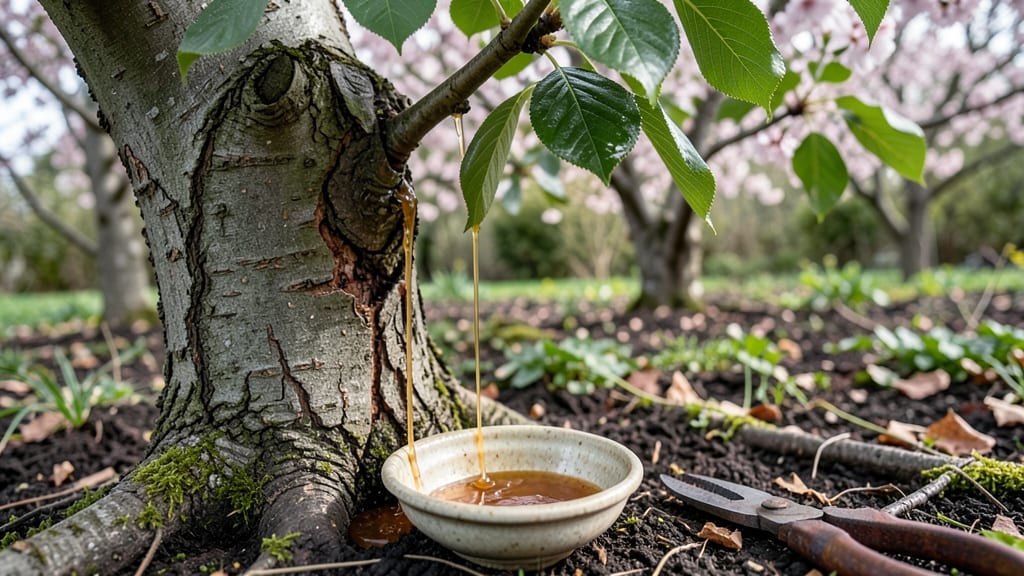
Your cherry tree’s sticky sap leaks aren’t just messy—they’re a cry for help. 🌳 I’ve seen this happen after storms, pest attacks, or even over-pruning, and the good news? Most cases fix with simple, foolproof steps that take less than an hour.
Start by inspecting the trunk and branches for wounds, discolored sap (a sign of silver leaf fungus), or tiny holes (borer larvae). Wipe away oozing sap with rubbing alcohol to check for pests underneath—this alone stops many leaks.
If you spot cracks or oozing gum-like sap, that’s a sign of deeper stress or infection. The real game-changer? Applying tree wound dressing (like Tanglefoot) to seal minor wounds and keeping the area clean. For fungal issues, a copper fungicide spray does the trick.
Most trees recover within 4-6 weeks with consistent care. Don’t ignore it if the sap keeps flowing heavily or the tree shows wilting leaves—those are red flags for a deeper problem. But for the everyday leaks? This method works like a charm, even for beginners.
Root Causes Of Sap Bleeding
When your cherry tree starts oozing sap like a syrup factory gone rogue, it’s usually a sign of nature’s way of saying, “Hey, something’s up!” While it might look alarming, sap leaking—especially in early spring—is often a normal (if messy) part of a tree’s life cycle.
But sometimes, it’s a red flag. Let’s break down the science behind why your cherry tree is “bleeding” and what’s really going on under that bark.
If your cherry tree is leaking sap in late winter or early spring, don’t panic—it’s likely just root pressure doing its thing. Here’s how it works:
- Water and nutrient buildup: As temperatures rise, your tree’s roots start absorbing water and minerals faster than the rest of the tree can use them. This creates hydraulic pressure deep underground, pushing sap upward through the trunk and branches.
- Dormant season storage: During winter, trees store sugars and water in their roots. When spring arrives, this stored energy gets pushed out through the tree’s vascular system—sometimes as sap.
- Species-specific trait: Many fruit trees, including cherries, are prone to sap bleeding because their xylem (water-conducting tissue) is especially active in early spring. Think of it like a tree’s version of a spring cleanse.
💡 Pro Tip: This type of sap flow is usually harmless and stops on its own once the tree’s leaves fully emerge and growth ramps up. If the sap is clear or pale yellow, you’re probably dealing with natural root pressure.
Not all sap leaks are innocent. If your cherry tree is oozing dark, thick, or foul-smelling sap, it could be a sign of stress or injury. Here’s what might be triggering it:
| Cause | How It Happens | Signs to Watch For |
|---|---|---|
| Physical damage (e.g., pruning cuts, animal bites, or storms) | When bark or wood is injured, the tree seals off the wound with sap—a natural band-aid to prevent pathogens from entering. | Sap leaks from fresh cuts, cracked bark, or areas where branches have been broken. |
| Fungal or bacterial infections (e.g., silver leaf disease, canker) | Pathogens weaken the tree’s vascular system, causing it to bleed as it fights off invaders. Some fungi even produce toxic compounds that disrupt sap flow. | Dark, gummy sap; sunken or oozing cankers on the trunk; wilting leaves. |
| Pest infestations (e.g., borers, aphids, or scale) | Insects burrow into the bark or sapwood, creating wounds that trigger sap production. Some pests, like borers, block the tree’s plumbing, causing backups. | Sawdust-like frass near leaks, tiny holes in bark, or sticky residue from pests. |
| Environmental stress (e.g., drought, extreme heat, or poor soil) | Stressed trees produce abnormal sap as a byproduct of their survival mechanisms. Drought, for example, can cause xylem cavitation, where air bubbles form in the water-conducting vessels, forcing the tree to “flush” the system. | Wilting leaves, yellowing foliage, or sap that’s thicker than usual. |
🚨 Warning Sign: If the sap is dark brown, black, or has a rotten smell, your tree might be battling a serious infection. Act fast—prune out damaged areas and treat with a copper-based fungicide or contact an arborist.
Believe it or not, your cherry tree’s thermostat plays a role in sap leaks. Rapid temperature changes—especially warm days followed by freezing nights—can trigger excessive sap flow. Here’s why:
- Frost damage: Freezing temperatures can rupture xylem vessels, causing sap to leak out when the tree thaws. This is common in late winter when temperatures swing wildly.
- Thaw cycles: As ice melts in the tree’s roots, water pressure spikes, forcing sap upward through any weak points in the bark.
- Early bud break: If your cherry tree starts growing leaves too early (due to unseasonably warm weather), its vascular system gets overwhelmed, leading to sap bleed as it struggles to keep up.
💡 Quick Fix: If sap leaks spike after a freeze-thaw cycle, the tree is likely just recovering. Monitor it closely—if new growth appears healthy, the bleeding should taper off.
Now that you know why your cherry tree is leaking sap, the next step is figuring out how to stop it. Stay tuned for actionable fixes—from pruning techniques to natural remedies!
Quick Fixes for Sap Leaks
If your cherry tree is oozing sap like a syrup factory gone rogue, don’t panic—there are practical ways to stop the flow and protect your tree’s health.
Below, we’ve broken down the most common causes of sap leaks and matched them with easy, actionable fixes (plus prevention tips to keep your tree happy long-term).
Fix: Adjust your watering habits and improve soil aeration.
- 🔥 Step 1: Let the Soil Dry Out Water only when the top 2–3 inches of soil are dry. Stick your finger in—if it’s damp, wait a day or two.
- 🍳 Step 2: Check Drainage If your tree sits in soggy soil, amend the area with compost or perlite to loosen compacted earth. For container-grown cherry trees, ensure pots have drainage holes.
- 👨🍳 Step 3: Mulch Properly Apply 2–3 inches of organic mulch (like wood chips) around the base, but keep it 6 inches away from the trunk to prevent rot.
💡 Pro Tip: If your tree is in a low-lying spot, consider raising the soil level slightly with a mound of amended dirt to prevent water pooling.
Fix: Seal cuts and protect the tree from further harm.
- 🔪 Step 1: Prune Correctly Use clean, sharp pruners and make cuts at a 45-degree angle just outside the branch collar (the swollen area where the branch meets the trunk). Avoid tearing bark—this invites pests and disease.
- 🥘 Step 2: Seal Large Wounds For sap leaks from big cuts, apply pruning sealant (like Tanglefoot Tree Wound Pruning Seal) to protect the wound. For small nicks, let the tree heal naturally—sealants can trap moisture.
- ⏰ Step 3: Monitor for Pests If sap attracts wasps, ants, or borers, spray the area with neem oil or insecticidal soap to deter them.
🌡️ Pro Tip: Prune during dormant season (late winter/early spring) when the tree is less stressed. Avoid heavy pruning in summer heat.
Fix: Identify the culprit and treat it before it spreads.
- 🎯 Step 1: Inspect the Tree Look for sawdust-like frass (borer droppings), holes in bark, or fungal growth (like cankers). Common offenders:
- Cherry bark borers (leaving D-shaped exit holes)
- Scale insects (sticky residue + white bumps)
- Fungal cankers (sunken, oozing sores)
- ✨ Step 2: Treat Accordingly
- For borers: Drill holes into the galleries and inject beneficial nematodes or borer-specific insecticide.
- For scale/insects: Spray with horticultural oil or soapy water (1 tbsp mild dish soap per gallon of water).
- For fungal issues: Apply copper fungicide or baking soda spray (1 tbsp baking soda + 1 tsp oil + 1 gallon water).
- 🔥 Step 3: Remove Infested Branches Cut off and burn or dispose of heavily damaged branches to prevent spread.
💡 Pro Tip: Encourage natural predators like ladybugs and birds by planting pollinator-friendly flowers nearby.
Fix: Shield the tree and adjust its environment.
- 🌞 Step 1: Provide Shade Cloth If sap leaks spike after sudden heatwaves, drape lightweight shade cloth (30–50% coverage) over the tree for a few weeks to acclimate it.
- 💧 Step 2: Deep Water During Drought Water slowly and deeply (1–2 inches per week) to prevent moisture stress. Use drip irrigation to keep roots consistently hydrated.
- 🌡️ Step 3: Protect from Cold Snaps If your tree is young or in a frost-prone zone, wrap the trunk with burlap or tree wrap in winter to prevent sunscald (which can cause sap leaks).
🎯 Pro Tip: Mulch volcanoes (piling mulch against the trunk) trap moisture and heat—avoid this at all costs!
Keep your cherry tree sap-free with these long-term strategies: ✅ Water wisely—deep and infrequent beats shallow, frequent soaking. ✅ Prune strategically—remove dead/diseased wood in dormant season. ✅ Monitor for pests—early detection = easier fixes. ✅ Improve soil health—test pH (cherry trees prefer 6.0–7.0) and amend with compost. ✅ Avoid physical trauma—no leaning ladders or lawnmower mishaps near the trunk!
With these fixes, your cherry tree should stop the sap saga and thrive. Most leaks resolve within 4–6 weeks with proper care—so grab your tools and get to work! 🌳✨
Frequently asked questions about cherry tree sap leaking
Is sap leaking from my cherry tree always a bad sign?
Not necessarily! In early spring, clear or pale yellow sap is often harmless root pressure as the tree wakes up. This happens when roots absorb water faster than the tree can use it. However, dark, thick, or foul-smelling sap signals stress—like infections or pests—and needs attention.
Can I use regular pruning sealant to stop sap leaks?
For small wounds, let the tree seal itself—sealants can trap moisture and worsen issues. But for larger cuts, use a tree-specific sealant like Tanglefoot. Always clean tools first to prevent spreading disease.
What should I do if I find tiny holes in the bark near sap leaks?
Those could be borer larvae! Scrape away debris to check for sawdust-like frass (insect droppings). Treat with neem oil or inject beneficial nematodes into the holes. Remove heavily infested branches immediately.
Will my cherry tree recover if I ignore the sap leaks?
Minor leaks from root pressure usually stop on their own, but ignoring dark sap or wilting leaves risks permanent damage. If the tree shows signs of stress (yellowing leaves, oozing cankers), act fast—most issues respond well to treatment within 4-6 weeks.
Can I use household items like vinegar or baking soda to treat sap leaks?
For fungal issues, a baking soda spray (1 tbsp baking soda + 1 tsp oil per gallon of water) works well. Vinegar alone isn't effective—it can harm the tree. Always test sprays on a small area first.