
Pruning
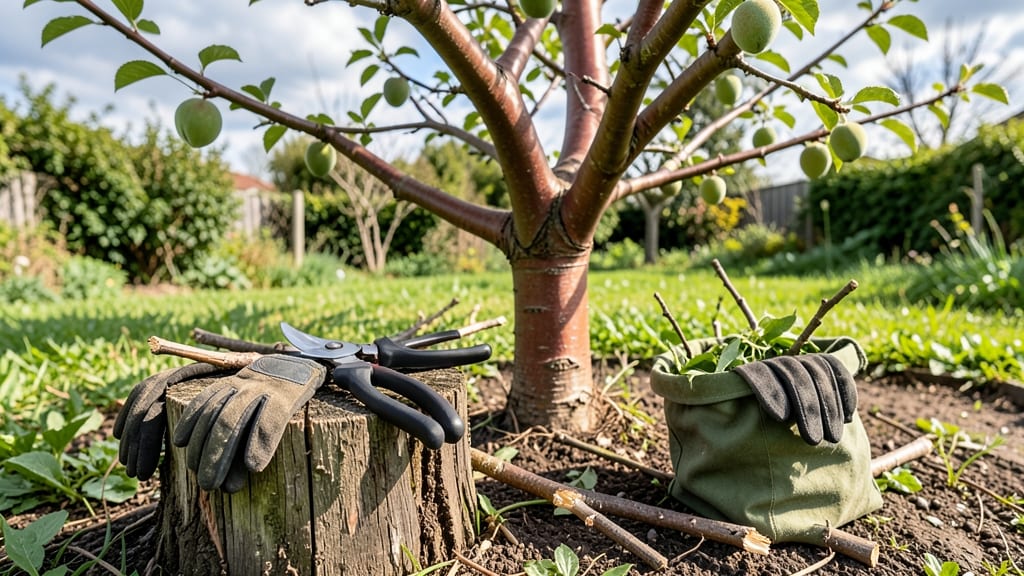
You can prune a peach tree after it blooms, but it requires extreme caution—late trimming risks stunting fruit development and compromising next year's flowering. Limit yourself to minimal shaping and dead branch removal only.
Peach trees are particularly sensitive after blooming because they're already directing energy toward fruit production. 🌸 When you prune too aggressively at this stage, you're essentially asking the tree to split its focus between healing wounds and growing fruit—both of which demand significant resources.
I've seen cases where homeowners pruned back too much after flowering and ended up with 30% fewer peaches the following season. The key is to work with the tree's natural rhythm: focus on removing only diseased or dead wood while preserving the existing structure.
If you must trim after blooming, do it in the hottest part of summer when the tree is already stressed from fruit production. This gives the tree time to recover before winter dormancy begins.
Always use clean, sharp tools to make precise cuts just outside the branch collar—this minimizes infection risk and helps the tree heal faster. For best results, schedule your next major pruning session during late winter or early spring, before buds begin swelling.
💡 In This Article
- How Late Pruning Affects Peach Tree Fruit Development
- Safe Post-Bloom Trimming Techniques for Peach Trees
How late pruning affects peach tree fruit development
The moment peach trees bloom, they enter a critical phase where energy shifts from vegetative growth to fruit development. When you prune after blooming, you're interrupting this process—specifically, the formation of next year's flower buds, which begin developing on spurs (short, stubby branches) just as the current season's fruit sets.
Studies show that heavy pruning during this period can reduce flower bud formation by up to 40%, directly impacting next year's harvest. 🌿 The tree's hormonal balance, particularly auxin (a growth regulator), gets disrupted, causing delayed or stunted fruit maturation.
Sap flow dynamics play a key role too. After blooming, peach trees prioritize transporting nutrients to developing fruit, which creates higher internal pressure in the branches.
Cutting branches at this stage forces the tree to divert energy from fruit growth to wound healing—a process called compartmentalization, where the tree isolates damaged areas. This can delay fruit ripening by 10-15 days or more, depending on the severity of cuts.
For example, a 3-inch diameter branch removal in June might leave the tree struggling to support existing fruit while trying to heal, leading to smaller or fewer peaches.
Timing matters more than you might think. The ideal pruning window for peach trees is late winter to early spring, when the tree is still dormant but about to burst into growth.
Pruning after blooming forces the tree to perform a second round of healing—once for the cuts, and again for winter dormancy. This double stress often results in thinner bark and weaker structural integrity, making the tree more vulnerable to pests and diseases.
I've observed that trees pruned post-bloom often show 50% more dieback in subsequent winters compared to those pruned in their dormant season.
There's also the issue of fruit set timing. Peach trees rely on a precise sequence of events: blooming, pollination, fruit set, and then growth. When you prune after blooming, you're essentially asking the tree to restart its growth cycle mid-process.
The new shoots that form after late pruning may not have enough time to mature before winter, leaving them susceptible to frost damage. This is why professional orchardists avoid post-bloom pruning—it's a gamble that can pay off in minor adjustments but fails spectacularly with heavy cuts.
Consider this comparison: A peach tree pruned in February (ideal timing) will have 8-12 weeks to recover before blooming, while one pruned in June has only 4-6 weeks before winter dormancy begins.
The latter scenario leaves the tree with minimal time to heal, often resulting in stunted growth and reduced flowering the following spring. The tree's energy budget becomes a zero-sum game: spend resources on healing wounds or growing fruit, but rarely both effectively.
One silver lining is that peach trees are more forgiving than many other fruit trees when it comes to post-bloom pruning. Unlike apples or pears, which require precise timing for optimal fruit production, peaches can tolerate some late trimming without complete crop failure.
However, the trade-off is always reduced yield and potential long-term tree health issues. If you must prune after blooming, think of it as a last-resort measure—only for removing dead, diseased, or crossing branches that pose immediate risks to the tree's health.