
Orchid Care
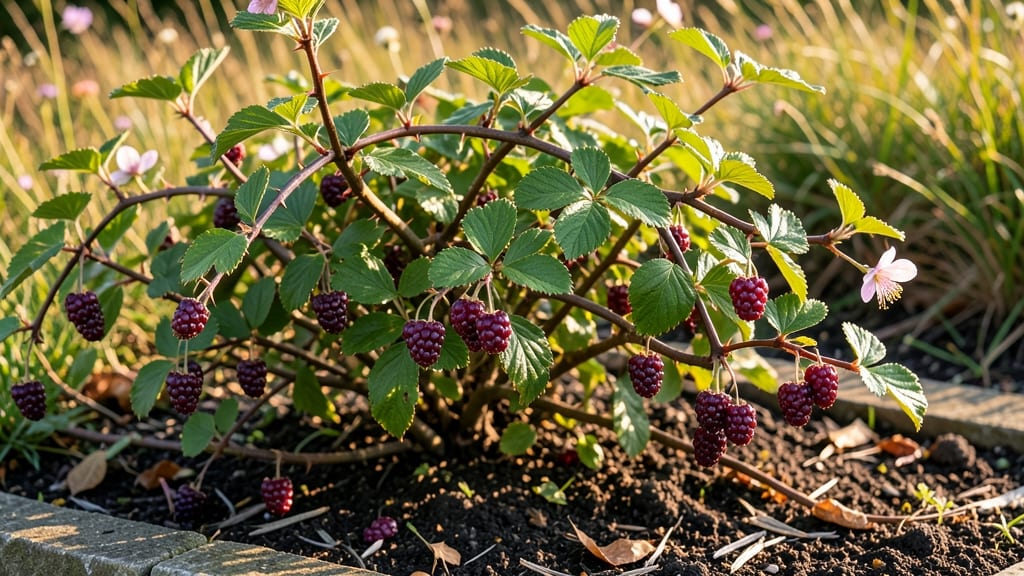
Boysenberries grow as vigorous, thorny vines—not trees—forming sprawling shrub-like bushes that need strong trellises or support to thrive in home gardens. Unlike true trees, they spread aggressively, requiring pruning and space management for optimal fruit production.
When people picture boysenberries, they often imagine a neat, tree-like plant—but the reality is far more dynamic. These berries thrive as perennial vines in the Rubus family, closely related to blackberries and raspberries, and their growth habit is anything but passive.
The "bush" appearance comes from how gardeners train and prune these sprawling canes, which can stretch up to 10-15 feet if left unchecked. 🌿 This vine-like structure is why they demand sturdy support systems, like T-bar trellises or woven wire fences, to keep canes organized and maximize fruit exposure to sunlight.
The aggressive spread isn't just about space—it's about survival. Each cane produces new shoots from its base, creating dense thickets that can crowd out other plants if not managed. That's why annual pruning (removing old canes after harvest) is non-negotiable for both yield and plant health.
What many gardeners discover is that boysenberries reward careful training with heavier fruit production than their tree-like cousins, making the extra effort worthwhile for those willing to embrace their vine nature.
💡 In This Article
- Why Boysenberries Are Thorny Vines, Not Trees
- Best Boysenberry Planting Strategies for Bush-Like Growth
Why boysenberries are thorny vines, not trees
Boysenberries belong to the Rubus genus, a group that includes blackberries and raspberries, and their growth habit reflects this botanical lineage. Unlike true trees with a single woody trunk, boysenberries produce biennial canes—first-year canes grow vegetatively (no fruit), while second-year canes bear fruit before dying.
These canes can reach 12-15 feet long if unchecked, sprawling horizontally or climbing supports with sharp thorns that deter pests and animals. 🌿 The thorns aren't just for defense; they help the vines anchor to trellises or fences, creating a natural support system that mimics their wild ancestors' behavior of clinging to forest underbrush.
The root system of boysenberries is another clue to their vine identity. They develop a shallow but extensive root network that spreads aggressively, sending up new shoots from the base (called "suckers") that can form dense thickets. This contrasts with tree roots, which grow deeper for stability.
The "bush" appearance gardeners see is actually a trained version of this sprawling growth—canes are pruned and guided along trellises to create a more organized, fruit-bearing structure. Without support, these vines would flop to the ground, shading out lower canes and reducing yield by up to 40%.
What often confuses gardeners is the woody, shrub-like appearance of mature canes, especially after winter dormancy when old canes turn brown and brittle. However, these aren't true shrubs—they're persistent canes that die back annually.
The key difference is in their growth pattern: trees grow upward from a central trunk, while boysenberries grow outward from the base, with each cane acting as an independent fruiting unit.
This is why pruning is so critical—it forces the plant to redirect energy into new, productive canes rather than wasted growth.
The thorns themselves are a specialized adaptation. Each cane produces 1-2 inch long thorns along its length, arranged in clusters near leaf nodes. These aren't just random spikes—they're positioned to protect developing fruit clusters while allowing sunlight to reach the canes.
The thorns also make harvesting more challenging, which is why many gardeners opt for thornless varieties (like 'Thornfree Boysenberry') when space allows. Despite this, the thorns play a crucial ecological role in preventing deer and rabbit damage, which can devastate unprotected plants.
Here's what happens beneath the surface: Boysenberries use a process called rhizomatous spread, where horizontal roots (rhizomes) produce new shoots. This is why they're often called "colonizers"—each plant can become a multi-cane cluster over time.
The rhizomes also make them perennial, meaning they regrow each spring from the same root system. This persistence is why boysenberries thrive in USDA zones 5-9, where they can establish strong root systems that survive winter freezes and spring thaws.
For comparison, imagine a 10-foot diameter boysenberry patch left unpruned: it could produce 50+ canes, each capable of yielding 1-2 pounds of berries. Without training, these canes would tangle, shade each other, and produce only 20-30% of their potential yield.
The "bush" you see in commercial plantings is actually a highly managed vine system, where canes are pruned to 3-5 feet and spaced 3-4 feet apart on trellises for optimal sunlight exposure and air circulation.