
Pruning
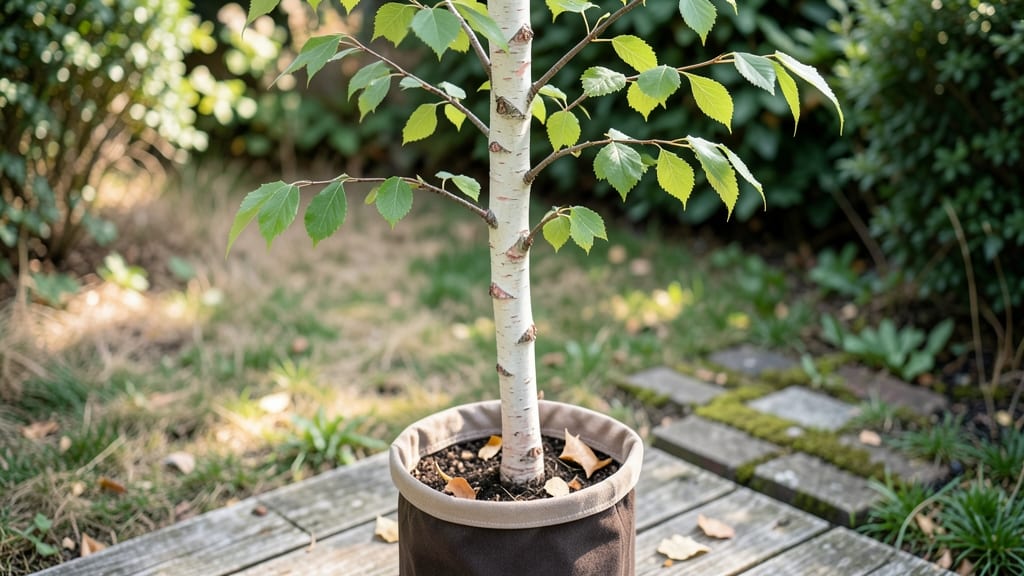
A birch tree in a pot brings that delicate, white-barked beauty to patios and small yards where roots can't spread. 🌿 The key isn't just choosing the right dwarf variety—it's matching container size, soil, and care to the tree's natural habits.
I've kept mine thriving for five years by mimicking its woodland roots' needs in a compact system.
The right setup means a 15-20 gallon container for mature trees (smaller for dwarf varieties), fast-draining soil with perlite, and a spot with morning sun and afternoon shade—just like birches love in the wild. Most people overwater; birches hate soggy roots.
Let the top inch dry between waterings, and you'll avoid the root rot that kills potted birches every winter. By late summer, you'll see those signature peeling bark patterns emerge, even in containers, and the tree will stay compact and graceful with just light pruning to remove dead branches.
The real magic happens in winter: wrapped properly, your potted birch stays dormant and healthy through freezing temps. Dwarf varieties like 'Fastigiata' or 'Gracilis' are the easiest for containers, but even standard birches can work if you refresh the soil every 2-3 years.
The trick is patience—these trees grow slowly, but their presence transforms any space into a serene woodland corner.
📚 In This Guide
- What you need
- Instructions
- Tips and common mistakes
- Wrapping up and next steps
What you need
- ● Birch tree sapling: Choose a Betula pendula (weeping birch) or Betula papyrifera (paper birch) in a 3–5 gallon container (1–2 ft tall). Ensure it’s healthy with no yellowing leaves or pests.
- ● Large, durable pot: A 18–24-inch diameter container with drainage holes (ceramic, fiberglass, or heavy plastic). Aim for 12+ inches deep to accommodate roots.
- ● High-quality potting mix: A well-draining blend like 60% peat moss or coco coir, 30% perlite/pumice, and 10% compost. Avoid garden soil—it compacts and suffocates roots!
- ● Gravel or drainage layer: 2–3 inches of small pebbles or expanded clay pellets at the pot’s bottom to prevent waterlogging.
- ● Pruning tools: Bypass pruners (for small branches)
- ● Loppers (for thicker stems, if needed)
- ● Sharp knife or saw (for stubborn branches)
- ○ Optional but helpful: Slow-release fertilizer (e.g., Osmocote for potted trees)
- ● Mulch (bark or pine needles to retain moisture)
- ● Tree support stake (if your birch is top-heavy)
- ● Watering can with a rose nozzle (for gentle hydration)
- ● A sunny spot with 4–6 hours of direct light daily (partial shade in hot climates).
- ● Access to soft, filtered water (tap water left out for 24 hours to reduce chlorine).
- ● Patience! Birches grow slowly—plan for 1–2 years before significant pruning is needed.
Step-by-step guide to growing a birch tree in a pot
Here’s how to cultivate that delicate, graceful birch tree in containers—with minimal fuss but maximum impact.
🪴 Step 1: Select the Right Pot and Drainage
Birch trees need room to grow, so choose a container at least 18-24 inches deep and 24-30 inches wide—this mimics their natural woodland habitat. I prefer unglazed ceramic or fiberglass pots because they allow moisture to evaporate through the walls, preventing root rot. If you’re using plastic, drill multiple drainage holes at the bottom to ensure excess water escapes.
Line the pot’s base with 2-3 inches of gravel or broken pottery to create a reservoir for water. This layer prevents soil from clogging the drainage holes while allowing roots to access moisture when needed. Birches hate soggy feet—always prioritize drainage. If your pot lacks a saucer, place it on a tray or cache pot to catch runoff.
🌱 Step 2: Use the Right Soil Mix for Moisture-Loving Roots
A birch’s shallow, fibrous roots need well-draining yet moisture-retentive soil. Mix 50% high-quality potting soil with 30% perlite or pumice (for aeration) and 20% compost or peat moss (for moisture retention). Avoid garden soil—it compacts and suffocates roots, leading to stunted growth.
Fill the pot two-thirds full with your mix, then tap the container gently to settle the soil without compacting it. Leave 4-6 inches of space at the top for mulch and watering. Birches thrive in slightly acidic to neutral soil (pH 5.0-7.0), so test your mix with a soil pH meter if you’re unsure. Adjust with lime (to raise pH) or sulfur (to lower pH) as needed.
☀️ Step 3: Plant and Position for Optimal Light
Remove the birch sapling from its nursery pot and loosen the roots if they’re circling tightly. Position it in the center of the container, ensuring the root flare (where roots meet the trunk) sits just above the soil line—burying it too deep invites rot. Backfill with soil, pressing lightly to remove air pockets but avoiding compaction.
Birches love bright, indirect light—think morning sun and afternoon shade. Place your pot in a location with at least 4-6 hours of filtered sunlight daily, like a south-facing window with sheer curtains or a partially shaded patio. Avoid harsh afternoon sun, which can scorch delicate leaves. If indoors, supplement with a grow light (12-14 hours/day) to prevent leggy growth.
💧 Step 4: Water Deeply and Maintain Consistent Moisture
Birches hate drying out, but they also detest waterlogged roots. Water deeply once a week (or more in hot weather) until water drains freely from the bottom. Check moisture by inserting your finger 2 inches into the soil—if it feels dry, it’s time to water. Overwatering is the #1 killer of potted birches, so always let the top inch dry out between waterings.
Mulch the surface with 2-3 inches of bark or pine needles to retain moisture and regulate soil temperature. Refresh the mulch seasonally to prevent it from breaking down into the soil. In winter, add an extra 1-2 inches of mulch to insulate roots from freezing temperatures. Birches are hardy to USDA Zone 3, but potted specimens need protection in colder climates.
✂️ Step 5: Prune Strategically for Shape and Health
Birches need minimal pruning—focus on removing dead, diseased, or crossing branches in late winter or early spring (before new growth begins). Use clean, sharp pruners to make cuts just outside the branch collar (the swollen area where the branch meets the trunk). Never leave stubs—they invite decay.
To encourage a fuller shape, trim back the longest branches by 1/3 in early spring. Avoid heavy pruning—birches are sensitive to aggressive cuts and may produce fewer leaves. If your tree grows too tall for its pot, consider topping the leader (main stem) by 6-12 inches to redirect energy to side branches. Just don’t overdo it—birches respond best to light, strategic pruning.
Tips & tricks for growing a birch tree in a pot
These insights will help your birch thrive in its container and keep it looking elegant year after year.
Container Size Matters: The 18-24 inch depth and 24-30 inch width recommendations aren't arbitrary—they accommodate birch roots' horizontal spread while allowing room for seasonal growth. If you're tempted to use a smaller pot for aesthetics, resist! Roots circling the container will strangle themselves, leading to stunted growth. I've seen birches in undersized pots develop a "pot-bound" look with twisted trunks—something you'll want to avoid.
Soil Mix Secrets: While the 50-30-20 soil ratio is perfect, here's what nobody tells you about the perlite: rinse it before mixing to remove any dust or fine particles that could compact your soil. I also recommend adding a handful of worm castings to the compost portion—this boosts microbial activity that helps roots absorb moisture more efficiently. The pH testing step is crucial; birches are sensitive to soil acidity, and even a slight deviation from 5.0-7.0 can stress the tree.
Light Positioning: That 4-6 hours of filtered sunlight is your sweet spot, but here's how to maximize it: rotate your pot every 2-3 weeks to ensure even growth. Birches naturally lean toward light sources, so without rotation, you'll end up with a lopsided tree. For indoor growers, place your birch near a west-facing window if possible—morning sun is gentler, but afternoon light is more intense and beneficial for photosynthesis.
Winter Protection: The extra 1-2 inches of winter mulch is essential, but don't stop there. Move your pot to a sheltered location (like against a north-facing wall) before the first frost. I've had birches survive winter outdoors in Zone 3, but they need that extra insulation. For extreme cold snaps (below 10°F), consider wrapping the pot in bubble wrap or burlap to prevent temperature fluctuations that can damage roots. The key is to mimic the gradual temperature changes birches experience in the wild.
Pro Tips for Birch Tree In Pot
- These insights will help your birch thrive in its container and keep it looking elegant year after year.
- Container Size Matters: The 18-24 inch depth and 24-30 inch width recommendations aren't arbitrary—they accommodate birch roots' horizontal spread while allowing room for seasonal growth.
- Soil Mix Secrets: While the 50-30-20 soil ratio is perfect, here's what nobody tells you about the perlite: rinse it before mixing to remove any dust or fine particles that could compact your soil.
Frequently asked questions
Got questions about keeping a birch tree in a pot thriving year-round? You’re not alone—many gardeners wonder about care, placement, and even how to keep it looking its best with minimal effort. Here are answers to the most common queries!
Can a birch tree in a pot survive winter outdoors?
A potted birch tree can survive mild winters outdoors, but it needs protection in freezing temps (below 10°F/-12°C). Wrap the pot in bubble wrap or move it to a sheltered spot (like a garage or porch) with indirect light. Paper birch varieties are slightly more cold-hardy than river birch, but always check your USDA zone!
How often should I water a birch tree in a pot?
Water when the top 1–2 inches of soil feel dry—usually every 5–7 days in summer, but reduce in winter (every 2–3 weeks). Overwatering is a bigger risk than underwatering! Ensure the pot has drainage holes to prevent root rot. Pro tip: Use a moisture meter for accuracy.
Do I need to prune a potted birch tree if I’m keeping it minimal?
Minimal pruning is key! Remove only dead, crossing, or overly long branches in late winter/early spring. Avoid heavy pruning—birch trees hate aggressive cuts, which can stress them. Focus on shaping lightly to maintain airflow and balance. No need for annual pruning unless you spot issues!
What’s the best pot size for a birch tree in a container?
Start with a pot 2–3 times wider than the tree’s root ball, but no deeper than 12–18 inches. As the tree grows, upgrade to a larger pot every 2–3 years (aim for 18–24 inches for mature trees). Use a fast-draining mix (50% potting soil, 30% perlite, 20% sand) to prevent soggy roots.
Can I keep a birch tree in a pot long-term, or will it outgrow it?
Birch trees can stay in pots long-term, but they’ll need regular root pruning (every 2–3 years) to prevent circling roots. Eventually, they’ll outgrow containers—plan to transplant to the ground after 5–10 years unless you’re committed to large, deep pots (30+ gallons). Dwarf varieties (like Betula pendula ‘Fastigiata’) are better for small spaces!
Why are my birch tree’s leaves turning yellow in a pot?
Yellow leaves often signal overwatering, nutrient deficiency, or root bound conditions. Check the soil—if it’s soggy, reduce watering. If leaves are pale, fertilize with a balanced, slow-release fertilizer in spring. Root-bound trees may need repotting. Bonus tip: Yellowing on lower leaves is normal aging!
Wrapping up and next steps
Growing a birch tree in a pot is a rewarding way to bring nature’s elegance into your space with minimal fuss!
Whether you’re drawn to its delicate bark or the joy of nurturing a small-scale tree, this guide has shown you how to thrive—from the right soil and pot size to seasonal care tips.
With just a little attention, your birch tree can flourish year-round, adding beauty and serenity to your home or garden.
Ready to take the next step? Start by choosing your pot and soil today, and soon you’ll be enjoying the graceful sway of your own potted birch tree! 🌿✨