
Trees
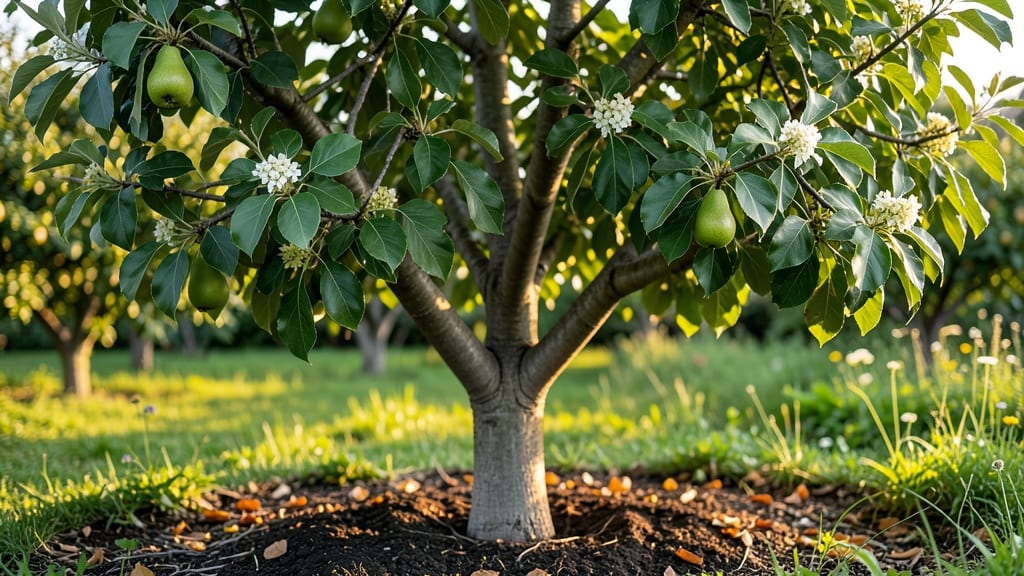
Bartlett pear tree leaves tell the story of your tree's health—spotting the first signs of trouble early saves your harvest. 🌿 I’ve watched fire blight turn vibrant green into blackened branches in just days, and pear psylla leave sticky residue that smothers new growth.
The key to keeping those leaves lush and productive? Year-round pruning that starts with removing diseased wood in winter and continues through summer’s pest outbreaks.
You’ll need sharp pruners, a bucket for clippings, and a close-up look at your leaves—check for curled edges, dark spots, or webbing between branches. Organic options like neem oil tackle pests, while copper sprays prevent fire blight.
The goal? A canopy so healthy it fights off problems before they spread. Think of pruning as a conversation with your tree: listen to its leaves, and they’ll reward you with fruit for years.
📚 In This Guide
- What you need
- Instructions
- Tips and common mistakes
- Wrapping up and next steps
What you need
- ● Pruning shears: Bypass pruners (sharp, 6-8 inch blades) for small branches (🔹 Quantity: 1 pair).
- ● Loppers: For medium branches (1-2 inches thick) (🔹 Quantity: 1 pair).
- ● Pruning saw: For thick branches (2+ inches) (🔹 Quantity: 1).
- ● Gloves: Heavy-duty, cut-resistant (🔹 Quantity: 1 pair).
- ● Disinfectant: 70% isopropyl alcohol or bleach solution (1 part bleach to 9 parts water) (🔹 For sterilizing tools).
- ○ Pruning sealant: Optional but helpful for large cuts (🔹 Quantity: Small tube).
- ● Ladder: Sturdy, extendable (🔹 Height: At least 10-12 feet).
- ● Heavy-duty trash bags: For collecting pruned branches (🔹 Quantity: 2-3).
- ○ Marking twine or flags: For tagging branches to prune later (🔹 Optional but handy).
- ● Hand pruners: For fine-tuning small cuts (🔹 Quantity: 1 pair).
- ● Pole pruners: For high branches (🔹 Quantity: 1).
- ● Work gloves: For extra protection (🔹 Quantity: 1 pair).
- ● Tree wound dressing: For sealing larger cuts (🔹 Quantity: Small container).
- ● Camera or phone: To document pruning progress (🔹 For tracking growth).
- ● First-aid kit: Just in case (🔹 Always a good idea!).
Step-by-step guide to pruning a Bartlett pear tree for a healthy canopy
Here's how I keep my Bartlett pear tree thriving year-round with simple, seasonal pruning.
✂️ Step 1: Late Winter Pruning for Structure and Airflow
Start in late winter while the tree is still dormant, but just before buds begin to swell. This is the best time to shape the tree and remove any dead, diseased, or crossing branches. I always begin by removing any branches that are rubbing against each other—this prevents wounds that invite pests and disease.
Look for branches that grow inward toward the center of the tree. These compete for sunlight and create a dense, shaded interior where fruit can't ripen properly. Use sharp pruning shears to make clean cuts just outside the branch collar—the raised area where the branch meets the trunk. Avoid leaving stubs, as they can rot and attract insects.
☀️ Step 2: Summer Pruning to Thin the Canopy and Improve Fruit Quality
In early summer, after the tree has finished flowering but before the fruit sets, it's time for a second round of pruning. This is when I focus on thinning the canopy to ensure sunlight reaches the inner branches. Start by removing any suckers—those vigorous shoots that grow from the base or along the trunk. They sap energy from the main tree.
Next, look for branches that are overcrowding the center. I like to remove about 20% of the smallest branches to improve airflow and reduce humidity, which helps prevent fungal diseases like pear scab. Make your cuts just above an outward-facing bud to encourage healthy growth in the right direction.
🌿 Step 3: Post-Harvest Pruning for Winter Preparation
After harvesting your pears in late fall, take one last look at the tree. Remove any branches that produced poor-quality fruit or showed signs of disease. I also prune out any branches that grew excessively during the season to maintain the tree’s shape and prevent it from becoming top-heavy.
This is also a great time to check for any dead or dying branches. If you see branches with no leaves, cracked bark, or signs of pests, cut them back to healthy wood. Avoid heavy pruning now—just focus on cleaning up and preparing the tree for dormancy. A light pruning session now will make next year’s growth stronger and more productive.
⏰ Step 4: Year-Round Maintenance to Keep the Tree Healthy
Throughout the year, keep an eye out for any branches that are growing in the wrong direction or blocking sunlight. A little pruning here and there—like trimming back a branch that’s growing into a walkway or removing a few leaves to improve airflow—goes a long way in keeping your Bartlett pear tree healthy.
I also make it a habit to sterilize my pruning tools with rubbing alcohol between cuts. This prevents the spread of disease from one branch to another. Finally, always prune on a dry day to reduce the risk of fungal infections. A well-maintained tree will reward you with a bounty of sweet, juicy pears year after year.
Tips & tricks for pruning your Bartlett pear tree
Real talk: Pruning a Bartlett pear tree isn't just about cutting branches—it's about creating the perfect balance for fruit production and long-term health. Here's what nobody tells you about keeping your tree thriving.
Timing Secret: Late winter pruning (just before buds swell) is your golden window because the tree is dormant but ready to heal quickly. I learned this the hard way after pruning too early—my cuts took forever to seal, and pests moved in. Mark your calendar for that exact moment between dormancy and bud swell, usually around late February to early March in most climates.
Branch Collar Technique: This is the difference between a clean cut and a wound that invites disease. Always cut just outside the branch collar—the swollen area where the branch meets the trunk. I use a sharp bypass pruner to make a clean cut at a slight angle, avoiding any stubs. If you're unsure where the collar is, look for that raised ridge—it's your guidepost for perfect cuts that heal properly.
Summer Pruning Strategy: The 20% rule in Step 2 isn't arbitrary—it's about creating that perfect balance. When you remove about 20% of the smallest branches in early summer, you're not just thinning the canopy; you're redirecting the tree's energy toward stronger, fruit-bearing branches. I focus on the smallest branches first because they're competing with the main structure for sunlight and nutrients. Think of it like decluttering your closet—you're making room for what matters.
Tool Maintenance: Your pruning tools are your most important equipment. I sterilize my shears with rubbing alcohol between every cut to prevent spreading disease from one branch to another. A dull blade tears wood instead of cutting cleanly, creating larger wounds. Invest in quality bypass pruners and sharpen them annually—your tree's health depends on it. This small habit has saved me from multiple outbreaks of fungal diseases over the years.
Pro Tips for Bartlett Pear Tree Leaves
- Real talk: Pruning a Bartlett pear tree isn't just about cutting branches—it's about creating the perfect balance for fruit production and long-term health.
- Timing Secret: Late winter pruning (just before buds swell) is your golden window because the tree is dormant but ready to heal quickly.
- Branch Collar Technique: This is the difference between a clean cut and a wound that invites disease.
Frequently asked questions
Got questions about caring for your Bartlett pear tree’s leaves? Here are some of the most common concerns—and their answers—to keep your tree thriving year-round.
When is the best time to prune Bartlett pear tree leaves for optimal growth?
The ideal time to prune is late winter or early spring (before buds swell) or summer after harvest. Avoid heavy pruning in fall—it can stimulate new growth that’s vulnerable to frost. Light maintenance (removing dead/diseased leaves) can happen anytime, but never prune in winter if your region gets harsh freezes.
Why are my Bartlett pear tree leaves yellowing or curling? What should I do?
Yellowing or curling leaves often signal nutrient deficiency (like iron or zinc), pest infestation (e.g., pear psylla), or disease (fire blight). Start by checking the soil pH (Bartletts prefer 6.0–7.0) and fertilize with a balanced organic mix. For pests, use horticultural oil or insecticidal soap. If disease is suspected, prune infected branches immediately and sterilize tools with rubbing alcohol.
How long does it take for new leaves to grow after pruning?
New leaves typically emerge within 2–4 weeks after pruning, depending on weather and tree health. In spring, growth is fastest (thanks to warmer temps and sunlight). If leaves don’t appear after 6 weeks, check for root damage, over-pruning, or drought stress. Water deeply and monitor for recovery.
Can I use Bartlett pear tree leaves for compost or mulch?
Yes! Healthy leaves make great green compost material—they add nitrogen and break down quickly. For mulch, shred leaves and spread a 2–3 inch layer around the base (but keep mulch away from the trunk to prevent rot). Avoid using leaves from trees treated with pesticides or showing signs of disease.
What’s the difference between pruning for leaf health vs. fruit production?
Pruning for leaf health focuses on removing dead, diseased, or crowded leaves to improve airflow and sunlight. For fruit production, prioritize open-center shaping—cut back 1/3 of the oldest branches annually to encourage new growth where fruit forms. Thin leaves inside the canopy to reduce humidity (which spreads fungal diseases).
Wrapping up and next steps
Caring for your Bartlett pear tree doesn’t have to be overwhelming—just a little intentional! 🌿 By mastering seasonal pruning, you’ll ensure a lush, productive canopy and bountiful harvests for years to come.
Whether you’re trimming dead branches in winter or shaping growth in summer, consistency is key to keeping your tree thriving.
Ready to take the next step? Grab your pruners, dust off your gloves, and schedule your first pruning session—your Bartlett pear tree will thank you with vibrant leaves and delicious fruit! 🍐