
Pruning
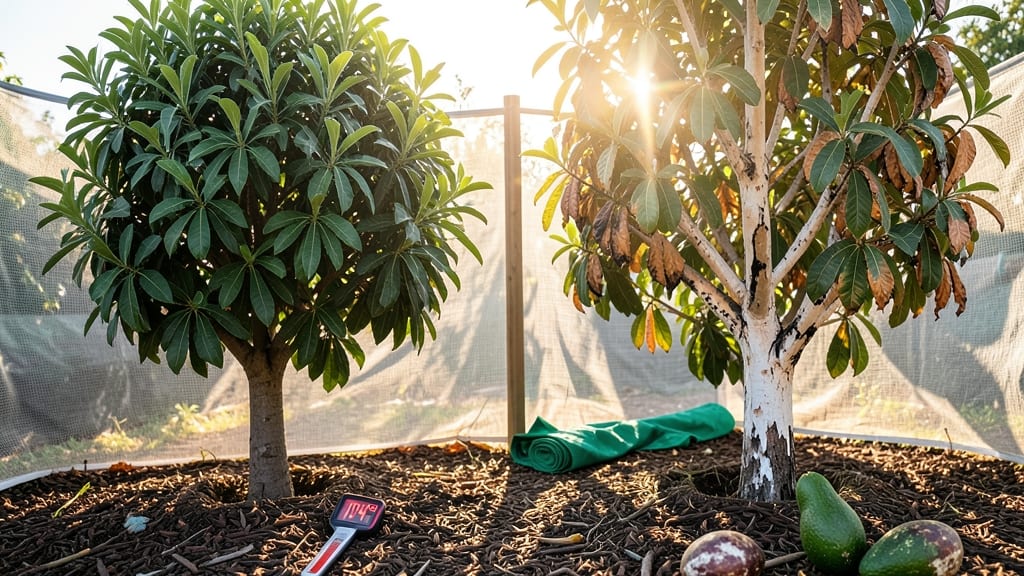
Your avocado tree’s crispy brown leaves aren’t a death sentence—just a cry for help. ✨ Sunburn happens when young trees get too much direct sunlight too fast, and the damage looks worse than it is.
The good news? With the right moves, you can nurse those leaves back to health in weeks, not years.
Start by moving your tree to partial shade for a few days—think dappled sunlight, not scorching afternoon rays. Water deeply but infrequently (avocado roots hate soggy soil), and mulch around the base to keep roots cool.
This isn’t just damage control; it’s teaching your tree to handle sunlight the right way.
Within 2-3 weeks, you’ll see new growth pushing through, and the crispy edges will soften. The key is patience—don’t rush the tree back into full sun, or you’ll repeat the cycle. Think of it like sunbathing after winter: gradual exposure is everything.
For extra protection, drape lightweight shade cloth (30-50%) over the tree for the first month. It’s like giving your tree a sun hat while it builds its tolerance. And here’s the secret weapon: prune any severely damaged leaves—they’re just sucking energy your tree could use for recovery.
Sun Exposure Gone Wrong
When your avocado tree’s leaves start looking like they’ve been kissed by a solar flare—yellowing, crisping, or developing brown patches—it’s not just a bad tan. These are classic signs of sunburn, and they happen when your tree’s delicate foliage gets more sunlight than it can handle.
But why does this occur in the first place? Let’s break down the science behind the scorch.
Avocado trees (Persea americana) are native to tropical and subtropical regions where sunlight is abundant, but their leaves aren’t built for sudden, intense exposure.
When a tree that’s been growing in partial shade—whether in a greenhouse, under a canopy, or even in a shaded backyard—is abruptly moved to full sun, its leaves lack the protective pigments and thick cuticles needed to shield them from UV rays.
Think of it like this: If you’ve spent winter indoors and then step outside without sunscreen on a bright day, your skin burns. Similarly, avocado leaves don’t have time to acclimate to harsh sunlight, leading to:
- Photoxidative stress: Excess sunlight triggers the production of reactive oxygen species (ROS), which damage cell membranes in the leaves.
- Water loss acceleration: Direct sun causes rapid transpiration, dehydrating the leaves faster than roots can replenish moisture.
- Chlorophyll breakdown: The green pigment degrades under intense UV, turning leaves yellow or brown as the cells die.
Actionable insight: If you’re moving your avocado tree outdoors, harden it off gradually—start with 2–3 hours of morning sun and slowly increase exposure over 1–2 weeks.
Avocado trees thrive in warm climates, but sudden heat spikes—especially when combined with dry air—can push them past their comfort zone. High temperatures (above 90°F or 32°C) increase the tree’s metabolic rate, but if the roots can’t keep up with water demand, the leaves become stressed.
Here’s the kicker: Avocado leaves have a stomatal closure response to conserve water during heatwaves. While this helps prevent dehydration, it also traps heat inside the leaf tissue, creating a greenhouse effect. Over time, this leads to:
- Cell membrane damage: Heat denatures proteins and lipids in leaf cells, causing them to leak and die.
- Necrosis (dead spots): Areas with trapped heat and blocked gas exchange turn brown and crispy.
- Reduced photosynthesis: The tree can’t produce enough energy to repair damaged cells, leading to a downward spiral.
Pro tip: During heatwaves, provide afternoon shade (using shade cloth or a temporary cover) and water deeply at dawn to keep roots cool and hydrated.
Sunburn and drought often go hand in hand for avocado trees. When soil moisture drops, the tree’s roots struggle to supply water to the leaves fast enough. This creates a double whammy:
- Water deficit: Leaves wilt, reducing their ability to dissipate heat through transpiration.
- Sunburn acceleration: Dehydrated leaves become more susceptible to UV damage because their protective compounds (like flavonoids) are diluted.
Additionally, overhead watering in full sun can worsen the issue. Water droplets act like tiny magnifying glasses, focusing sunlight onto the leaf surface and causing lens burn—tiny, crispy white or brown spots.
Solution: Water deeply and slowly at the base of the tree (not the leaves) in the early morning or late evening to avoid evaporation and sunburn.
New growth on avocado trees is especially prone to sunburn because:
- Thin cuticles: Young leaves haven’t developed the waxy layer that protects mature leaves from UV rays.
- Higher water content: Their cells are packed with water, making them more susceptible to heat damage.
- Less pigmentation: They often lack the deep green or reddish hues that help older leaves reflect sunlight.
If you’ve pruned your tree or it’s in a growth flush, watch for sunburn on new leaves—they may develop reddish or purplish tinges before turning brown. Provide temporary shade (like a light cloth or dappled shade) until the leaves harden off.
Understanding these causes is the first step to prevention. Next, we’ll dive into how to treat sunburned leaves and protect your tree from future damage—so keep reading!
Quick Fixes For Damaged Leaves
Sunburned avocado leaves won’t heal overnight, but with the right care, you can minimize further damage and help your tree recover. The key is acting fast—whether you’re dealing with direct sun scorch, windburn, or heat stress.
Below are targeted solutions, broken down by cause, plus long-term prevention tips to keep your tree thriving.
If your avocado’s leaves look bleached, crispy, or white (like they’ve been left in a tanning bed too long), it’s suffering from direct sun scorch. Avocados thrive in bright, indirect light—they’re not desert plants!
Immediate Actions: 1. 🌳 Move or Shade the Tree (Fast!)
- If possible, prune nearby structures (like walls or fences) casting harsh afternoon shadows.
- Use shade cloth (30-50% coverage) draped over the tree for a few weeks.
Secure it loosely to avoid trapping heat. - Pro tip: 💡 East-facing shade works best—it blocks the harshest afternoon sun while still allowing morning light.
- 💦 Hydrate Deeply & Often
- Sunburn weakens leaves, making them more prone to water loss. Water deeply 2-3 times per week (1-2 inches per session).
- Mulch the base with 2-3 inches of organic mulch (wood chips or straw) to retain moisture and cool roots.
- 🍃 Trim Severely Damaged Leaves
- Use clean, sharp pruners to cut off only the worst-affected leaves (those that are brown, brittle, or curling).
- Avoid heavy pruning—focus on opening the canopy to improve airflow and reduce future sun exposure.
Windburn looks like frayed, torn, or papery leaf edges, often on the windward side of the tree. While not as severe as sunburn, it stresses the tree and invites pests.
Immediate Actions:
- 🛡️ Protect from Wind
- Install a windbreak (bamboo screens, lattice fencing, or even a temporary tarp) on the dominant wind side.
- Pro tip: 🌡️ Check wind patterns—if winds shift seasonally, adjust protection accordingly.
- 🧴 Apply Leaf Shine (Optional Boost)
- Mix 1 tsp neem oil + 1 tsp dish soap + 1 quart water in a spray bottle. Lightly coat leaves to seal minor damage and deter pests.
- Caution: Avoid over-spraying—neem oil can harm beneficial insects if overused.
- 🌱 Fertilize for Recovery
- Sunburn and wind stress deplete nutrients. Use a balanced fertilizer (6-6-6 or 10-10-10) in early spring to support regrowth.
- Pro tip: ✨ Avoid high-nitrogen fertilizers—they promote leafy growth but make trees more sun-sensitive.
Heat stress often shows as yellowing between leaf veins or drooping leaves, even if the tree isn’t fully sunburned. This happens when roots can’t keep up with water demand.
Immediate Actions:
- 💧 Increase Watering Frequency
- Soak the soil every 2-3 days during heatwaves (test with your finger—top 2 inches should stay moist).
- Water at the base, not the leaves, to prevent fungal issues from excess moisture on foliage.
- 🌊 Use Drip Irrigation or Soaker Hoses
- Slow, deep watering reduces evaporation and ensures roots get hydration. Set up a system for early morning watering (avoid evenings to prevent fungal growth).
- 🌿 Prune for Better Airflow
- Thin out dense branches to improve circulation—this helps leaves cool down faster after hot days.
- Pro tip: 🎯 Remove suckers (shoots growing from the base) to redirect energy to recovery.
Once your avocado recovers, keep it healthy with these proactive strategies:
| Problem | Prevention Fix | When to Do It |
|---|---|---|
| Sunburn Risk | Plant in partial shade (morning sun + afternoon shade). | Before planting or when relocating. |
| Wind Damage | Install permanent windbreaks (e.g., hedges, trellises). | Early spring or fall. |
| Heat Stress | Mulch heavily (3+ inches) + drip irrigation. | Spring before hot months. |
| Over-Pruning | Prune lightly in late winter/early spring. | Avoid summer pruning—it stresses trees. |
If your avocado shows:
- Large patches of dead bark (not just leaves).
- Fungal growth (black spots, mold) on damaged areas.
- No improvement after 4-6 weeks of care.
A local arborist can assess for root rot, pests, or disease—common issues that worsen sun-stress symptoms.
Remember: Avocados are tropical trees—they’re used to gentle sun and humidity, not harsh desert conditions. With a little TLC, your tree will bounce back, and you’ll be enjoying lush, healthy leaves (and maybe even fruit!) in no time. 🥑💚
Frequently asked questions
Why do avocado tree leaves turn white or bleached after sun exposure?
This is classic sun scorch, where intense UV rays break down chlorophyll and damage leaf cells. The white or bleached patches occur when sunlight exceeds the tree’s protective capacity, causing cell death. Young leaves are especially vulnerable because their cuticles aren’t fully developed.
Can I save a severely sunburned avocado tree, or should I replace it?
Most trees recover with proper care! Prune damaged leaves, move to partial shade, and water deeply. If the trunk shows signs of damage (cracked bark) or the tree fails to produce new growth after 6-8 weeks, consider replacing it—though this is rare with proper intervention.
How long does it take for an avocado tree to recover from sunburn?
With ideal conditions (shade, proper watering, and pruning), you’ll see new growth in 2-4 weeks. Full recovery typically takes 2-3 months, depending on the severity. Monitor for fresh, healthy leaves pushing through—this is your best indicator of progress.
Is shade cloth better than moving my tree to a shadier spot?
Both work, but shade cloth offers more control. A 30-50% coverage cloth blocks harsh rays while allowing light penetration, while moving the tree might disrupt its root system. For container-grown trees, cloth is ideal—just secure it loosely to avoid trapping heat.
Will fertilizing help my sunburned avocado tree recover faster?
Yes, but choose wisely! Use a balanced fertilizer (6-6-6 or 10-10-10) to support recovery without promoting sun-sensitive growth. Avoid high-nitrogen fertilizers—they encourage leafy growth that can worsen sunburn. Apply in early spring for best results.