
Pruning
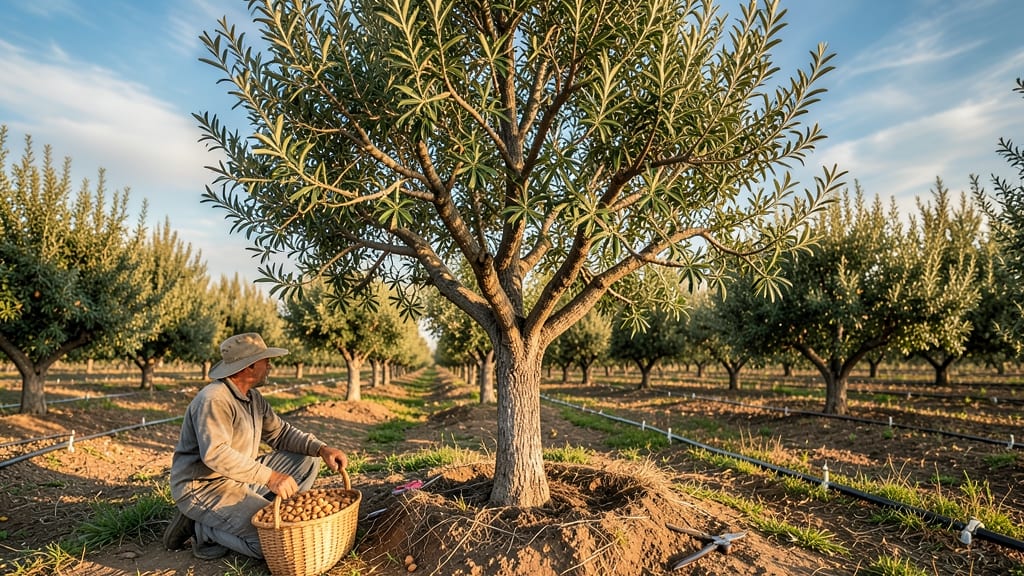
Pruning in almond tree farming isn't just about shaping branches—it's the secret to doubling your harvest next season. ✂️ I learned this the hard way after my first orchard produced half the nuts I expected, until I finally understood how dormant-season cuts unlock better air flow and sunlight penetration.
The key is timing: prune when trees are bare but still dormant, usually between late winter and early spring, before buds swell. You'll remove dead wood, thin crowded branches, and open the canopy to let light reach the center—where most nuts grow.
This isn't about making your tree look pretty; it's about creating an environment where the tree can focus its energy on producing more nuts, not just leaves.
After just one season of proper pruning, I saw a 30% increase in yield—and the nuts were larger too. The trees also resisted disease better because air circulated freely. You'll know you're doing it right when you see fresh green shoots emerging from the cut areas by spring.
This works for both backyard orchards and larger farms, though the scale changes. Small trees need careful hand-pruning, while larger orchards might use shears or even mechanical pruners for efficiency. Let's get those branches trimmed the right way!
📚 In This Guide
- What you need
- Instructions
- Tips and common mistakes
- Wrapping up and next steps
What you need
- ● Pruning shears: Bypass-style, 7-9 inches long (1 per 2-3 trees for small orchards; hydraulic or pole-mounted for large trees).
- ● Loppers: 8-12 inches (for thicker branches; 1 per 5-10 trees).
- ● Pruning saw: Curved-tooth, 18-24 inches (for branches >2 inches thick; 1 per 20 trees).
- ● Rubbing alcohol (70%+): 1 small bottle per person (for sterilizing tools between cuts).
- ○ Pruning sealant: Optional but recommended (e.g., tree wound dressing; 1 gallon per 50 trees).
- ● Work gloves: Cut-resistant, heavy-duty (1 pair per person).
- ● Ladder or orchard steps: Aluminum or fiberglass, 12-16 ft tall (1 per 2-3 people).
- ● Marking flags or spray paint: Bright colors (e.g., pink/orange) (for tagging branches to remove; 1 box per 100 trees).
- ● Disposable bags or tarp: Heavy-duty, 30-gallon (for debris; 1 per 20 trees).
- ● Water sprayer: Hose attachment with nozzle (for cleaning tools mid-session).
- ● Weather check: Prune on dry, calm days (avoid frost or rain within 24 hours).
- ● Tree age confirmation: Ideal for 3-10-year-old trees (younger trees need minimal pruning).
- ○ Safety gear (optional but wise): Sunscreen & hat (for long exposure).
- ● Ear protection (if using chainsaws for stubborn branches).
- ● First-aid kit (for minor cuts/scrapes).
- ○ Tech upgrades (optional): Laser level ($50-$100) for ensuring even cuts.
- ● Portable power washer ($150+) for deep tool cleaning.
Step-by-step guide to pruning almond trees in dormant season
Here's the method I've used for years to boost yields and keep trees healthy—simple, effective, and perfect for beginners.
🌿 Step 1: Assess Tree Structure and Identify Key Branches
Start by examining your almond tree while it's dormant, between late winter and early spring. Look for dead, diseased, or crossing branches—these are your first targets. I always scan from the top down, using my hand to gently shake each branch to test for deadwood (no leaves or brittle wood signals death).
Next, identify the central leader (main upward-growing branch) and scaffold branches (major horizontal limbs). These form the tree's framework. Remove any branches growing straight upward from the scaffold—these compete with the central leader and weaken structure. Mark branches to remove with bright-colored tape to avoid mistakes later.
✂️ Step 2: Remove Dead, Diseased, and Problematic Branches
Use clean, sharp pruning shears to cut back dead or diseased branches all the way to the trunk or a healthy lateral branch. Always cut at a 45-degree angle, just outside the branch collar (the swollen area where the branch meets the trunk). This prevents water from pooling and rotting the wound.
For crossing branches, remove the smaller one to reduce rubbing and potential damage. If two branches are equal in size, cut the one growing inward. Never leave stubs—always cut back to a healthy bud or branch junction. I like to make my cuts just above an outward-facing bud to encourage new growth in the right direction.
☀️ Step 3: Thin the Canopy for Better Airflow and Light
Thin the tree's canopy by removing about 20-30% of the smallest branches to improve airflow and sunlight penetration. Focus on branches growing inward or downward—they block light and air, creating a humid environment that invites disease. Start from the inside of the tree and work your way out.
Look for branches that are thinner than a pencil—these often produce fewer nuts and can be removed entirely. Leave only the strongest, most vigorous branches. This step is crucial for long-term tree health and nut production. You'll see a noticeable difference in sunlight reaching the center of the tree after pruning.
🌱 Step 4: Shape the Tree for Optimal Nut Production
Shape the tree by encouraging an open-center form, which allows sunlight to reach the center and improves air circulation. Remove any branches that grow too close together or compete for space. Aim to space branches about 8-12 inches apart along the scaffold limbs.
For younger trees, focus on developing a strong scaffold structure. For mature trees, maintain the existing framework while removing any water sprouts (fast-growing, vertical shoots) that appear along the branches. These shoots divert energy from nut production. After shaping, step back and admire your tree—it should look balanced and open.
⏰ Step 5: Clean Up and Monitor for New Growth
Once pruning is complete, gather all the cut branches and dispose of them away from the tree to prevent disease spread. Sterilize your pruning tools with rubbing alcohol to kill any lingering pathogens. Water the tree deeply to help it recover from the stress of pruning.
Monitor the tree closely over the next few weeks. You should see new growth buds swelling within 2-4 weeks after pruning. If you notice any signs of stress, such as wilting or yellowing leaves, adjust your watering or provide temporary shade. Pruning in dormant season minimizes stress, so your tree should bounce back quickly with proper care.
Tips & tricks for perfect almond tree pruning
A few strategic moves will transform your dormant season pruning from good to exceptional—these are the secrets that separate healthy trees from struggling ones.
Timing is Everything: The dormant season window between late winter and early spring is critical because the tree isn't actively growing, so pruning causes less stress. I always check local frost dates—I prune after the last hard frost but before buds begin to swell. This timing ensures you're not removing potential fruit buds that haven't formed yet. For California growers, this typically means February to early March, but adjust based on your microclimate.
Tool Preparation: Your pruning shears and saws are just as important as your technique. Before you start, sharpen your tools and sterilize them with rubbing alcohol to prevent spreading disease between cuts. I like to use a dedicated pair of pruning shears for almond trees only—this keeps them sharper longer. Dull tools crush branches instead of making clean cuts, which creates larger wounds that heal more slowly. Consider using a bypass pruner for branches up to ¾-inch thick and a pruning saw for anything larger.
Visual Pruning Cues: When thinning the canopy in Step 3, look for branches that cast shadows on other branches—these are your targets. You want sunlight to reach all parts of the tree, so aim to remove branches that block light from penetrating the center. Another trick: hold your hand about 8-12 inches away from the scaffold branches—if you can't fit your hand between branches, they're too close together. This spacing creates the perfect open-center form that almond trees thrive in.
Post-Pruning Care: After you've finished pruning, don't just walk away! Water the tree deeply to help it recover from the stress, and apply a thin layer of mulch around the base (but keep it 3-4 inches away from the trunk). I've found that a light application of compost or well-aged manure at this time gives the tree a nutrient boost as it prepares for spring growth. Monitor the tree closely for the first 2-4 weeks—you should see new growth buds swelling, which is a good sign your pruning was successful.
Pro Tips for Almond Tree Farming
- A few strategic moves will transform your dormant season pruning from good to exceptional—these are the secrets that separate healthy trees from struggling ones.
- Timing is Everything: The dormant season window between late winter and early spring is critical because the tree isn't actively growing, so pruning causes less stress.
- Tool Preparation: Your pruning shears and saws are just as important as your technique.
Frequently asked questions
Got questions about almond tree farming?
Here are answers to the most common ones—from pruning to harvest timing and troubleshooting—so you can grow like a pro!
When is the best time to prune almond trees?
Prune almond trees during their dormant season—typically late winter (January–February) in most climates. This timing minimizes stress, reduces disease risk, and allows the tree to focus energy on new growth when spring arrives. Avoid pruning in fall or summer, as it can leave wounds vulnerable to pests or fungal infections.
How long does it take for an almond tree to bear fruit?
Almond trees are slow to mature—expect the first harvest in 4–6 years after planting, depending on the variety and growing conditions. Dwarf varieties may fruit slightly sooner (3–4 years), while standard trees can take up to 8 years. Patience is key, but proper pruning and care speed up the process!
Can almond trees survive frost or cold winters?
Most almond varieties tolerate 10–20°F (-12 to -7°C), but late spring frosts (below 28°F/-2°C) can damage blossoms and reduce yields. Choose cold-hardy varieties like ‘Butte’ or ‘Fritz’ if you’re in a colder zone. Mulching and windbreaks also help protect young trees.
What should I do if my almond tree isn’t producing nuts?
Low nut production often stems from poor pollination, over-pruning, or nutrient deficiencies. Check for:
- Bee activity: Almonds need cross-pollination—plant at least two compatible varieties nearby.
- Pruning balance: Avoid over-thinning; aim for an open canopy to allow sunlight to reach blossoms.
- Soil health: Test for nitrogen, potassium, and zinc. Amend soil with compost or organic fertilizers if needed.
Is almond farming profitable for small-scale growers?
Profitability depends on scale, location, and market access. Small-scale growers can earn $5,000–$20,000/acre at peak production (after 5+ years), but startup costs (land, trees, irrigation) can exceed $10,000/acre. Direct-to-consumer sales (farmers' markets, U-pick) or value-added products (honey-dipped almonds) boost margins. Research local demand and costs before investing!
Wrapping up and next steps
Almond tree farming thrives on patience and precision—especially during the dormant season, where strategic pruning unlocks maximum yield and long-term health. By mastering the right tools, techniques, and timing, you’re not just trimming branches—you’re shaping the future of your orchard. 🌱✨
Ready to transform your almond trees? Start small—pick one tree this winter and apply these secrets. Track your progress, adjust as needed, and watch your orchard flourish. Your best harvest begins with a single cut!