
Lawn
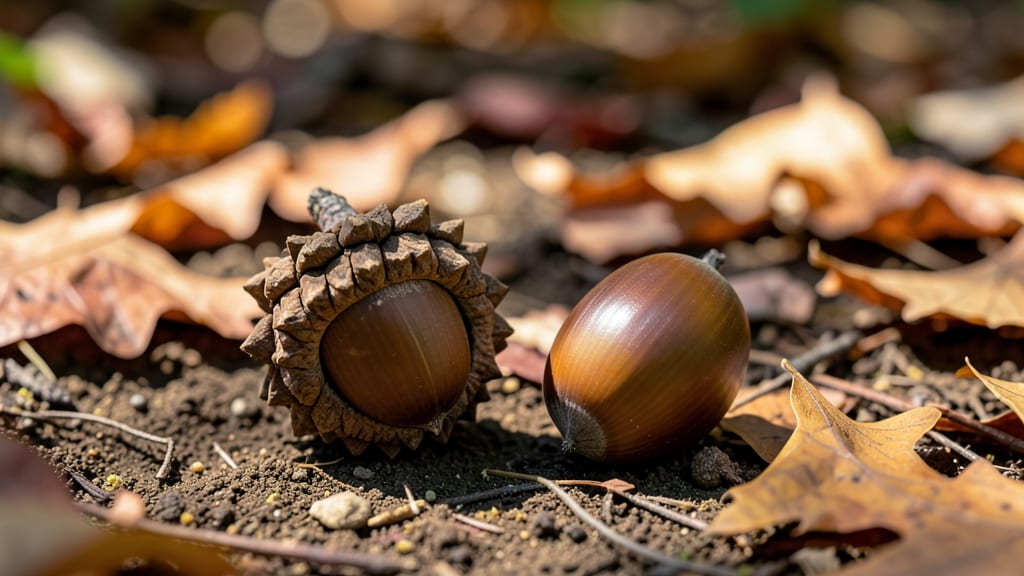
An oak tree seed, or acorn, looks like a small, oval nut with a glossy or slightly rough shell, topped by a scaly cap that resembles a tiny cup. These caps vary from 0.5 to 2 inches long, typically in earthy brown or tan hues, depending on the oak species.
Acorns are nature's masterpiece of seed design, built for survival. 🌰 The scaly husk isn't just decorative—it protects the nut from predators and harsh weather while helping it cling to branches until it's ready to fall.
White oak acorns, for example, have a smoother shell and a sweeter taste, while red oak acorns are more bitter and have a more pronounced cap. This variation isn't random; it's evolution ensuring different species thrive in their specific environments.
What's fascinating is how these seeds adapt to their surroundings. Some species produce acorns that attract squirrels and birds, which then scatter them far from the parent tree. Others rely on their hard shells to survive being buried underground until conditions are just right for germination.
If you're out in nature, look for these distinctive caps—they're your clue that you're near an oak tree.
💡 In This Article
- Key Features of Acorn Anatomy
- How to Identify Oak Seeds in Nature
Key features of acorn anatomy
The acorn's iconic cup-like husk, called the cupule, is far more than just packaging—it's a survival strategy. This scaly cap protects the nut from rain erosion, fungal infections, and hungry animals while it's still attached to the tree.
The cupule's design varies dramatically between species: white oak acorns have tightly clustered, bowl-shaped husks that cradle the nut snugly, while red oak cupules are flatter and more open, allowing water to drain away more efficiently during wet seasons.
Underneath the husk lies the nut itself, typically oval or egg-shaped, with a smooth or slightly ribbed shell that ranges from 0.5 to 2 inches in length. White oak acorns tend to be larger and more rounded, with a glossy finish that reflects light beautifully in sunlight.
Red oak acorns, meanwhile, are usually smaller and more elongated, often with a matte texture. The shell's thickness varies too—white oak shells are thicker and more durable, designed to withstand the 1-2 years it may take for germination in some climates.
What's truly remarkable is how the acorn's design supports its journey from tree to soil. The cupule's shape helps acorns cling to branches longer, giving them more time to mature before falling. Once detached, the cupule's weight distribution makes acorns roll away from the parent tree, reducing competition for resources.
This "rolling dispersal" can carry acorns up to 50 feet from their origin—a clever adaptation that prevents overcrowding and promotes genetic diversity across the forest floor.
The nut's internal structure is equally fascinating. Inside, you'll find the embryo and a single large seed leaf (cotyledon) packed with nutrients to fuel early growth.
White oak acorns contain more starch and less tannin (the bitter compound that deters animals), making them more palatable to wildlife like deer and squirrels. Red oak acorns, with their higher tannin content, are often left uneaten, allowing them to remain viable in the soil longer.
This chemical difference explains why white oak acorns are more commonly cached by animals for winter food.
Seasonal timing plays a crucial role too. Most acorns mature in late fall, when they're ready to fall and germinate in spring. The husk's drying process signals this readiness—fresh acorns have a greenish tinge, while mature ones turn deep brown.
Interestingly, some oak species produce acorns every 2-5 years in massive "mast years," flooding the forest with seeds to overwhelm predators and ensure survival of some offspring. This boom-and-bust cycle is nature's way of maintaining balance in the ecosystem.
If you're examining acorns closely, you might notice tiny pores or a faint seam where the shell meets. These aren't flaws—they're actually respiration points that allow the seed to exchange gases while waiting for the right conditions to germinate.
The shell's microscopic texture also helps water penetrate during rainy seasons, preparing the seed for its future growth. 🌱