
Size
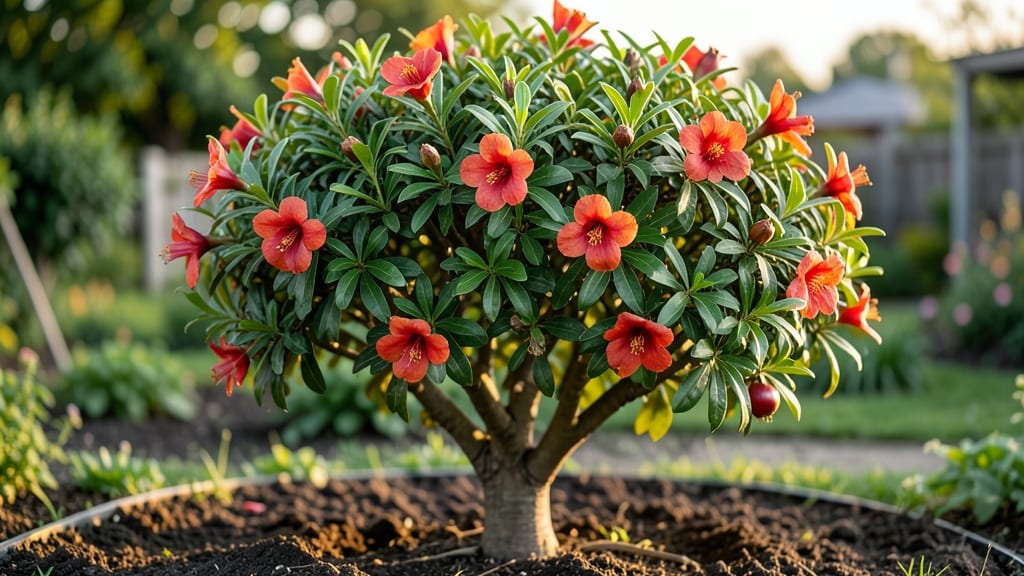
The Russian pomegranate tree size you choose for your garden will determine whether it thrives or struggles — these trees typically mature between 6 and 12 feet tall with a spread of 10 to 15 feet, making them a statement piece in any landscape.
If you’re picturing a compact shrub, think again: this 🍇 beauty grows fast, and without planning, it can quickly outgrow small yards or containers. That’s why knowing its growth habits upfront is the difference between a stunning centerpiece and a pruning project every spring.
Most varieties, like the popular ‘Wonderful’ or ‘Donskoy,’ reach their full height within 3 to 5 years, so spacing and pruning early saves headaches later.
Whether you’re working with a standard tree or a slightly smaller cultivar, understanding its potential size helps you place it where it belongs — whether that’s against a fence, in a large pot, or as a focal point in a sunny corner.
Below, I’ll break down exactly how size varies by variety, how to control growth with pruning, and the 3 spacing rules that keep your tree healthy and your garden looking intentional. Let’s get started.


Russian pomegranate tree mature size by variety: heights and spread guide
If you’re planning to grow a Russian pomegranate tree (Punica granatum), knowing its mature size is essential for proper spacing, sunlight exposure, and long-term care. These trees can reach impressive heights, but varieties differ significantly in their growth habits.
Understanding these differences helps you choose the right cultivar for your garden or container setup.
The Russian pomegranate is prized for its cold hardiness and sweet, juicy fruit. However, its size varies widely depending on the variety. While some can tower over 15 feet tall, others stay more compact.
Let’s explore the most popular varieties and their mature dimensions to help you plan your garden layout.
Wonderful is one of the most common varieties, known for its large, deep-red fruit. This variety typically grows 12–18 feet tall with a spread of 10–15 feet, making it ideal for spacious gardens. Its vigorous growth means it needs ample room to thrive and produce abundant fruit.
Donskoy, another popular Russian cultivar, is slightly smaller but still robust. It reaches 10–15 feet tall and spreads 8–12 feet wide, offering a slightly more manageable size for medium-sized yards. This variety is also highly cold-hardy, making it a favorite in colder climates.
Krasnodarnyy is a newer variety that’s gaining popularity for its disease resistance and sweet-tart flavor. It grows 10–14 feet tall with a spread of 8–10 feet, making it a great choice for gardeners who want a slightly smaller but still productive tree.
While standard varieties like Wonderful and Kubanets dominate larger gardens, some gardeners opt for container growing to manage size. However, Russian pomegranates don’t have true dwarf varieties, so even the smallest options (like Granatnyy) still require careful pruning and container selection to control growth.
For small gardens, consider planting your Russian pomegranate near a fence or wall to maximize space efficiency. This not only saves room but also provides support for pruning and training the tree.
Always ensure the tree has at least 6–8 feet of clearance from structures to allow for airflow and sunlight penetration.
If you’re growing in containers, choose a pot that’s at least 24–36 inches wide and deep to accommodate root growth. Smaller containers will stunt the tree’s growth, but they’re ideal for patios or balconies where space is limited. Just be prepared to prune regularly to keep the tree manageable.
Regardless of variety, all Russian pomegranates benefit from regular pruning to control size and shape. Prune in late winter or early spring before new growth begins. Remove any dead, diseased, or crossing branches first, then thin out excess growth to improve airflow and sunlight exposure.
Understanding the mature size of your Russian pomegranate tree ensures you can create an environment where it thrives. Whether you have a sprawling backyard or a cozy balcony, choosing the right variety and planning for its growth will set you up for years of beautiful blooms and delicious fruit.
How Russian pomegranate tree size affects garden planning and care
The Russian pomegranate tree can reach 10–15 feet tall with a 10–15-foot spread, making it a statement piece in any garden. But its size isn’t just about aesthetics—it directly impacts where you plant it, how you prune it, and even whether it thrives in containers.
Without proper planning, your tree might outgrow its space or struggle with airflow, leading to disease. Let’s break down how to manage its growth for a healthy, productive tree.
One of the first decisions you’ll face is spacing requirements. Planting too close to other trees or structures can stunt growth or invite pests.
The general rule is to give your Russian pomegranate at least 10 feet of clearance from neighboring plants and 6–8 feet from walls or fences. This ensures optimal airflow, which is critical for preventing fungal diseases like powdery mildew—a common issue with pomegranates.
Pruning techniques are your best tool for controlling height and shape. If you’re working with a small garden, you can prune in late winter or early spring to limit vertical growth. Focus on removing suckers at the base and thinning out overcrowded branches to encourage a more compact form. Just remember: never prune more than 25% of the canopy in one season, or you risk stressing the tree.
- 📏 Spacing: Plant 10+ feet apart for airflow and sunlight access.
- ✂️ Prune annually in late winter to control height and shape.
- 🪴 Container growing limits height to 6–8 feet but requires large pots (20+ gallons).
- 🌞 Full sun (6+ hours) is non-negotiable—shade stunts growth and reduces fruit.
- 💧 Deep watering (1–2 gallons) promotes stronger root systems for better support.
For those with limited space, container growing is a game-changer. While Russian pomegranates aren’t naturally dwarf varieties, you can keep them manageable in large containers (20+ gallons), where they’ll typically reach 6–8 feet tall.
Use a well-draining potting mix and repot every 2–3 years to accommodate root growth. Just be prepared for more frequent watering and fertilizing, as containers dry out faster than ground soil.
Another critical factor is soil and sunlight. Russian pomegranates thrive in well-draining, slightly acidic soil (pH 6.0–7.0) and full sun (6+ hours daily). Poor soil or insufficient light can lead to stunted growth or weak branches that struggle to support the tree’s weight.
If your garden lacks ideal conditions, consider amending the soil with compost or supplementing with grow lights during shorter daylight months.
Finally, don’t overlook the long-term care required to maintain your tree’s health and size. Mulch around the base to retain moisture and regulate soil temperature, and monitor for pests like aphids or scale insects, which can weaken the tree.
With the right balance of pruning, spacing, and container strategies, you can enjoy a Russian pomegranate tree that fits your garden—no matter how big or small your space is.