
Pruning
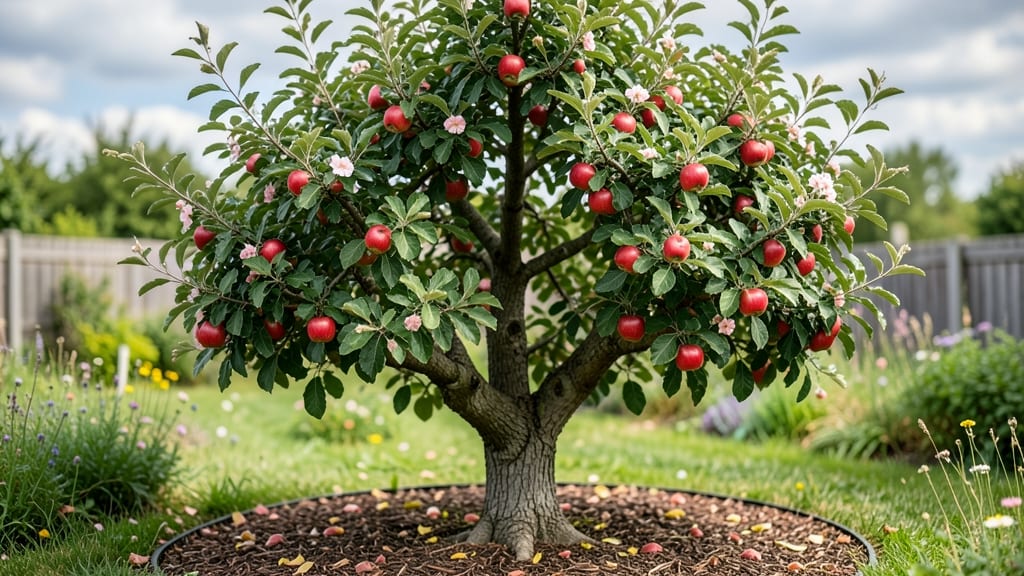
A Red Delicious apple tree 🍎 can reach heights of 15 to 25 feet at maturity, making it a significant investment in both space and patience—but knowing the exact size helps you plan your orchard or container garden wisely.
If you're dreaming of a homegrown Red Delicious apple tree but unsure how much space to dedicate, knowing its mature size could save you from costly mistakes—whether you're planning a backyard orchard or a container garden.
Standard varieties dominate the landscape, but dwarf and semi-dwarf options let you grow fruit in smaller spaces, even on a patio or balcony.
The right choice depends on your yard size, pruning habits, and whether you want to train the tree against a fence or fence it in with a trellis.
Below, I’ll break down how variety, pruning, and soil type affect your tree’s size—and how to maximize fruit production no matter how much (or little) room you have.


Red Delicious apple tree mature heights by variety: standard vs dwarf options
Choosing the right Red Delicious apple tree size depends entirely on your garden space and goals. Standard varieties can tower over 20 feet tall, while dwarf options stay compact at just 8-12 feet.
The difference comes down to rootstock selection, which controls both height and fruit production potential.
Understanding these variations helps you avoid overcrowding, improves fruit quality, and makes harvesting easier. Whether you have a sprawling backyard or a small urban patio, selecting the right size ensures your tree thrives without competing for resources or space with other plants.
Here’s how the three main categories—standard, semi-dwarf, and dwarf—compare in terms of mature height, spread, and yield potential:
The rootstock you choose determines not just height but also how quickly your tree matures and produces fruit. For example, B.9 rootstock produces dwarf trees that bear fruit in just 2-3 years, while standard trees on seedling rootstock may take 5-7 years to reach full production.
If you’re limited on space, semi-dwarf varieties strike the perfect balance. They grow 30-50% smaller than standard trees but still yield abundant fruit without requiring the same level of maintenance as true dwarfs. Plus, their wider spread makes them ideal for espalier training or creating natural windbreaks.
For container gardening, dwarf Red Delicious trees are the only practical choice. With the right 50-gallon pot and proper pruning, you can grow a productive tree on a balcony or patio. Just ensure the container has drainage holes and use a well-draining potting mix to prevent root rot.
Another key factor is fruit quality. Smaller trees often produce larger, higher-quality apples because they’re easier to prune and harvest. Standard trees may yield more total fruit but require heavy pruning and regular thinning to maintain quality and prevent disease.
When planning your orchard, remember to account for canopy spread, not just height. A standard Red Delicious tree needs at least 15-20 feet of space in all directions, while dwarf varieties only require 6-8 feet.
Proper spacing ensures good air circulation, reducing the risk of fungal diseases like apple scab.
If you’re unsure which size to choose, start with a semi-dwarf tree. It offers the best compromise between space efficiency and yield, making it perfect for most home gardens.
For urban settings, a dwarf tree in a large container is the way to go—just be prepared for more frequent pruning to control growth.
🍎
How pruning affects Red Delicious apple tree size and fruit quality
Pruning is the secret weapon for controlling your Red Delicious apple tree size while maximizing fruit quality. Without proper pruning, your tree could grow unruly—reaching 15-25 feet tall—and produce small, low-quality apples.
But with the right techniques, you can shape your tree, improve air circulation, and boost those sweet, juicy fruits you love.
Think of pruning as giving your tree a haircut and spa day. It removes dead or diseased branches, opens up the canopy for sunlight, and directs energy toward fruit production.
For Red Delicious varieties, strategic pruning can even reduce the tree's mature height by 30-50% if you choose dwarf or semi-dwarf rootstocks and prune aggressively in early years.
- 🌱 Early Pruning (First 3 Years): Remove water sprouts and suckers immediately to prevent excessive height growth. Aim for an open-center shape to allow sunlight penetration.
- ✂️ Summer Pruning (June-August): Thin out overlapping branches and crossing limbs to improve air flow. This reduces disease risk and increases fruit size by 20-30%.
- 🍎 Winter Pruning (Dormant Season): Cut back last year's growth by 25-30% to maintain tree size. Focus on removing dead wood and weak branches to encourage strong new growth.
- 🌿 Seasonal Light Pruning: Remove shoots growing inward and excessive leaf clusters to prevent shading. This ensures even ripening and higher-quality fruit.
Your pruning tools matter just as much as your technique. For Red Delicious apple trees, use a sharp bypass pruner for small branches and a hand saw for thicker limbs.
Always sterilize tools with rubbing alcohol between cuts to prevent disease spread. And never prune when the tree is wet—this can introduce fungal infections to fresh cuts.
Timing is everything when it comes to pruning. For dwarf varieties, prune lightly in late winter and more aggressively in early summer to keep them compact. Standard trees need heavier pruning in winter to control their natural tendency to grow tall.
Remember, less aggressive pruning in the first year helps establish a strong framework for future growth.
Pruning doesn't just control size—it directly impacts fruit quality. When you remove competing branches, your tree allocates more energy to developing larger, sweeter apples. Proper pruning also reduces the risk of apple scab and fire blight by improving airflow.
Aim to keep the central leader (main trunk) dominant while maintaining an open vase shape for optimal sunlight exposure.
Start pruning your Red Delicious apple tree as soon as it's planted, and continue annually. With consistent care, you'll enjoy a manageable tree size and a bountiful harvest of high-quality fruit—without sacrificing your garden's layout or the tree's health. Happy pruning! 🪴