
Pruning
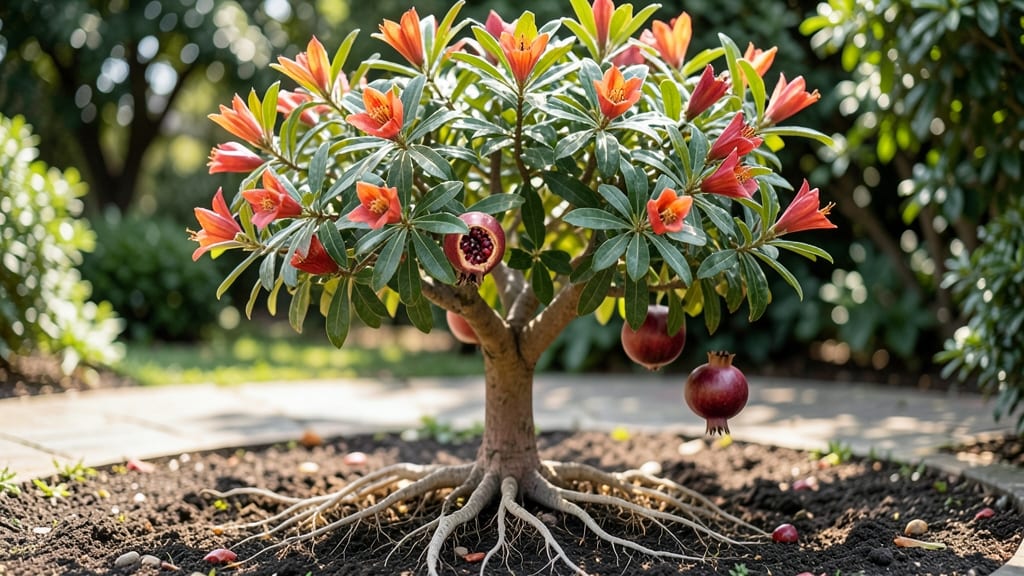
Pomegranate tree roots dive deeper than you’d expect—up to 6 feet—while spreading wide to anchor the tree’s thirsty needs. 🌱 I’ve learned that healthy roots mean bigger, sweeter fruit, but most gardeners overlook their care until problems pop up.
The secret isn’t just water or soil—it’s understanding how to prune, protect, and nurture what’s below the surface.
These roots crave well-draining soil mixed with compost, and they hate soggy feet—even drought-tolerant pomegranates need consistent moisture in their first few years. When transplanting, dig a hole twice as wide as the root ball but no deeper, or you’ll smother the tree’s natural depth.
The right technique keeps roots from circling and strangles growth before it starts.
Pruning roots isn’t just for established trees—even young pomegranates benefit from shallow root trimming to encourage outward spread. You’ll see the difference in fruit size and yield within a season.
The key is timing: prune roots in early spring before new growth kicks in, and avoid heavy pruning in summer when the tree is already stressed.
Whether you’re dealing with a container-grown pomegranate or a backyard tree, these root-care tricks work across climates—from hot deserts to Mediterranean zones. The payoff? Trees that thrive, not just survive, and fruit that’s worth the wait. Let’s get those roots working for you.
📚 In This Guide
- What you need
- Instructions
- Tips and common mistakes
- Wrapping up and next steps
What you need
- ● Pruning shears – Bypass pruners (sharp, clean, and capable of cutting through ½-inch branches). Quantity: 1 pair.
- ● Root pruning saw – A sturdy, heavy-duty saw designed for deep root cuts (e.g., Fiskars or Felco brands). Quantity: 1.
- ● Garden gloves – Heavy-duty, cut-resistant gloves (e.g., Mechanix or Gloveworks) to protect hands from thorns and debris. Quantity: 1 pair.
- ● Disinfectant – 70% isopropyl alcohol or bleach solution (1 part bleach to 9 parts water) for sterilizing tools. Quantity: Small bottle or spray.
- ● Shovel or spade – A flat-edged shovel (12–18 inches wide) for digging around roots. Quantity: 1.
- ● Root stimulator or mycorrhizal fungi – Organic rooting hormone (e.g., Rootone) or mycorrhizal powder to promote regrowth. Quantity: Small packet.
- ● Mulch – Organic mulch (wood chips, straw, or compost) to protect exposed roots. Quantity: 2–3 inches (5–7.5 cm) per tree.
- ● Watering can or hose – For post-pruning hydration. Quantity: 1.
- ● Knee pads – For comfort during extended digging. Quantity: 1 pair.
- ● Root exposure spray – Water-soluble dye (e.g., Fluorescent pink dye) to visualize roots if needed.
- ● Pruning sealant – Tree wound dressing (e.g., Tanglefoot Tree Wound Pruning Seal) for large cuts (controversial but useful for some gardeners).
- ● Garden twine or stakes – To mark areas for future reference.
- ● Soil moisture meter – To monitor hydration levels post-pruning.
Pomegranate tree root care: pruning secrets for stronger growth
Healthy roots are the foundation of a thriving pomegranate tree—here's how to nurture them year-round.
🌱 Step 1: Assess Root Health Before Pruning
Start by examining the root system in early spring when new growth begins. Healthy roots should be firm, white to light tan, and free of dark spots or mushy areas. Kneel beside the tree and gently brush away the top 2-3 inches of soil around the base to expose the roots. You're looking for a strong, fibrous network extending outward—this is your tree's lifeline.
If you notice blackened or soft roots, that's a sign of rot or fungal infection. In this case, remove only the affected sections with sterilized pruners and avoid pruning further until the tree shows new, healthy growth. Healthy roots will have a slightly rough texture and won't crumble when gently touched.
✂️ Step 2: Prune Surface Roots Strategically
Surface roots—those growing within 6 inches of the soil surface—need special attention. These roots absorb water and nutrients most efficiently, but they can become overcrowded or damaged by lawn equipment. Use sharp, clean pruners to trim any surface roots that are growing in circles or competing with each other.
Make cuts at a 45-degree angle, about 1/4 inch above a lateral root or bud. This encourages new growth downward into the soil rather than outward. Avoid cutting more than 20% of the root system at once—this can stress the tree and reduce its ability to absorb water and nutrients.
💧 Step 3: Mulch to Protect and Nourish Roots
After pruning, spread a 3-inch layer of organic mulch—like wood chips or shredded bark—around the base of the tree, keeping it 6 inches away from the trunk. Mulch acts as a protective blanket, regulating soil temperature and retaining moisture while preventing weed competition.
Replenish the mulch annually in late winter or early spring. Over time, the mulch will break down and enrich the soil, providing a slow-release source of nutrients for the roots. Avoid piling mulch against the trunk, as this can trap moisture and lead to rot.
☀️ Step 4: Water Deeply to Encourage Root Growth
After pruning and mulching, water the tree deeply to a depth of 12-18 inches. Use a garden hose with a slow setting or a soaker hose to deliver water gradually, allowing it to penetrate the soil without running off. The goal is to encourage roots to grow deeper, making the tree more drought-resistant.
Check soil moisture weekly by inserting your finger 2-3 inches into the soil. If it feels dry, water again. Pomegranate trees are drought-tolerant once established, but their roots need consistent moisture during the first 2-3 years to develop properly. Avoid overwatering, as soggy soil can suffocate roots and lead to rot.
⏰ Step 5: Monitor and Adjust Seasonally
In late fall, after the tree has dropped its leaves, conduct a final root check. Remove the mulch and inspect for any signs of stress, such as wilting leaves or stunted growth. If you notice new surface roots forming, trim them back lightly to prevent overcrowding.
Adjust your watering schedule based on seasonal changes—reduce frequency in winter when the tree is dormant, but maintain consistent moisture during the growing season. Healthy roots will support stronger branches, more abundant blooms, and sweeter fruit. With proper care, your pomegranate tree will reward you with decades of lush growth and vibrant harvests.
Tips & tricks for perfect pomegranate tree root care
Let me share the secrets I've learned after years of nurturing these beautiful trees—because strong roots mean everything for your pomegranate's future.
Root Health Inspection: In Step 1, when you're brushing away that top 2-3 inches of soil, take a moment to run your fingers along the roots you expose. Healthy roots should feel like firm, slightly rough ropes—not slippery or mushy. If you see any roots with a dark, almost blackened appearance, that's a clear sign of rot. I've seen gardeners miss this early warning and lose entire trees because they didn't act quickly enough. Sterilize your pruners with rubbing alcohol between cuts if you're dealing with infected roots—this prevents spreading any potential disease to healthy parts.
Pruning Precision: That 45-degree angle cut in Step 2 isn't just arbitrary—it's about directing growth where you want it. When you make that clean cut about 1/4 inch above a lateral root or bud, you're essentially telling the tree, "Grow down, not out." I've found that using a sharp, clean pruner makes all the difference. A dull blade can crush roots instead of cutting cleanly, which stresses the tree. And remember—never remove more than 20% of the root system at once. I learned this the hard way when I overzealous pruned and nearly killed a young tree.
Mulch Mastery: The 3-inch layer of organic mulch in Step 3 serves multiple purposes beyond just looking pretty. It regulates temperature, retains moisture, and prevents weeds—but here's the pro tip: make sure that mulch stays 6 inches away from the trunk. I've seen too many cases where people pile mulch right against the bark, creating a perfect environment for rot. Think of it like a donut around your tree—cover the roots but leave that trunk exposed to air. And when you replenish that mulch annually, use it as an opportunity to check for any new surface roots that might need trimming.
Watering Wisdom: When you're watering to that 12-18 inch depth in Step 4, the key is patience. Pouring water quickly just creates runoff that doesn't penetrate deep enough. I use a soaker hose set on a slow drip for about 20-30 minutes to ensure that water reaches those deep roots. And that weekly finger check? It's your best tool for understanding your tree's needs. If the soil feels dry 2-3 inches down, that's your cue to water again. The first 2-3 years are critical—these roots need consistent moisture to establish themselves properly.
Pro Tips for Pomegranate Tree Roots
- Let me share the secrets I've learned after years of nurturing these beautiful trees—because strong roots mean everything for your pomegranate's future.
- Root Health Inspection: In Step 1, when you're brushing away that top 2-3 inches of soil, take a moment to run your fingers along the roots you expose.
- Pruning Precision: That 45-degree angle cut in Step 2 isn't just arbitrary—it's about directing growth where you want it.
Frequently asked questions
Got questions about pomegranate tree roots? You’re not alone! Here are some of the most common concerns—and their answers—to help you nurture a healthier, more resilient tree.
How deep do pomegranate tree roots grow, and how does it affect pruning?
Pomegranate roots typically extend 3–5 feet deep but spread widely (up to 2–3 times the tree’s canopy width). Avoid aggressive root pruning—focus on surface-level roots during soil prep or shallow trenching. Deep root damage can stress the tree, so stick to canopy pruning for growth control.
When is the best time to prune roots if I’m also trimming branches?
The ideal window is late winter or early spring (just before buds swell) or summer after harvest. Root pruning is best done 2–3 months before branch pruning to minimize shock. Never prune roots in fall or winter—the tree needs energy to heal before dormancy.
What should I do if I accidentally cut a major root while digging?
Stay calm! Small cuts (<1-inch diameter) will heal on their own. For larger roots, seal the wound with pruning sealant and water deeply. If the root is >2 inches thick, call an arborist—severe damage may require root grafting or soil aeration to recover.
Can I grow pomegranates in containers, and how do I manage their roots?
Yes! Use a large pot (20+ gallons) with drainage holes and fast-draining soil. Prune roots annually in spring by trimming circling roots with sterilized shears. Repot every 2–3 years to refresh soil and prevent root-bound stress.
How do I tell if my pomegranate tree’s roots are unhealthy or diseased?
Watch for mushy, discolored roots (fungus), gnarled growths (root knot nematodes), or sudden leaf drop. Healthy roots are white/tan and firm. Treat with neem oil for pests or copper fungicide for rot. Avoid overwatering—soggy soil invites disease.
Wrapping up and next steps
Caring for your pomegranate tree’s roots is the secret ingredient to a thriving, fruit-bearing plant! 🌱 From proper pruning techniques to understanding soil health, these steps ensure your tree stays robust and productive.
Whether you’re a seasoned gardener or just starting out, small efforts now can lead to big rewards later—think juicy pomegranates and stunning blooms!
Ready to take your pomegranate tree to the next level? Start by scheduling a root check this season—dig gently, observe, and adjust your care routine based on what you learn. Happy growing! 🌟