
Pruning
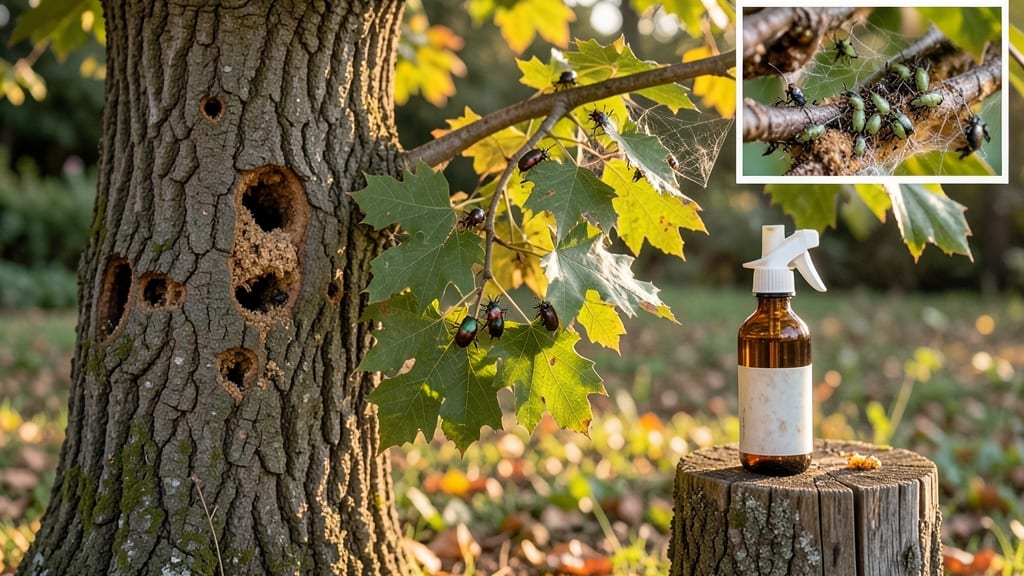
Your maple tree's sticky leaves and wilting branches scream "pests!"—and I've battled both aphids and borers in mine. 🌳 The good news? Organic sprays work better than you'd think, cutting infestations without harsh chemicals that harm bees or your soil.
I'll show you the exact sprays I use that stop these pests in their tracks.
First, identify the culprit: aphids leave behind a honeydew residue (that black sooty mold is a dead giveaway), while borers create D-shaped holes in bark and sawdust piles at the base. The key to organic control is timing—spring is when aphids strike, and summer's when borers get active.
My go-to spray mix of neem oil, insecticidal soap, and horticultural oil works in 3-5 days when applied right.
You'll see results within a week: fewer sticky leaves, stronger new growth, and no more borer tunnels eating your tree's heartwood. The best part? These sprays are safe for pets and kids once dry, and they won't kill beneficial insects like ladybugs that actually help control pests.
Spring and summer are critical monitoring seasons—check your tree every 10 days during these months.
For heavy infestations, combine sprays with physical removal (blast aphids off with water) and preventive measures like keeping your tree healthy with proper watering and mulching. Even if your maple's already struggling, these methods can turn things around before pests take over completely.
Root Causes Of Maple Tree Attacks
Maple trees, with their vibrant foliage and sturdy trunks, are a favorite among homeowners—but they’re also a magnet for pests. Understanding why these insects target your maples is the first step to stopping them before they cause real damage. Below, we break down the science behind the most common triggers.
Healthy maples naturally resist pests, but when their defenses drop, insects and borers strike like vultures. Here’s what weakens them:
- Nutrient Deficiencies: Maple trees need balanced nutrients—especially nitrogen, phosphorus, and potassium—to produce strong sap and bark. Lack of these makes them easier prey. For example, nitrogen deficiency (yellowing leaves) signals to aphids that the tree is stressed, prompting them to feed aggressively.
- Water Stress:
Both overwatering and drought create ideal conditions for pests. Overwatered soil fosters fungal diseases (like verticillium wilt), which attract sap-sucking insects. Meanwhile, drought-stressed trees produce less sap, making them more vulnerable to borers that tunnel into dry, brittle wood.
- Physical Damage:
Broken branches, cracked bark, or wounds from pruning create entry points for borers and beetles. Example: A poorly healed pruning cut can invite maple borers within weeks, as they detect the tree’s compromised phloem (the nutrient-rich layer just under the bark).
Pests don’t attack randomly—they’re drawn by specific environmental cues. These factors turn your maple into a pest buffet:
- Warm, Humid Climates:
Aphids, scale insects, and Japanese beetles thrive in temperatures above 70°F (21°C) with high humidity. Maple trees in these conditions produce more tender new growth—a smorgasbord for soft-bodied pests. Pro tip: Early spring and late summer are peak risk periods.
- Nearby Infested Hosts:
Pests like maple leafcutter bees or lanternflies (in the Northeast) often spread from other trees or plants. If your neighbor’s oak or birch is overrun with borers, your maple is next in line. Actionable fix: Monitor surrounding trees for early signs of infestation.
- Monoculture Landscaping:
Planting only maples (or other related species like boxelder trees) creates a pest paradise. Insects specialize in certain hosts, and a single-species grove gives them a guaranteed food source. Solution: Diversify with pest-resistant trees like serviceberry or hackberry to disrupt their lifecycle.
Sometimes, the problem isn’t nature—it’s us. Human activities can accidentally invite pests to the party:
| Activity | How It Attracts Pests | Example Pest |
|---|---|---|
| Overuse of Synthetic Fertilizers | Excess nitrogen promotes rapid, weak growth, which aphids and mites love to colonize. | Greenfly aphids |
| Late-Season Pruning | Cutting branches in late summer/fall leaves fresh wounds that borers detect via pheromones. | Maple bark borer |
| Storing Firewood Near Trees | Borers and beetles emerge from stored wood and migrate to nearby maples for fresh hosts. | Powderpost beetles |
Key takeaway: Pests exploit opportunities—whether it’s a stressed tree, a warm microclimate, or a human mistake. The good news? You can control most of these triggers with proactive care.
Quick Fixes for Tree Troubles
When pests invade your maple trees, acting fast is key to saving their health—and your sanity. Below, we’ve mapped out practical, step-by-step solutions for the most common culprits, from sap-sucking aphids to wood-boring beetles.
Each fix is designed to be easy to implement, whether you’re a weekend gardener or a seasoned green thumb. Pair these with prevention tips to keep your trees thriving long-term.
Signs: Sticky residue (honeydew), curled leaves, or tiny green/black clusters on new growth.
🔥 Immediate Action: Blast Them Off 1. Spray with Soapy Water 💦
- Mix 1 tbsp mild dish soap (like Dawn) + 1 quart water in a spray bottle.
- Directly spray aphids until leaves glisten.
Repeat every 3–4 days for 2 weeks. - Why it works: Soap disrupts their waxy coating, dehydrating them.
- Introduce Beneficial Insects 🐞
- Ladybugs, lacewings, and parasitic wasps love aphids. Buy them online or attract them with neem oil sprays (aphids hate the smell!).
🌱 Prevention for Next Season
- Encourage Ants’ Enemies: Ants farm aphids—hang sticky barriers (like Tanglefoot) around tree trunks to block their access.
- Prune Strategically: Remove heavily infested branches in late winter (before aphids wake up).
- Neem Oil Barrier: Spray trees with neem oil in early spring (before aphids arrive) to deter them.
Signs: Sawdust-like frass near holes, wilting branches, or adult beetles crawling on bark.
🍳 DIY Borer Trap & Lure
- Set Up a Beer Trap 🍺
- Bury a plastic cup filled with beer near the tree trunk. Borers are attracted to the yeast and drown.
- Check traps weekly and refresh the beer every 3–4 days.
- Prune & Treat Infested Branches 🪓
- Cut out borer-damaged branches (up to 6 inches beyond the hole) and burn or bag them (do not compost!).
- Seal fresh cuts with pruning paint to prevent secondary infections.
🔪 Long-Term Defense
- Apply Mineral Oil Spray 🛡️
- Mix 2 tbsp mineral oil + 1 tsp dish soap + 1 quart water. Spray trunk and branches in late winter to smother egg-laying adults.
- Beneficial Nematodes: Soil-dwelling microbes that attack borer larvae.
Apply in early spring (follow package instructions).
Signs: Yellow/brown spots with dark edges, premature leaf drop, or black fungal growth on undersides.
🌡️ Fungal Cleanup in 3 Steps 1. Rake & Remove Debris 🧹
- Clear fallen leaves under the tree—fungus overwinters here! Bag and compost only if heat-treated (or trash it). 2. Copper Fungicide Spray 🛡️
- Use copper-based spray (like Bonide Copper Fungicide) every 10–14 days during wet seasons.
- Improve Airflow 🌬️ - Thin out dense branches to reduce humidity (fungus thrives in damp conditions).
🎯 Prevention Starts Now
- Water at the Base 💧 (not overhead) to keep leaves dry.
- Space Trees Properly: Overcrowding = more fungus.
Aim for 20–30 feet between maples. - Fall Cleanup: Apply baking soda spray (1 tbsp baking soda + 1 quart water + a drop of soap) in early spring as a preventative.
- Timing is Everything: Treat early spring (before pests emerge) and late fall (to catch overwintering eggs).
- Monitor Regularly: Check trees weekly during growing season for early signs.
- Avoid Chemical Overkill: Organic sprays work best when rotated (e.g., neem oil one week, soapy water the next).
Remember: Pests are a normal part of tree life—balance is the goal. With these fixes, your maple trees can bounce back stronger than ever! 🌳💪
Frequently asked questions
What are the most common signs my maple tree has pests?
Watch for sticky leaves (aphid honeydew), curled or yellowing foliage, tiny black clusters (scale insects), or sawdust-like frass near holes in the bark (borers). Early detection is key—check your tree every 10 days during spring and summer when pests are most active.
Can I use neem oil on maple trees during flowering?
Neem oil is generally safe during flowering, but avoid spraying directly on blooms to protect pollinators like bees. Apply in early morning or late evening when bees are less active, and always follow label instructions for dilution.
How do I know if my maple tree's damage is from pests or disease?
Pest damage often shows up as holes, chewed leaves, or sticky residue, while diseases typically cause leaf spots, wilting, or fungal growth. Check for live insects or eggs—if you see them, it's pests. For fungal issues, look for moldy growth or discolored patches on leaves.
Will pruning help control pests in my maple tree?
Yes! Prune in late winter to remove infested branches and improve airflow. Always sterilize pruners with rubbing alcohol between cuts to prevent spreading disease. Focus on dead or damaged wood first—this removes hiding spots for borers and beetles.
Are there any natural predators that help control maple tree pests?
Ladybugs, lacewings, and parasitic wasps eat aphids, while birds and bats help control beetles. Plant native flowers near your maple to attract these beneficial insects. Avoid pesticides—they kill both pests and their natural enemies!