
Trees
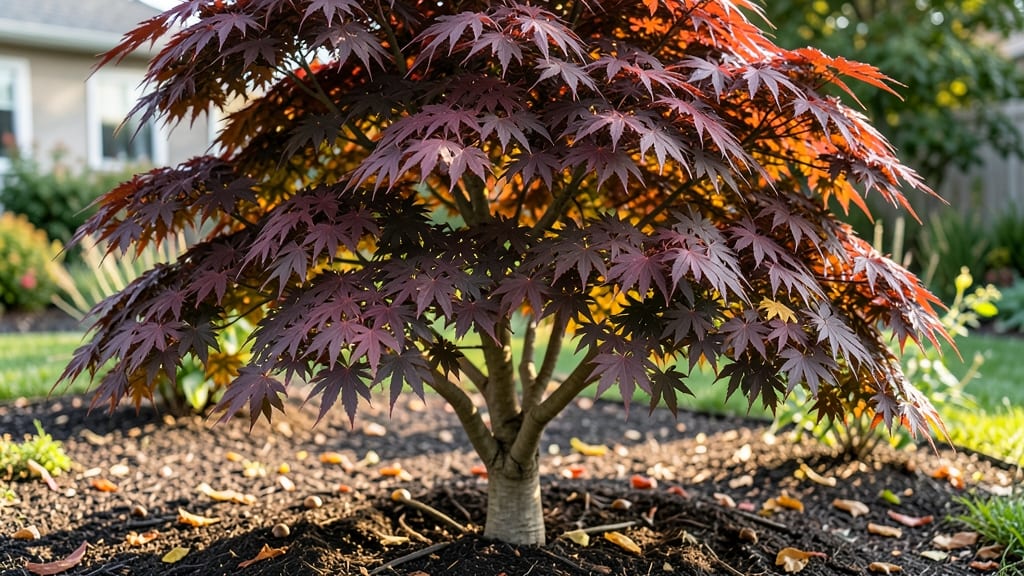
Burgundy maple leaves turn every season into a masterpiece. 🌿 These trees aren’t just pretty—they’re the bold centerpiece of my garden, stealing the show from spring’s fresh green to winter’s frosty hues.
The right variety (Acer palmatum 'Bloodgood' or Acer rubrum 'Autumn Flame') transforms any yard into a living art gallery, with foliage that shifts from deep red to fiery orange and even hints of gold.
They thrive in full sun to partial shade, making them perfect for small yards or as statement plants in larger landscapes. My 'Bloodgood' maple stands just 20 feet tall but casts dramatic shade—ideal for pairing with hostas or ferns that love dappled light.
The secret to keeping those leaves vibrant? Well-draining soil and a little pruning in late winter to open up the canopy for better airflow.
Imagine your garden in autumn, when the leaves blaze like embers against a crisp blue sky. These maples don’t just survive winter—they hold onto their burgundy tones until the first thaw, giving you months of drama.
Plant one near a patio or walkway to enjoy the show year-round, and watch neighbors ask, "What’s that stunning tree?"
For best results, mulch around the base to retain moisture and protect roots, and water deeply during the first growing season. They’re low-maintenance once established, but that first year sets the stage for decades of foliage fireworks. Trust me—your garden will never look the same.
📚 In This Guide
- What you need
- Instructions
- Tips and common mistakes
- Wrapping up and next steps
What you need
- ● Maple tree saplings: Choose a red-purple-leaved variety like Norway Maple (Acer platanoides 'Crimson King') or Japanese Maple (Acer palmatum 'Bloodgood'). Buy 2–3 healthy saplings (15–20 ft tall for mature color impact).
- ● Well-draining soil: Mix 1 part native soil with 1 part compost (or potting mix for containers). Aim for a pH of 6.0–7.5.
- ● Mulch: 3–4 inches of wood chips or shredded bark (retains moisture, regulates temperature). Avoid fresh mulch near the trunk.
- ● Slow-release fertilizer: 10–10–10 NPK ratio (apply 1 lb per 100 sq ft in early spring).
- ● Watering can or hose with a gentle spray nozzle (for deep hydration).
- ● Garden trowel or spade (for digging holes 2x wider than the root ball).
- ● Pruning shears (sterilized with 70% isopropyl alcohol).
- ● Gloves (gardening or work gloves for protection).
- ● Measuring tape (to space trees 15–25 ft apart for mature growth).
- ○ Optional: Tree stakes (if planting in windy areas) and tree ties (for support).
- ● Sunlight: Full sun to partial shade (6+ hours of direct light daily for optimal burgundy hues).
- ● Space: Ensure 10+ ft clearance from structures/walkways (maples grow wide!).
- ● Water access: A drip irrigation system or consistent watering plan (especially in the first year).
- ● Patience: Burgundy leaves may take 2–3 years to fully develop (worth the wait! 🍁).
How to grow and maintain a stunning maple tree with burgundy leaves
Here's the straightforward approach I've used to cultivate showstopping maples with rich, deep foliage that steals the show all season.
🌱 Step 1: Choose the Right Variety and Planting Site
For true burgundy leaves, select a proven cultivar like 'Royal Purple' Norway maple or 'Bloodgood' Japanese maple. These varieties develop their signature deep purple-red hue in spring, intensifying through summer and often persisting into autumn. Plant in full sun to partial shade—at least 4-6 hours of direct sunlight daily—but protect from harsh afternoon sun in hot climates.
Your site must have well-draining soil with a slightly acidic to neutral pH (6.0-7.5). I always test soil first—amending with compost improves drainage and nutrient availability. Dig a hole twice as wide as the root ball but only as deep. The top of the root ball should sit 1-2 inches above ground level to prevent waterlogging.
🪴 Step 2: Plant with Proper Spacing and Mulching
Maples need room to develop their dramatic canopies. Space mature trees 30-50 feet apart depending on variety, while smaller cultivars like 'Crimson Queen' can grow in 15-20 feet of space. Backfill the planting hole with native soil mixed with 2-3 inches of compost to enrich the root zone without disturbing the root ball.
Water deeply after planting to settle the soil and remove the watering can. Apply 2-3 inches of mulch (wood chips or shredded bark) around the base, keeping it 6 inches away from the trunk to prevent rot. This mulch ring retains moisture, regulates soil temperature, and gradually enriches the soil as it breaks down.
☀️ Step 3: Water Deeply and Fertilize Strategically
Young maples need 1-2 inches of water weekly during the first growing season, but established trees develop deep roots that make them surprisingly drought-tolerant once mature. Water deeply every 10-14 days during dry spells, letting the soil dry out between waterings—this encourages strong root growth. You'll know your watering is right when the top 6 inches of soil feel dry to touch.
Fertilize only in spring with a balanced 10-10-10 formula or specialized tree fertilizer. Apply according to package instructions, focusing on the root zone. Avoid high-nitrogen fertilizers—they promote leafy growth at the expense of vibrant burgundy color. I've found that maples respond best to a light feeding rather than heavy doses.
✂️ Step 4: Prune for Shape and Health
Prune maples in late winter or early spring before new growth begins. Remove dead, diseased, or crossing branches first, then shape the tree by thinning out crowded growth. Never remove more than 25% of the canopy in one year—this prevents stress. Use clean, sharp pruners to make cuts just outside the branch collar for the cleanest heal.
Watch for signs of stress like yellowing leaves or oozing sap—these can indicate over-pruning or disease. Japanese maples, in particular, are sensitive to harsh pruning. I always prune after a rain when the tree is well-hydrated, and I sterilize my tools with rubbing alcohol between cuts to prevent bacterial spread.
⏰ Step 5: Protect and Maintain Through Seasons
Young trees benefit from tree wraps or burlap guards during winter to protect against sunscald and rodent damage. Mature maples handle winter well but may need occasional support if heavy snow accumulates. Shake snow off branches gently to prevent breakage—never use metal tools that can scratch the bark.
Monitor for pests like aphids or scale insects, which can drain sap and dull leaf color. A strong spray of water often dislodges aphids, while horticultural oil treats scale effectively. The key to maintaining those showstopping burgundy leaves is consistent care—water when needed, prune judiciously, and avoid heavy-handed fertilizing that shifts focus from color to growth.
Tips & tricks for perfect maple tree burgundy leaves
These simple strategies will help you maintain those stunning burgundy leaves all year long.
Variety Selection: When choosing between 'Royal Purple' Norway maple and 'Bloodgood' Japanese maple, consider your climate. 'Royal Purple' handles colder winters better, while 'Bloodgood' thrives in milder regions. Both varieties intensify their color in cooler temperatures, so plant them where they'll get that late afternoon shade in hot climates as mentioned in Step 1. The color difference between spring and summer is dramatic—you'll notice the deep burgundy really pops when temperatures drop below 75°F.
Soil Preparation: Don't skip the soil test! I've seen maples planted in perfectly amended soil still struggle because the pH wasn't quite right. Aim for that 6.0-7.5 range, and if your soil tests too alkaline, mix in some peat moss or sulfur to adjust. The root ball elevation tip (1-2 inches above ground) is crucial—it prevents water from pooling around the trunk, which can cause rot. I've had to replant maples twice before I learned this lesson!
Mulching Technique: That 2-3 inch mulch ring isn't just decoration—it's a game-changer for moisture retention. I recommend using hardwood mulch rather than cedar chips, as cedar can be too acidic for maples over time. Keep that mulch 6 inches from the trunk to prevent moisture buildup that invites disease. In summer, check the soil moisture every 10-14 days—you'll know you're doing it right when the top 6 inches feel dry to touch before watering again.
Pruning Timing: Late winter pruning (before buds swell) is ideal, but if you miss that window, early spring works too. The key is to prune when the tree is dormant but before new growth begins. I've made the mistake of pruning in summer—it stresses the tree and can lead to those unsightly yellow leaves. Always sterilize your pruners between cuts to prevent spreading disease from any infected branches you might encounter.
Pro Tips for Maple Tree Burgundy Leaves
- These simple strategies will help you maintain those stunning burgundy leaves all year long.
- Variety Selection: When choosing between 'Royal Purple' Norway maple and 'Bloodgood' Japanese maple, consider your climate.
- Soil Preparation: Don't skip the soil test!
Frequently asked questions
Got questions about those stunning burgundy maple leaves?
You’re not alone! Whether you’re planning a garden makeover or just curious about care, here are some common queries—and their answers—to help you keep those fiery foliage dreams alive.
When do maple trees with burgundy leaves change color, and how long do they last?
Burgundy maple leaves (like Japanese maple varieties) typically peak in fall, but their deep reds can last weeks longer than traditional maples. Some cultivars, such as 'Bloodgood' or 'Emperor 1', even hold their color into winter—especially in cooler climates. For year-round drama, pair them with evergreens or other four-season performers!
Will burgundy maple leaves survive harsh winters?
Most burgundy maples are hardy to USDA Zones 5-8, but young trees or tender varieties (like 'Black Lace') may need winter protection. Mulch the root zone, wrap the trunk with burlap, and avoid late-season pruning. If leaves brown or crisp, it’s often winter burn—not fatal! Just trim damaged foliage in early spring.
Can I grow a burgundy maple in a pot, or does it need ground planting?
Yes! Dwarf varieties like 'Drummondii' or 'Shishigashira' thrive in 15–20 gallon containers with well-draining soil. Use a mix of potting soil and perlite, and repot every 2–3 years. Place pots in partial shade (6+ hours of filtered light) to preserve their vibrant hue. Just remember: Container trees dry out faster—water consistently!
Why are my burgundy maple leaves turning yellow or losing color?
Yellowing leaves often signal nutrient deficiencies (try a balanced fertilizer in spring) or overwatering. Check for:
- Iron deficiency (yellow between veins? Use chelated iron).
- Root rot (soggy soil? Improve drainage).
- Too much sun (bleaching? Move to partial shade).
What’s the best companion plant for burgundy maples to extend fall color?
Pair burgundy maples with complementary foliage for a show-stopping display:
- Smoke bush (Cotinus) – Adds pink/purple plumes.
- Ninebark (Physocarpus) – Bright red stems contrast beautifully.
- Boxwood (Buxus) – Evergreen structure balances seasonal change.
- Grasses like Miscanthus – Movement and texture.
Wrapping up and next steps
Watching your maple tree burst into stunning burgundy leaves is like having a living masterpiece in your garden! 🌿 Whether you’re drawn to their vibrant fall colors or their year-round elegance, these trees bring drama and beauty to any landscape.
Now that you’ve got the knowledge to care for them—from soil prep to pruning—it’s time to roll up your sleeves and plant one!
Ready to transform your outdoor space? Start by visiting your local nursery this weekend, pick out your favorite maple variety, and give your garden the wow factor it deserves. Happy planting! 🌳✨