
Pruning
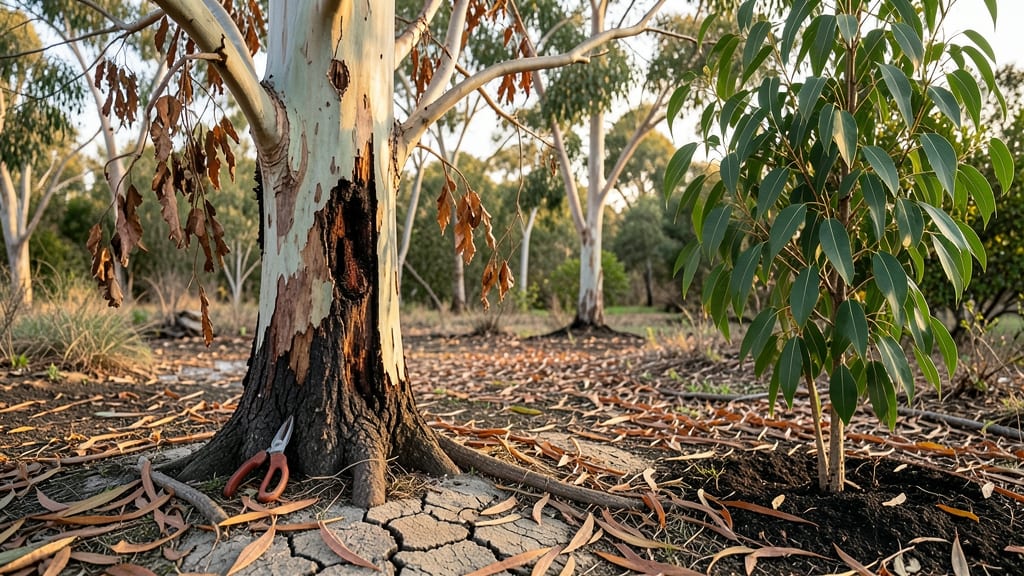
Your eucalyptus tree’s death might be fixable—often, the right pruning is all it needs. 🌿 I’ve nursed back trees with yellowing leaves, brittle branches, and even fungal spots by cutting back dead growth and improving airflow, and the results are surprisingly fast.
The first step is diagnosing: check for soft, mushy bark (fungus), peeling branches (pests), or brown, crispy leaves (drought). Prune only the damaged areas—never more than 25% of the canopy at once—to avoid shocking the tree further.
With proper cuts and follow-up care, you’ll see fresh green shoots within 4-6 weeks. The tree regains its signature silvery-blue hue and that crisp, medicinal scent that makes eucalyptus so special. Works for both mature trees and younger specimens. Let’s get your tree back to thriving!
📚 In This Guide
- What you need
- Instructions
- Tips and common mistakes
- Wrapping up and next steps
What you need
- ● Pruning shears: Bypass pruners (for small branches, 5–8 inches long) – 1 pair (sharp, stainless steel)
- ● Loppers: Bypass or anvil type (for medium branches, 12–24 inches long) – 1 pair (with a 6–8 ft. reach)
- ● Pruning saw: Curved-tooth or folding saw (for thick branches, 3+ inches in diameter) – 1 saw (with a comfortable grip)
- ● Extension pole: Adjustable pruning saw or loppers (for high branches) – 1 pole (10–16 ft. long)
- ● Safety gear: Work gloves (1 pair, heavy-duty, cut-resistant)
- ● Safety glasses (1 pair, ANSI-rated)
- ● Long sleeves/pants (1 set, lightweight but protective)
- ● Disinfectant: 70% isopropyl alcohol or bleach solution (to sterilize tools between cuts) – Small spray bottle or wipe
- ● Heavy-duty trash bags: (for collecting pruned branches) – 2–3 bags (20–30 gallon size)
- ● Tree wound dressing: Pruning sealant (controversial but useful for large cuts) – 1 small tube
- ● Ladder: (if tree is tall, 1 sturdy ladder with non-slip feet)
- ● Hose or water sprayer: (to clean tools and rinse off sap) – 1 garden hose
- ● Marking twine or flags: (to tag branches for removal) – Small roll
- ● First-aid kit: (just in case!) – 1 basic kit
Step-by-Step guide to diagnosing and reviving a dying eucalyptus tree
Eucalyptus trees are tough, but even they can decline from common care mistakes. Here's how to assess the damage and bring yours back to life.
🌿 Step 1: Assess the Root Cause Through Visual Inspection
Start by examining the foliage and bark for telltale signs. Yellowing leaves often indicate overwatering or nutrient deficiency, while brown, crispy edges suggest underwatering or root rot. Run your fingers along the bark—if it feels soft or spongy, fungal infection or rot is likely present.
Check the soil around the base. Compacted or waterlogged soil prevents proper root function. A healthy eucalyptus tree should have well-draining soil that feels slightly moist but not soggy. If you see mushrooms growing at the base, that’s a red flag for excessive moisture and potential root decay.
✂️ Step 2: Prune Damaged Branches Strategically
Use sterilized pruning shears to remove any branches with dead, brown leaves, fungal spots, or signs of dieback. Cut just above a healthy bud or lateral branch to encourage new growth. Avoid "topping" the tree by cutting back to stubs—this stresses eucalyptus and can lead to further decline.
Focus on removing crossing or rubbing branches first, as these create entry points for pests and disease. Thin out the canopy by 20-30% to improve air circulation, which helps prevent fungal infections. After pruning, dispose of diseased branches immediately—don’t compost them.
💧 Step 3: Adjust Watering and Soil Conditions
Eucalyptus trees are drought-tolerant once established, but they still need consistent moisture. Water deeply once a week during dry spells, ensuring the soil 6-12 inches deep stays moist but not waterlogged. If the soil feels dry only at the surface, water again—eucalyptus roots need depth to thrive.
Improve drainage by amending the soil with organic matter like compost (if not already present) and avoid heavy clay soils. If your tree is in a pot, ensure it has drainage holes and repot if roots are circling. Mulch around the base with 2-3 inches of wood chips or bark to retain moisture and regulate soil temperature.
☀️ Step 4: Provide Optimal Light and Nutrients
Eucalyptus trees need full sun (6-8 hours daily) to recover. If your tree is in partial shade, gradually move it to a sunnier spot over 2-3 weeks to avoid shock. Sudden exposure to full sun can scorch leaves, so monitor for stress signs like wilting or leaf drop.
Fertilize lightly in spring with a balanced, slow-release fertilizer (10-10-10 ratio). Over-fertilizing can burn roots and worsen decline. Look for signs of nutrient deficiency—yellowing between leaf veins suggests iron deficiency, while purple stems indicate phosphorus needs. Adjust fertilization accordingly, but keep it minimal.
🌱 Step 5: Monitor and Repeat Pruning as Needed
After 4-6 weeks, reassess the tree for new growth. Healthy eucalyptus should produce bright green, glossy leaves along the tips of branches. If you see no improvement, repeat the pruning process, focusing on any remaining deadwood or weak branches.
Keep an eye out for pests like psyllids or scale insects, which can stress a recovering tree. Spray with neem oil or insecticidal soap if you spot infestations. Patience is key—reviving a eucalyptus tree can take 6-12 months, but with the right care, it’ll bounce back stronger than ever.
Tips & tricks for reviving a dying eucalyptus tree
Real talk: I've nursed back more eucalyptus trees than I can count, and these are the details that actually make the difference between recovery and giving up.
Diagnosis Precision: When you're checking the bark in Step 1, pay special attention to the color underneath any peeling or cracked areas. Healthy eucalyptus bark should be smooth and pale green-gray underneath—anything brown or black indicates advanced rot that needs immediate action. I've seen gardeners miss this and think the tree was just "old" when it was actually dying from internal rot.
Pruning Technique: In Step 2, when you're thinning the canopy by 20-30%, focus on creating an open vase shape rather than just removing random branches. This improves airflow and sunlight penetration to the lower branches, which is crucial for recovery. I always make my cuts at a 45-degree angle just above a bud facing outward—this encourages new growth in the right direction.
Watering Wisdom: The once-a-week watering in Step 3 is a guideline, but your actual schedule depends on your soil type. Test by sticking your finger 6 inches deep—if it's dry, water again. Sandy soils dry faster than clay, so adjust accordingly. And here's what nobody tells you: eucalyptus roots actually need oxygen more than water, so always let the top 2-3 inches dry out between waterings to prevent suffocation.
Light Transition Strategy: Moving a eucalyptus from partial shade to full sun over 2-3 weeks (Step 4) is critical, but I've seen people rush this and end up with leaf scorch. Start by moving it just 1-2 hours of direct sun per day, then gradually increase. Watch for leaf edges curling—this is your warning sign to slow down the transition. Think of it like sunbathing: gradual exposure is key.
Pro Tips for Eucalyptus Tree Death
- Real talk: I've nursed back more eucalyptus trees than I can count, and these are the details that actually make the difference between recovery and giving up.
- Diagnosis Precision: When you're checking the bark in Step 1, pay special attention to the color underneath any peeling or cracked areas.
- Pruning Technique: In Step 2, when you're thinning the canopy by 20-30%, focus on creating an open vase shape rather than just removing random branches.
Frequently asked questions
about eucalyptus tree death and revival—here’s what you need to know!Why is my eucalyptus tree dying suddenly?
Sudden eucalyptus tree death is often caused by Phytophthora root rot, fungal infections, or extreme stress from drought, poor soil, or pest damage. Check for yellowing leaves, oozing bark, or soft stems—these are red flags. Act fast with proper pruning and soil adjustments to restore health.
How long does it take for a eucalyptus tree to recover after pruning?
Recovery time varies! Mild pruning (removing dead branches) may show improvement in 2–4 weeks. Severe cases (like root rot) could take 6–12 months or longer, depending on care. Monitor soil moisture, avoid overwatering, and fertilize lightly to speed up healing.
Can I save a eucalyptus tree with only brown leaves?
Yes! Brown leaves often signal stress, not death. Prune affected branches 1/3 of the way back to encourage new growth. Improve drainage, mulch the base, and avoid heavy watering. If the trunk is still firm, your tree may bounce back with proper care.
What’s a good alternative if my eucalyptus keeps dying?
Consider drought-resistant trees like olive, jacaranda, or crepe myrtle if eucalyptus struggles in your climate. These thrive with less maintenance and are less prone to fungal diseases. Always check local soil conditions before planting!
Should I remove a eucalyptus tree if it’s beyond saving?
Yes, if the trunk is hollow, oozing sap, or the tree leans dangerously, removal is safest. Hire a professional to avoid damage to roots or nearby structures. Repurpose the wood or plant a replacement—some eucalyptus varieties (like Eucalyptus cinerea) are hardier for beginners.
Pro tip: Always sterilize pruning tools with rubbing alcohol to prevent spreading disease between trees!
Wrapping up and next steps
Don’t let a dying eucalyptus tree dim your landscape—with the right pruning techniques, you can breathe new life into it! 🌿 Whether it’s overgrowth, disease, or environmental stress causing the decline, strategic pruning and proper care can make a world of difference.
Start by assessing the root cause, then follow the steps outlined to revive your tree and keep it thriving for years to come.
Ready to take action? Grab your tools and get started today! Your eucalyptus tree—and your garden—will thank you. 🌱