
Trees
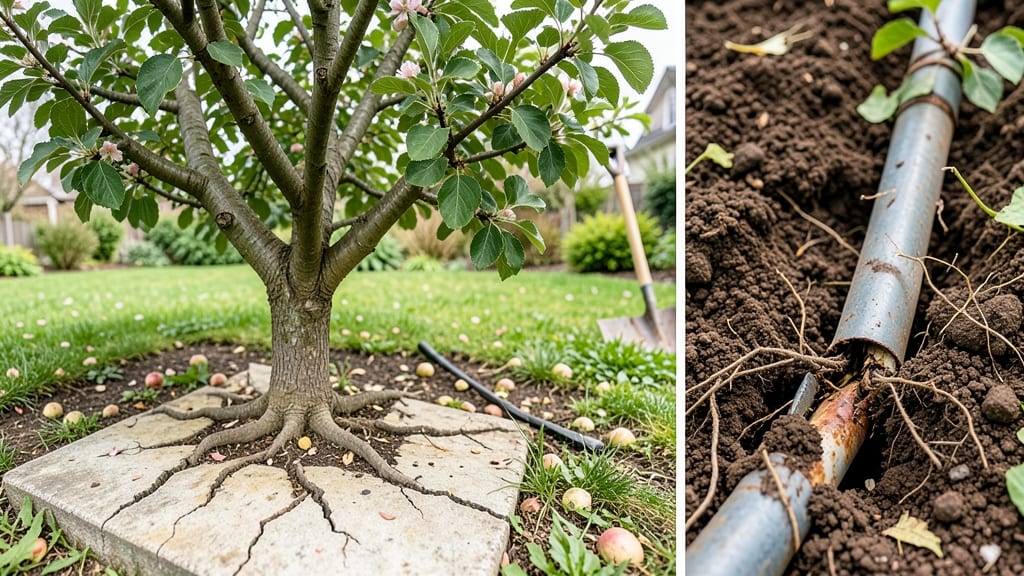
Apple tree roots do cause damage when planted too close to structures, as their expansive lateral roots and deep taproots can crack foundations, rupture pipes, or lift sidewalks over time. Proper spacing of at least 15–20 feet from buildings and 10 feet from driveways minimizes these risks.
Apple trees develop two types of roots that pose risks: shallow lateral roots spreading outward aggressively and a deep taproot that can reach 10–15 feet below ground. 🌳 The lateral roots, in particular, exert significant pressure as they expand, which is why even mature trees planted just 10 feet from a foundation can eventually cause structural issues.
Studies show that root pressure can displace soil and create voids beneath concrete slabs, leading to uneven surfaces or cracks over time.
To prevent damage, always consider the tree's mature size when planting. Dwarf varieties may need only 10–12 feet of clearance, while standard apple trees require the full 20 feet buffer.
Installing root barriers (buried plastic sheets) can help redirect growth, but they're most effective when combined with proper spacing and regular pruning of lower branches to reduce shade stress on the roots.
💡 In This Article
- How Apple Tree Roots Spread and Invade Structures
- Safe Planting Distances for Apple Trees Near Homes
How apple tree roots spread and invade structures
Apple trees develop a dual root system that makes them particularly invasive: a deep taproot that can extend 10–15 feet downward and a network of lateral roots spreading horizontally up to 2–3 times the tree's canopy width.
The taproot anchors the tree but creates pressure as it grows, while lateral roots expand aggressively in search of water and nutrients. 🌱 When planted near foundations, these roots can exploit even small cracks in concrete or mortar, using them as pathways to grow deeper into structures.
The real damage comes from root pressure, which occurs when roots exert force against surrounding materials. Studies from the University of California's Arboretum show that mature apple trees can generate 200–300 pounds of pressure per square inch—enough to lift concrete slabs or displace soil beneath driveways.
This pressure increases in dry conditions, as roots seek moisture from plumbing lines or foundation cracks, leading to ruptures or leaks over time.
Sidewalks and patios are especially vulnerable because their shallow depth makes them easy targets. Lateral roots growing beneath pavement create air pockets as they displace soil, causing the surface to heave or crack.
You might notice this as triangular cracks radiating from the tree's base, a classic sign of root intrusion. The damage often starts subtly but worsens over years, making early prevention critical.
Even dwarf apple varieties aren't exempt—while their roots spread less aggressively, they still require careful spacing. A common misconception is that smaller trees mean fewer risks, but their compact size can actually concentrate root pressure in tighter spaces.
For example, a 6-foot-tall dwarf tree might still need 10 feet of clearance to prevent sidewalk damage due to its dense root ball.
Soil type plays a surprising role: clay soils restrict root growth, forcing lateral roots to spread wider and deeper in search of nutrients.
In contrast, sandy soils allow roots to penetrate more easily, increasing the risk of plumbing invasions. 💧 This is why proper soil preparation—like amending with organic matter—can help redirect root growth away from structures.
What most homeowners overlook is the underground competition between apple tree roots and existing infrastructure. Roots will prioritize accessing water from irrigation lines, sewer pipes, or foundation drains over natural soil moisture, leading to costly repairs.
A 1-inch-thick root barrier installed 2 feet deep can help, but it must be paired with adequate spacing to be truly effective.