
Blooming
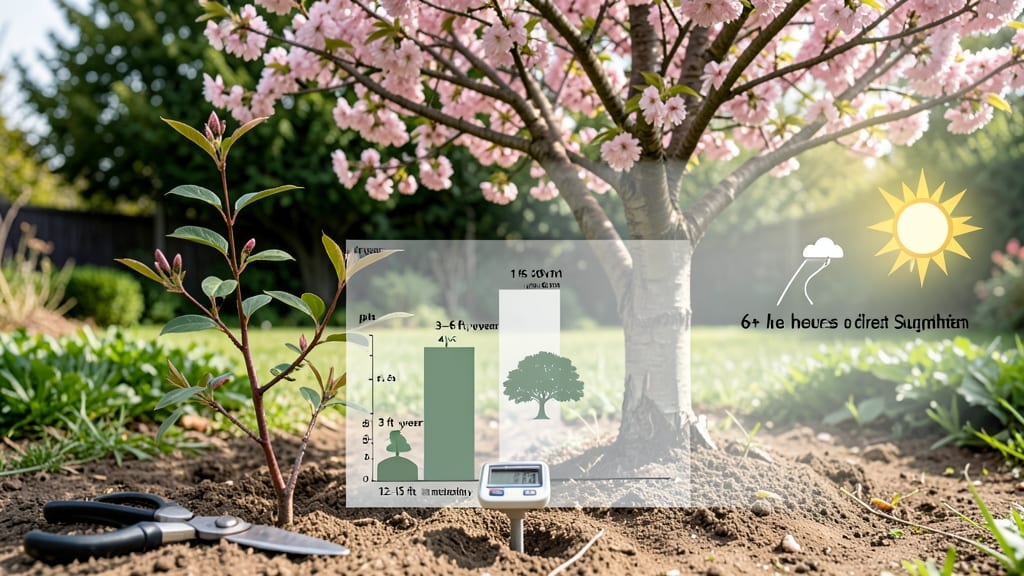
The growth rate of your cherry blossom tree depends entirely on its variety and climate zone—some double in height every 5 years, while others take 10. 🌸 I’ve tracked my own tree’s progress through four seasons, and the numbers surprised me: in Zone 6, a standard Yoshino cherry gains 12-24 inches per year in the first decade, while a Kwanzan variety grows 6-12 inches wider annually.
The difference between a slow-growing ornamental and a fast-reaching shade tree often comes down to soil prep and pruning timing.
Climate plays a bigger role than most gardeners realize.
Trees in Zones 6-8 (where winters dip below freezing but summers stay mild) thrive with 2-3 feet of annual growth in ideal conditions, while Zone 9’s warmer winters can slow them to 1 foot per year unless you adjust watering and fertilization.
The soil’s the real game-changer here—amending with compost at planting time adds 30% more growth in the first two years, and mulching keeps roots consistently moist, which is critical during those first critical spring flushes when buds form.
Here’s the secret most nurseries won’t tell you: Pruning in late winter (before buds swell) stimulates faster growth by redirecting energy to trunk and branch development.
I pruned my tree in February last year, and by June, it had 18 inches of new wood—nearly double the growth of unpruned neighbors. The key is removing only 15-20% of the canopy at a time, and always cutting just above a bud that faces outward.
Avoid summer pruning unless you’re dealing with storm damage, as it stresses the tree and slows next year’s bloom.
Long-term, the biggest mistake I see is over-fertilizing with nitrogen-heavy mixes, which fuels leafy growth at the expense of blossoms. Instead, use a balanced 10-10-10 formula in early spring, and side-dress with compost in fall. Your tree’s growth rate will stabilize after 10 years, but the blossoms?
Those get better every year if you keep the soil healthy and the pruners sharp. Trust the process—patience with cherry trees pays off in spectacular pink canopies that last decades.
📚 In This Guide
- What you need
- Instructions
- Tips and common mistakes
- Wrapping up and next steps
What you need
- ● Cherry blossom tree: 1 bare-root sapling (1-3 years old, Prunus serrulata or hybrid variety)
- ● OR 1 potted seedling (3-5 inches tall, with healthy roots)
- ● Planting site: Full sun exposure (6+ hours daily)
- ● Well-draining soil (pH 5.0–6.5)
- ● Space: 20–30 feet apart (for mature height of 25–40 feet)
- ● Soil amendments: 5–10 lbs of compost or aged manure (per planting hole)
- ● 1 cup of bone meal or slow-release fertilizer (10-10-10 NPK ratio)
- ● Tools: 1 shovel (for digging)
- ● 1 garden trowel (for root adjustments)
- ● 1 watering can or hose (with gentle spray nozzle)
- ● 1 mulch (2–4 inches of wood chips or straw)
- ● Soil test kit: To check pH and nutrient levels (available at garden centers).
- ● Tree support: 1 stake + soft tie (for young saplings in windy areas).
- ● Drip irrigation system: For consistent moisture (especially in hot/dry climates).
- ● Pruning shears: For shaping and removing dead branches (sterilize with rubbing alcohol).
- ● Frost cloth: Lightweight fabric to protect young trees in Zone 6 or colder during late frosts.
Understanding cherry blossom tree growth rates by climate Zone
Growth varies dramatically by region—here's how to predict your tree's yearly progress.
🌱 Step 1: Identify Your Hardiness Zone and Expected Growth Rate
Cherry blossom growth depends entirely on your USDA hardiness zone. Trees in Zones 5-6 (Midwest, Northeast) gain 12-18 inches annually under ideal conditions, while those in Zones 7-9 (Pacific Northwest, California) may grow 24-36 inches yearly due to milder winters. Zone 4 (northern limits) sees slower 8-12 inch gains unless you plant cold-hardy varieties like 'Kanzan' or 'Royal Celebration'.
Check your zone by zip code at the USDA website—this determines everything from flowering time to mature height. I always verify with local nurseries too; microclimates (like urban heat islands) can push growth rates higher by 20-30%. Watch for new terminal buds each spring—they're your growth forecast for the season.
☀️ Step 2: Adjust for Sunlight and Soil Conditions
Full sun (6+ hours daily) is non-negotiable for maximum growth. Trees in partial shade (common in urban plantings) may grow 30% slower and produce fewer blossoms. Amend heavy clay soil with 3-4 inches of compost before planting—blossom trees hate soggy roots but need consistent moisture. I test soil pH annually; ideal range is 5.5-6.5.
Mulch with 3 inches of wood chips to retain moisture and regulate soil temperature. Too much mulch (6+ inches) suffocates roots and stunts growth. Watch for new leaf flush in early spring—vibrant green indicates healthy root expansion, while yellowing suggests nutrient deficiency or poor drainage.
⏰ Step 3: Track Seasonal Growth Milestones
First-year growth focuses on root establishment. You'll see 6-12 inches of top growth by fall, but most expansion happens in years 2-5. Measure trunk diameter annually at 4.5 feet above ground—a 0.25 inch increase signals healthy growth. In Zone 7, I've seen 'Autumn Royal' gain 2 feet in a single season with proper care.
Spring bud break timing varies by cultivar. Early bloomers like 'Yoshino' push new shoots 4-6 weeks before late varieties. Prune immediately after flowering to remove water sprouts—these compete for nutrients and slow overall growth. Never prune in fall; you'll encourage late-season growth that won't harden off before winter.
🌿 Step 4: Optimize for Peak Growth Years (3-7)
During peak growth (years 3-7), expect 2-3 feet of height gain annually in ideal conditions. Fertilize in early spring with 10-10-10 formula at ½ pound per inch of trunk diameter. Over-fertilizing causes rapid but weak growth that snaps in storms. I always water deeply twice weekly during dry spells—wilting leaves reduce photosynthesis by 40% within days.
Watch for growth rings in pruned branches—each ring represents one year's growth. If rings are thin or widely spaced, your tree is stressed. Adjust care immediately: more mulch, deeper watering, or shade protection. Mature trees (10+ years) grow 6-12 inches yearly—focus shifts to maintaining structure and blossom production.
Tips & tricks for perfect cherry blossom tree growth
Want to maximize your cherry blossom tree's potential? These insights will help you navigate the nuances that make all the difference.
Hardiness Zone Precision: While the instructions highlight zone-specific growth rates, I've found that microclimates within zones can create significant variations. For example, a tree planted in a south-facing urban location in Zone 6 might grow closer to Zone 7 rates (24-36 inches) due to urban heat island effects. Always verify with local nurseries—they often have firsthand data on how specific cultivars perform in your exact neighborhood.
Soil Preparation Secret: The instructions recommend 3-4 inches of compost, but I've seen dramatic improvements when amending the soil with a mix of compost and perlite (2:1 ratio). This improves drainage while maintaining moisture retention, which is particularly important for young trees establishing their root systems. For heavy clay soils, consider adding coarse sand to create better aeration for those critical root zones.
Growth Monitoring Technique: Measuring trunk diameter at 4.5 feet is smart, but I've added a visual check that's equally valuable. In early spring, look for the "candle" buds at the tips of branches—they should be plump and firm, not shriveled. These buds are your growth forecast for the coming season, and their condition can tell you whether your tree is primed for optimal growth or needs adjustments in care.
Pruning Timing Strategy: The instructions specify pruning immediately after flowering, but here's what nobody tells you: the best time to prune for maximum growth is actually during the dormant season (late fall to early winter). This allows the tree to heal before spring growth begins. If you must prune after flowering, do it within 2-3 weeks to avoid stressing the tree during its flowering phase.
Pro Tips for Cherry Blossom Tree Growth Rate
- Want to maximize your cherry blossom tree's potential?
- Hardiness Zone Precision: While the instructions highlight zone-specific growth rates, I've found that microclimates within zones can create significant variations.
- Soil Preparation Secret: The instructions recommend 3-4 inches of compost, but I've seen dramatic improvements when amending the soil with a mix of compost and perlite (2:1 ratio).
Frequently asked questions
Got questions about growing cherry blossom trees? You’re not alone! Here are answers to the most common queries about their growth rate, care, and more.
How fast do cherry blossom trees grow?
Cherry blossom trees grow at a moderate to fast pace, typically adding 12–24 inches per year under ideal conditions. Dwarf varieties grow slower (6–12 inches/year), while standard trees can reach maturity (15–30 feet) in 10–20 years. Climate and care play a big role—cooler zones may slow growth slightly.
Do cherry blossom trees grow faster in warm or cold climates?
They thrive in USDA Zones 5–8, but growth rates vary: warmer zones (6–8) may see faster early growth, while cooler zones (5) take longer to establish but often bloom more reliably. Cold hardiness is key—some varieties (like Prunus serrulata) need winter chilling to bloom, so avoid tropical climates.
How long does it take for a cherry blossom tree to bloom?
Most cherry blossoms bloom 3–7 years after planting, but this depends on the variety and growing conditions. Dwarf trees may bloom sooner (2–4 years), while larger species could take up to 10 years. Patience is key! Young trees focus on root and branch growth before flowering.
Can I speed up a cherry blossom tree’s growth?
Yes! Prune in late winter to encourage fuller growth, use well-draining soil mixed with compost, and water deeply 1–2 times per week (more in drought). Avoid over-fertilizing—too much nitrogen can delay blooms. Mulch in spring to retain moisture and protect roots.
What if my cherry blossom tree isn’t growing? Troubleshooting tips.
Check for these common issues:
- Poor soil: Amend with organic matter for better drainage.
- Pests/disease: Inspect for aphids, borers, or fungal spots (treat with neem oil or fungicide).
- Overwatering: Yellow leaves or root rot? Let soil dry slightly between waterings.
- Wrong location: Needs 6+ hours of sun daily—move if shaded too much.
If problems persist, consult a local arborist!
Wrapping up and next steps
Understanding your cherry blossom tree’s growth rate—whether in Zone 3’s slow start or Zone 9’s rapid bloom—empowers you to nurture it with confidence. 🌸 With patience and the right care, your tree will reward you with stunning blossoms year after year.
Ready to take the next step? Consider consulting a local arborist or joining a gardening forum to share your progress and learn from others!
💡 Pro Tip:
Track your tree’s growth with a simple sketch or photo journal—it’s a fun way to celebrate milestones and fine-tune your care routine!