
Pruning
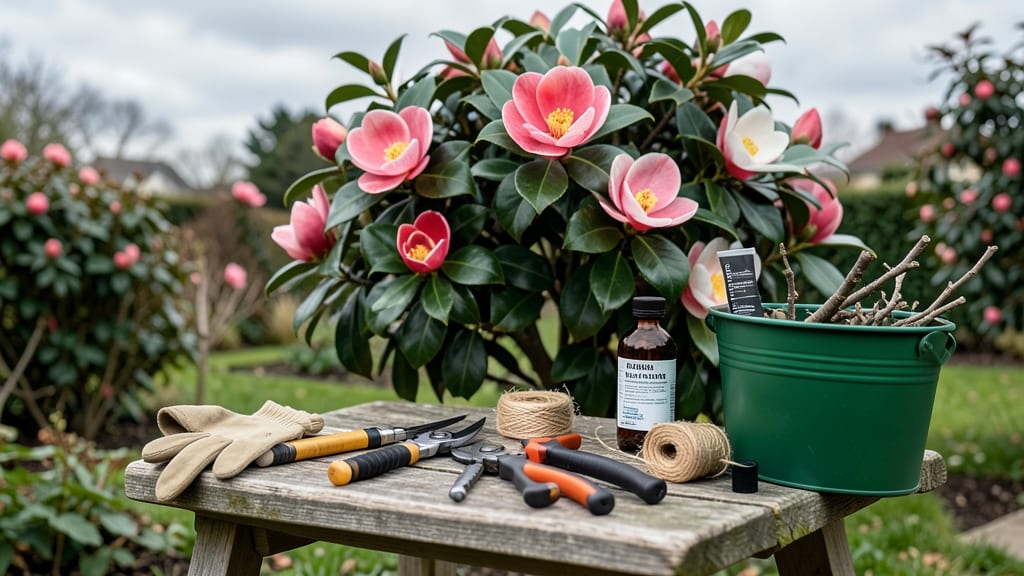
Camellia tree pruning requires precise timing—perform it after spring blooming, between late May and early July, to preserve next year's flower buds. Trim overgrown branches by one-third using sharp pruners while shaping the tree to enhance airflow and sunlight exposure.
Camellias are unique because their flower buds form on old wood, meaning any cuts made at the wrong time can eliminate next year's blooms. 🌸 The ideal window after flowering allows the plant to recover before dormancy, ensuring strong growth for the following season.
I always recommend sterilizing tools between cuts to prevent disease spread, especially when working with multiple branches.
Beyond timing, the technique matters just as much. Focus on removing only one-third of the oldest growth—this maintains the tree's natural form while preventing over-stressing the plant. Thin out crowded branches to improve circulation, which reduces humidity-related issues like fungal infections.
For best results, prune on a dry, overcast day when the tree is less vulnerable to shock.
💡 In This Article
- Why Timing Matters in Camellia Tree Pruning
- Step-by-Step Guide to Pruning Camellia Trees
Why timing matters in camellia tree pruning
Camellias produce flower buds on old wood—meaning last year's growth—during the late summer and fall. These buds remain dormant through winter and bloom in spring.
If you prune during dormancy (winter) or too early in spring, you risk cutting off these precious buds before they've even opened. 🌸 The ideal timing after blooming (late May to early July) gives the tree time to complete its flowering cycle while still allowing recovery before new bud formation begins.
Here's the science: Camellias enter a growth phase after flowering, where they focus energy on producing next year's flower buds. Pruning too late in summer can stress the plant by removing too much foliage just as it needs to prepare for dormancy.
The one-third rule—never removing more than 33% of the canopy—preserves this delicate balance. For example, a mature camellia with 100 branches should only have about 30 pruned in a single session to maintain vigor.
Seasonal growth cycles explain why winter pruning fails. Cold temperatures slow metabolic processes, making the tree more vulnerable to disease and shock. Summer pruning, while better than winter, still risks overheating the plant by exposing too much leaf surface to intense sunlight.
The 6-8 week window after blooming provides optimal conditions: moderate temperatures, adequate moisture, and active growth to heal cuts quickly.
Visual cues help identify the perfect moment. Look for fully opened flowers that have begun to fade—this signals the plant has completed its blooming phase. The new growth at the tips of branches should be 1-2 inches long, indicating the tree has shifted focus from flowering to vegetative growth.
This transition period is when pruning has the least impact on next year's blooms.
Improper timing disrupts flowering patterns in noticeable ways. Over-pruning in late summer can delay bud formation, while winter cuts may produce fewer, smaller blooms.
I've seen camellias that were pruned too aggressively in spring completely skip flowering the following year—a heartbreaking outcome for gardeners who look forward to their spring displays. The key is patience: let nature's cycle guide your pruning schedule.
Consider regional climate variations too. In warmer southern climates, camellias may bloom earlier (February-March), shifting the ideal pruning window to June-July. Northern growers should wait until July-August when cooler temperatures slow new growth. Always observe your specific plant's blooming pattern rather than relying on general timelines. 🌿