
Landscaping
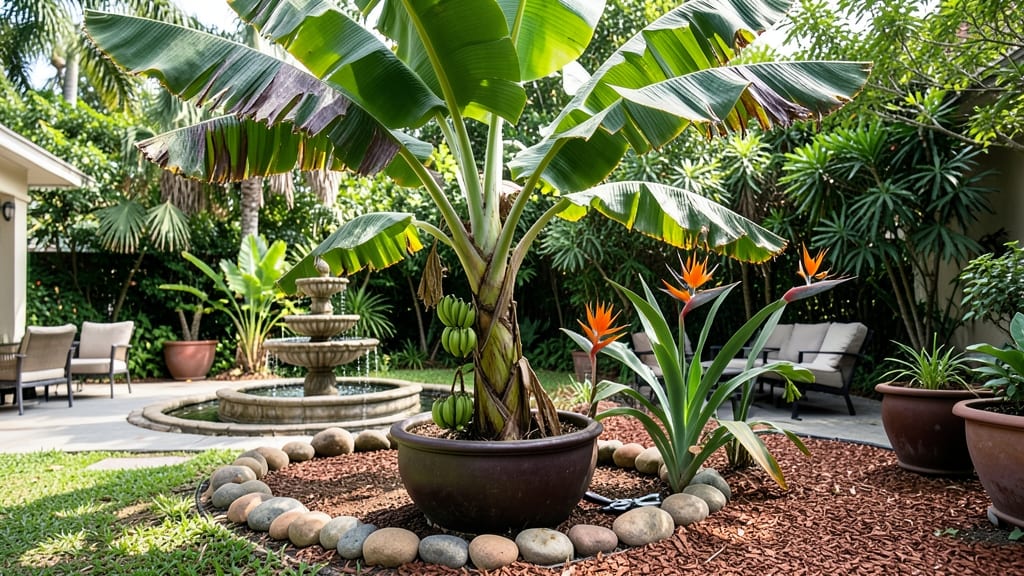
Your backyard could become a tropical paradise with the right banana tree landscaping ideas—these towering beauties don’t just add height, they create instant drama, privacy, and that lush Caribbean vibe we all crave.
I’ve planted mine near the patio, and now I can pretend I’m on vacation every time I step outside. The key is pairing them with the right companions: orchids, hibiscus, or even bamboo for a layered effect.
In warmer climates, they thrive as year-round stars, while cooler zones can grow them in containers and bring them inside during winter. Just remember—banana trees need space (at least 10 feet apart) and well-draining soil to avoid soggy roots. You’ll love how they transform any space into a serene retreat.
The large leaves filter sunlight beautifully, creating dappled shade perfect for lounging or dining al fresco. Plus, they’re surprisingly low-maintenance once established—just feed them occasionally and watch them grow. Works for both small yards (as a single statement plant) and larger landscapes (as a living screen).
Here’s how to make them work for your space!
📚 In This Guide
- What you need
- Instructions
- Tips and common mistakes
- Wrapping up and next steps
What you need
- ● Banana tree plants: 1-3 mature trees (depending on space; dwarf varieties like Musa acuminata work well for smaller yards).
- ● High-quality potting mix or well-draining soil: 5-10 bags (50 lbs each). Look for blends labeled for tropical plants or amend garden soil with 50% compost and 30% perlite/sand.
- ● Organic mulch: 2-3 cubic yards (e.g., pine bark or coconut coir) to retain moisture and regulate temperature.
- ● Slow-release fertilizer: 1 bag (10-10-10 or banana-specific formula like Fish Emulsion for a nutrient boost).
- ● Support stakes or trellis: 2-4 bamboo or metal stakes (6-8 ft tall) to secure young trees.
- ● Shovel and spade: 1 each (for digging holes 2-3x wider than the root ball).
- ● Garden trowel: 1 (for transplanting or pruning).
- ● Pruning shears or loppers: 1 pair (sterilized with rubbing alcohol).
- ● Wheelbarrow: 1 (for moving soil/mulch).
- ● Hose with spray nozzle or watering can: 1 (banana trees love 1-2 inches of water weekly).
- ● Measuring tape: 1 (to ensure proper spacing—10-15 ft apart for mature trees).
- ● Drip irrigation system: For automated watering in hot climates.
- ● Tropical-themed decor: Wind chimes, bamboo fencing, or colorful lanterns to amplify the vibe.
- ● Shade cloth: 50% block (to protect young trees from harsh sun).
- ● Epsom salt: 1 lb (mix with water monthly for magnesium-rich foliage).
- ● Companion plants: Bird-of-paradise, heliconia, or ferns to create a layered look.
Step-by-Step guide to designing a stunning banana tree landscape
Creating a tropical paradise with banana trees starts with smart placement and pairing—here's how to make it happen.
Choose the Right Variety for Your Climate
Not all banana trees thrive everywhere. For cooler climates, opt for Dwarf Cavendish or Lady Finger varieties—they tolerate temperatures down to 25°F and grow to 10-15 feet, perfect for small yards. In warmer zones, Musa velutina or Red Dacca add bold foliage and dramatic height.
Check your hardiness zone before buying. A quick online search for "USDA Zone Map" will show your exact range. I always plant at least two varieties for visual interest—one tall and dramatic, one compact for borders. This creates natural layers in your tropical oasis.
Select Strategic Planting Locations
Banana trees need full sun—at least 6 hours daily—but their massive leaves burn in intense afternoon heat. I plant mine 10-15 feet from the house where they get morning sun and afternoon shade from nearby structures. This prevents leaf scorch while keeping them visible from patios.
For privacy screens, space trees 8-10 feet apart in a staggered pattern. The trunks will eventually form a natural, wind-resistant barrier. If you're working with limited space, consider container growing—just use 15-gallon pots with drainage holes and move them to sheltered spots during winter.
Create a Tropical-Themed Surround
Banana trees look stunning when paired with other heat-loving plants. I surround mine with palm trees, bird of paradise, and hibiscus for a lush, layered effect. Add mulch (like pine bark) around the base to retain moisture and suppress weeds—banana trees hate competition for water.
For a bold statement, incorporate tropical hardscaping: stone pathways, bamboo fencing, or a small water feature nearby. The contrast between the tree's broad leaves and clean lines of stone creates visual balance. I also hang wind chimes or brightly colored outdoor rugs to enhance the vacation-like atmosphere.
Plan for Year-Round Interest
Banana trees produce edible fruit (when mature) and striking flower spikes, but their real value lies in their foliage. To keep them looking fresh, I prune yellow or damaged leaves in early spring before new growth begins. This encourages larger, healthier leaves and prevents disease.
In colder zones, protect young trees with burlap wraps or frost cloth during unexpected freezes. Mature trees can handle light frosts, but new growth is vulnerable. I also add citrus-scented mulch around the base—it deters pests while keeping the area smelling like a tropical getaway.
Add Lighting for Nighttime Drama
Spotlights or solar-powered path lights highlight banana trees after dark, turning your landscape into a nighttime spectacle. I use warm-white LEDs to create a cozy glow without washing out the foliage. String lights draped between trees add a festive touch—perfect for summer evenings.
For a more dramatic effect, install uplighting behind the tree trunk to silhouette the leaves against the sky. This works especially well with Musa basjoo, which has striking red stems. Just avoid shining lights directly on the leaves—it can cause heat stress over time.
Tips & tricks for perfect banana tree landscaping
A few smart tricks will help you create a thriving tropical oasis that stands out—and lasts. Here's what I've learned after years of working with these dramatic plants.
Variety Pairing Strategy: When selecting your two varieties in Step 1, consider height contrast and leaf shape. Pair the Dwarf Cavendish (10-15 feet) with Musa velutina (20+ feet) for natural vertical layers. The Lady Finger variety's smaller leaves create beautiful texture next to the bold foliage of Red Dacca. This visual balance makes your landscape look intentionally designed rather than random.
Sunlight Optimization: The 6 hours of daily sun mentioned in Step 2 is non-negotiable, but here's the secret: position your trees so they receive morning sun and afternoon shade from nearby structures. I've found that placing them 10-15 feet from a west-facing wall works beautifully—it prevents leaf scorch while maximizing sunlight exposure. For containers, rotate them weekly to ensure even growth.
Container Growing Hacks: If you're using the 15-gallon pots mentioned in Step 2, here's what I do differently: I add a 2-inch layer of gravel at the bottom for drainage, then mix coconut coir with perlite for the growing medium. This combination retains moisture while preventing root rot. Remember to move containers to sheltered spots during winter—even mature trees appreciate this protection.
Year-Round Maintenance: The early spring pruning mentioned in Step 4 is crucial, but here's my extra tip: always sterilize your pruning shears with rubbing alcohol between cuts. This prevents spreading disease from infected leaves to healthy ones. For cold protection, I've had great success with frost cloth—it's more breathable than burlap and actually lets light through, so your trees can still photosynthesize during mild freezes.
Pro Tips for Banana Tree Landscaping Ideas
- A few smart tricks will help you create a thriving tropical oasis that stands out—and lasts.
- Variety Pairing Strategy: When selecting your two varieties in Step 1, consider height contrast and leaf shape.
- Sunlight Optimization: The 6 hours of daily sun mentioned in Step 2 is non-negotiable, but here's the secret: position your trees so they receive morning sun and afternoon shade from nearby structures.
Frequently asked questions
Got questions about banana tree landscaping?
Here are some common concerns—and solutions—to help you create your dream tropical retreat with ease!
How fast do banana trees grow, and how long until they produce fruit?
Banana trees grow fast—some varieties can reach 10–15 feet in just a year! However, fruiting takes patience: dwarf varieties may produce fruit in 1–2 years, while larger types can take 2–5 years. Focus on establishing a healthy plant first—great soil, water, and sunlight speed up the process!
Can banana trees survive winter in colder climates?
Most banana trees are tropical and won’t survive freezing temps (<32°F/0°C). For colder zones, opt for hardy varieties like the Red Dacca or Ice Cream Banana, or grow them in containers to move indoors. Mulch heavily, wrap the trunk, and provide shade in fall to protect young plants.
Do banana trees attract pests? How do I keep them away?
Yes, banana trees can draw pests like aphids, banana weevils, or fruit flies. Prevent issues with neem oil sprays, regular pruning to improve airflow, and removing fallen fruit. For weevils, check the pseudostem (the "trunk") for holes and treat with systemic insecticides if needed.
Are banana trees safe to plant near homes or driveways?
Banana trees have aggressive roots and can crack sidewalks or damage foundations if planted too close (keep them 10+ feet from structures). Their large leaves also shed heavily in storms, so avoid planting near patios or pools. Dwarf varieties are slightly less invasive but still require space.
What’s a low-maintenance alternative to banana trees for tropical vibes?
If banana trees seem high-maintenance, try bird-of-paradise (drought-tolerant and striking), elephant ears (dramatic foliage), or palm trees (like the Pygmy Date Palm) for a similar tropical feel with less upkeep. All thrive in warm climates and add lush greenery!
Wrapping up and next steps
Transforming your backyard into a lush, tropical paradise with banana trees is easier—and more rewarding—than you think! 🌿 From striking focal points to privacy screens, these versatile plants bring drama, texture, and a touch of the exotic to any space.
Whether you’re a seasoned gardener or just starting out, the key is to start small, plan thoughtfully, and embrace the journey—your future self (and your neighbors!) will thank you.
Ready to dive in? Take the first step today:
- Sketch a rough layout of your space (even a napkin doodle counts!).
- Pick one or two banana tree varieties to test the waters.
- Reach out to local nurseries for expert advice on climate and soil needs.