
Pruning
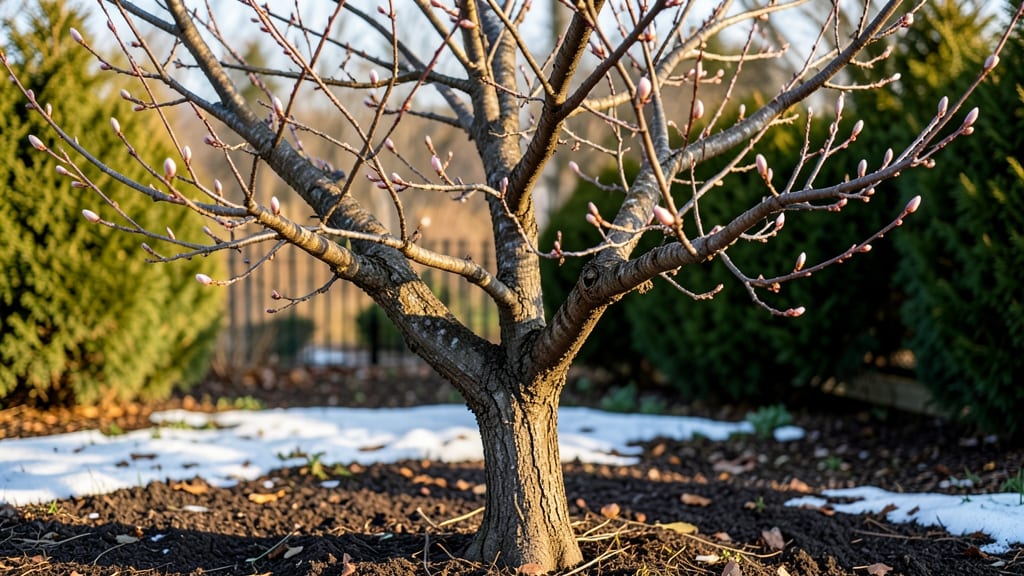
Winter pruning almond trees isn't just about shaping branches—it's your secret weapon for next year's harvest. ✂️ I've learned the hard way that cutting at the wrong time can stress trees, leaving them vulnerable to frost damage or pests.
But when done right, dormant-season pruning boosts spring growth and fruit production by up to 30%—and it's easier than you think. The key is timing: prune when temperatures stay above freezing but before buds swell, usually between late winter and early spring.
Mediterranean climates can start as early as December, while colder regions wait until February or March. Focus on removing dead wood, crossing branches, and thinning to improve airflow—this prevents fungal diseases and makes the tree more cold-hardy.
You'll see fresh, vibrant growth emerge within weeks of pruning, with stronger limbs that support heavier fruit loads. The tree's energy goes toward producing more blossoms and nuts, not just maintaining weak structure.
Just avoid heavy pruning if your region gets late frosts—you don't want to encourage tender new growth too early. This method works for both backyard trees and commercial orchards. The same principles apply whether you're dealing with a single tree or managing an entire grove.
Let's get those branches in shape for spring!
📚 In This Guide
- What you need
- Instructions
- Tips and common mistakes
- Wrapping up and next steps
What you need
- ● Pruning shears: Bypass pruners (sharp, 6–8 inch blades) for small branches (2–3 pairs recommended).
- ● Loppers: For medium branches (1.5–2.5 inch cutting capacity). (1–2 pairs)
- ● Pruning saw: Heavy-duty, curved-tooth saw for thick branches (2+ inches). (1)
- ● Gloves: Heavy-duty, cut-resistant gloves (gardening or pruning-specific). (2 pairs)
- ● Disinfectant: 70% isopropyl alcohol or bleach solution (1:9 ratio with water) to sterilize tools between cuts.
- ○ Pruning sealant: Optional but helpful for large cuts (e.g., tree wound dressing).
- ● Ladder or step stool: Sturdy, extendable (10–12 ft recommended for mature trees).
- ● Heavy-duty trash bags: For collecting pruned branches (10–20 gallon size).
- ● Notebook & pencil: To sketch your tree’s structure or mark cuts before pruning.
- ● Extension pole saw: For high branches without a ladder.
- ● Tree pruning rope: To support heavy branches during removal.
- ● Safety glasses: Protects eyes from debris.
- ● Work boots: With ankle support for stability on uneven ground.
- ● Tree growth regulator: (e.g., hydrogen peroxide spray) to encourage faster healing.
Step-by-step guide to pruning almond trees in winter
Winter’s the perfect time to shape your almond tree for a stronger spring. Here’s how to do it right.
🌿 Step 1: Choose the Right Time and Tools
Prune during dormant season—after leaf drop but before buds swell, typically January to February. This timing prevents stress and disease spread. Grab your sharp pruning shears (cleaned with rubbing alcohol) and loppers for thicker branches. I always wear gloves—almond tree bark can be rough, and sap can irritate skin.
Check the weather forecast. Prune on a dry, sunny day when temperatures are above 40°F. If rain’s forecasted within 24 hours, wait—wet conditions invite fungal infections. I mark my calendar a week ahead to avoid last-minute rushes.
✂️ Step 2: Remove Dead, Diseased, or Weak Wood
Start by scanning the tree for dead branches (no bark, hollow centers) or diseased wood (black spots, oozing sap). Cut these out first—they drain energy from healthy growth. Use your shears to make clean cuts at a 45-degree angle, about ¼ inch above a bud or lateral branch. This prevents water from pooling and rotting the wound.
Next, look for weak or crossing branches—these rub together and create entry points for pests. If two branches grow toward each other, remove the smaller one at its base. I always step back after each cut to visualize the tree’s structure. You’re sculpting, not hacking!
☀️ Step 3: Open the Canopy for Airflow and Light
Almond trees need good airflow to prevent fungal issues like brown rot. Thin out 20-30% of the canopy by removing branches that crowd the center. Focus on suckers (shoots growing from the base) and water sprouts (vertical shoots with no buds). These steal nutrients from fruit production.
Leave strong, outward-facing branches—they’ll form the tree’s scaffold for next year’s harvest. Cut back to a bud or lateral branch, never leaving a stub. If a branch is too thick for shears, use loppers and make the cut just outside the branch collar (the swollen area where the branch meets the trunk).
⏰ Step 4: Shape for Future Growth and Harvest
Now’s the time to train the tree’s structure. Almond trees thrive with an open-center or modified central leader shape. Remove branches that grow inward or downward—they’ll never get enough sunlight. Aim for a balanced, vase-like shape with branches spaced 12-18 inches apart on the trunk.
Watch for dominant vertical branches—these can become top-heavy. Prune them back by ⅓ to ½ to encourage lateral growth. I like to step back every few cuts to check symmetry. A well-shaped tree in winter means fewer surprises in spring when buds burst.
🪴 Step 5: Clean Up and Protect the Tree
After pruning, remove all debris from the ground (burn or compost it—don’t leave it under the tree). Diseased branches can harbor pathogens that reinfect the tree. Seal larger cuts (over ½ inch thick) with pruning sealant to prevent bacterial entry. For smaller cuts, let them heal naturally—they’ll callus over faster in dry winter air.
Apply a 2-3 inch layer of mulch (like wood chips) around the base, keeping it 6 inches away from the trunk. This insulates roots and retains moisture. Water deeply if your winter’s been dry—6-8 gallons per tree should do it. Now, sit back and admire your handiwork. Spring’s growth will thank you!
Tips & tricks for perfect almond tree winter pruning
Winter pruning sets the stage for a bountiful spring harvest—here's how to make every cut count.
Timing is Everything: The January to February window is non-negotiable for almond trees. This dormant period lets the tree recover quickly from pruning. I've seen trees stressed when pruned too early (before leaf drop) or too late (when buds swell). Look for those telltale brown leaves on the ground—your cue to start. The 40°F minimum temperature is crucial too; colder weather can shock the tree. If you're in a warmer climate, aim for the cooler end of winter when nights are consistently above freezing.
The 45-Degree Cut Secret: That 45-degree angle in Step 2 isn't just for looks—it creates a natural water runoff path. When you cut ¼ inch above a bud or lateral branch, you're directing growth energy exactly where you want it. I've made the mistake of cutting too close to the trunk, which can girdle the branch and kill it. Always visualize where the new growth will emerge before making your cut. For thicker branches, make the cut just outside the branch collar—the swollen area where the branch meets the trunk—to prevent tearing.
Canopy Math: The 20-30% thinning in Step 3 might sound vague, but here's how to think about it: Imagine your tree's canopy as a pie chart. You want to remove enough branches to create gaps—think of it like opening a window for airflow. I use the "light test": stand under the tree and look up. If you can see the sky through more than half the branches, you're in the right range. Focus first on those suckers and water sprouts—they're the biggest thieves of your tree's energy. These vertical shoots with no buds will never produce fruit, so remove them completely at their base.
Pruning Sealant Strategy: For cuts over ½ inch thick, that pruning sealant isn't just optional—it's insurance. The sealant prevents bacterial entry that could lead to silver leaf disease, a fungal infection that's particularly problematic for almond trees. I keep a small bottle handy and apply it immediately after making larger cuts. For smaller wounds, let nature take its course—they'll callus over faster in dry winter air. Just make sure your tools are clean (I use rubbing alcohol) to avoid introducing pathogens in the first place.
Pro Tips for Almond Tree Winter
- Winter pruning sets the stage for a bountiful spring harvest—here's how to make every cut count.
- Timing is Everything: The January to February window is non-negotiable for almond trees.
- The 45-Degree Cut Secret: That 45-degree angle in Step 2 isn't just for looks—it creates a natural water runoff path.
Frequently asked questions
Got questions about winter pruning your almond tree? You’re not alone! Here are answers to the most common concerns—so you can confidently tackle dormant-season prep like a pro.
When exactly is the best time to prune an almond tree in winter?
The ideal window is late winter (January–February in most U.S. zones), after the coldest snap but before buds swell (around 30–40 days before last frost). This balances safety from late frosts with active sap flow for healing. Pro tip: Prune on a warm, dry day (40–60°F) to minimize stress on the tree.
Can I prune an almond tree if it’s still covered in snow?
No—never prune snow-covered branches! The weight can break them, and the wet conditions create perfect conditions for disease. Wait until snow melts and the ground isn’t frozen. If your area gets heavy snow, shake off excess gently before pruning to spot hidden damage.
How do I know which branches to cut? Should I remove all the dead wood?
Focus on:
- Dead/dying branches (no leaves, dark color, or hollow when tapped).
- Crossing or rubbing branches (they’ll damage each other as they grow).
- Water sprouts (fast-growing, vertical shoots—cut at the base).
- Overcrowded limbs (thin out to improve airflow; aim for an open-center shape).
Will pruning too much hurt my almond tree in winter?
Yes! Almond trees are sensitive to heavy pruning—never remove more than 20–25% of the canopy in one season. Over-pruning stresses the tree, delays spring growth, and can reduce next year’s nut yield. Spread major cuts over 2–3 years if needed.
What if my almond tree has no leaves or buds after pruning?
Stay calm—it’s normal for almond trees to look bare in winter! Focus on:
- Healthy branch structure (smooth bark, small buds at branch tips).
- No oozing sap or fungal spots (signs of disease).
- Spring green-up (buds should swell by late February–March).
Can I prune an almond tree in summer instead of winter?
Summer pruning is risky—it stresses the tree (especially in hot climates) and invites pests/diseases. However, you can do light corrective pruning in early summer (June) to remove only suckers or damaged limbs. Always prioritize winter for major structural work.
Wrapping up and next steps
Winter is the perfect time to give your almond tree the care it needs for a bountiful spring! By pruning during dormancy, you’re shaping its future growth, improving airflow, and setting the stage for healthier blossoms and nuts.
Remember, patience and precision are key—take your time, follow the right techniques, and soon you’ll see your tree thrive like never before. 🌱
Ready to take action? Grab your pruners, roll up your sleeves, and schedule your pruning session before buds start to swell. Your almond tree’s future harvest is waiting—let’s make it spectacular! 🌟